Prentisstown’s isolation
The Knife of Never Letting GoPrentisstown’s isolation is presented as a quarantine born of the Noise germ, but its consequences reach well beyond infection: the town is left alone, its population declines, and the thoughts of its men remain exposed to one another. Todd gradually recognizes that the boundary around Prentisstown may have been imposed to protect others—or imposed by others to contain the town—and that this uncertainty threatens his attempt to reach safety with Viola.
Origins and Conditions
Ben explains that settlements were scattered across the New World after the ships arrived, roughly ten years before Todd’s birth. When war began with the Spackle and the germ spread, the other settlements were wiped out and Prentisstown nearly shared their fate. In Ben’s account, Mayor Prentiss’s military skill helped the town survive. Survival, however, did not restore a wider community: Prentisstown remained alone in a world described as having no women, and its population of 146 men was diminishing.
The dwindling population is not only a matter of people dying. Todd knows of men who take their own lives and others who disappear, including an old neighbor, a carpenter, and a man who vanished on the day his son became a man. Their departures make the town’s isolation feel ongoing rather than fixed in the past: there are fewer people left to sustain it, and no apparent destination beyond its borders. The surviving community is therefore enclosed both by the history of the epidemic and by the loss of people who might otherwise have shared its future.
Quarantine and Uncertainty
Todd’s understanding of the quarantine develops through guesses rather than a complete explanation. When he considers that Prentisstown may have been cut off because of the Noise germ, he imagines that the town might have isolated itself to keep the infection from reaching another settlement. The possibility briefly offers a more protective explanation for the town’s separation. He then recognizes the opposite possibility: another settlement may have cut Prentisstown off because the town was contagious.
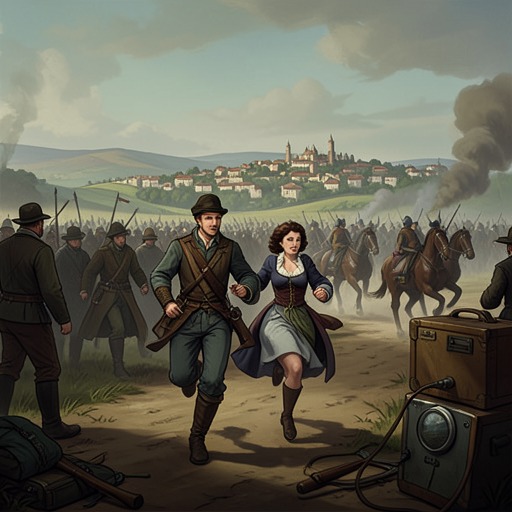
That uncertainty immediately changes the stakes of his journey. If Noise can pass from one person to another, Todd fears that Viola may have caught the germ from him. He also worries that entering a settlement could expose its inhabitants, or that they might reject him as a danger. His fear is not resolved by reassurance; the thought leaves him physically shaken, while Viola remains apart from him. Isolation thus operates as a problem of contact: even approaching help may carry risk for the people he hopes to reach.
An older woman later confirms that Prentisstown was quarantined because of the Noise germ, reinforcing Todd’s interpretation without settling every question about who initiated the separation or how it was enforced. She is a grown woman who has not died from the germ, and she regards Todd from a distance while carrying a rifle. She tells him plainly that he will not be welcome in the settlement, then winks and suggests that what he does not know will not kill him. Her warning makes the quarantine a social boundary as well as a medical one: the town’s history marks Todd as someone others may exclude, even when he needs their help.
Noise Within the Isolated Town
Quarantine does not mean quiet. As Todd looks back toward Prentisstown, he hears all 146 remaining men at once. Their Noise reaches him as a collective force, composed not only of spoken words but of images, memories, fantasies, secrets, plans, and lies. The town is isolated from other settlements, yet its inhabitants cannot easily withdraw from one another’s inner lives. Its enclosure intensifies exposure rather than providing privacy.
Mayor Prentiss’s household offers one response to that condition. The Mayor believes Noise can be ordered and harnessed; near his house, he and the men closest to him conduct counting exercises, imagine perfect shapes, and repeat chants. Todd reads these practices as the shaping of a small army and possibly the forging of a Noise weapon. The image makes the Mayor’s authority part of the town’s isolation: control over Noise is treated not merely as a private discipline but as preparation for something that may change the balance of power.
The novel also contrasts this unceasing exposure with other ways people manage sound. In Farbranch, music plays throughout the day and night; Doctor Snow explains that it is meant to keep men’s thoughts private. The comparison shows that Noise is not simply a feature of life in Prentisstown but a condition communities attempt to manage differently. Later, behind a waterfall, the natural roar becomes so loud that Noise is obliterated. The moment offers a temporary experience of quiet, but not a new social refuge: it depends on a particular place and sound, while Prentisstown’s quarantine remains unresolved.
Consequences and Significance
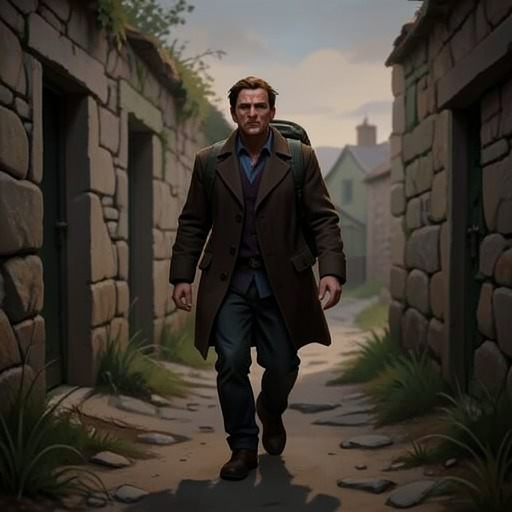
Prentisstown’s isolation creates a double bind for Todd and Viola. Remaining outside the settlement leaves them without the welcome or security he hopes to find; approaching it may carry the germ and invite rejection. The quarantine therefore follows Todd beyond the town’s physical boundary, shaping how he interprets strangers, travel, and the possibility of belonging elsewhere.
The town’s history also complicates the meaning of its survival. Mayor Prentiss is credited with helping Prentisstown endure the epidemic, but that survival has left a shrinking, all-male community whose Noise exposes private thought and whose future appears increasingly limited. The isolation is neither a simple refuge nor merely a wall around danger. It preserves a remnant while separating that remnant from other settlements, and it turns the question of who can safely approach whom into a central practical and moral problem.