The Prentisstown Massacre
The Knife of Never Letting GoThe Prentisstown Massacre destroyed the community of New Elizabeth and created the conditions for Prentisstown’s isolation and violence. As Ben recounts the past to Todd Hewitt and Viola, the massacre emerges not as an unexplained eruption but as the culmination of hardship, blame directed at the Spackle, and preaching that made violence seem justified. Its aftermath reached beyond those killed: survivors were confined by law, the town’s history was concealed, and killing became embedded in the next generation’s passage into adulthood.
Causes and Background
The history begins with the Noise germ, which Ben clarifies was not a weapon used by the Spackle. It was already present in the air when the human colonists landed on New World. Within a day, people could hear one another’s thoughts. The planet’s living things communicated continuously; the Spackle had evolved within that condition, while humans were unprepared for the unceasing flow of information. For humans, too much information could become Noise and contribute to madness. That distinction matters to the history that followed: the Spackle were blamed for a condition they had not caused.
Over the years, life on New World grew harder. Crops failed, sickness spread, and prosperity remained out of reach. In that climate of accumulated disappointment, preaching took hold that assigned blame to the aliens, the Spackle. According to Ben, accusation became a movement, and the movement became a war. The imbalance of force was decisive: the humans had guns, while the Spackle did not. Ben describes the result as the end of the Spackle, though Todd Hewitt insists that not all had died. The survivors kept their distance from humans, a separation that preserved the consequences of the war long after its immediate violence.
The massacre in Prentisstown followed this larger pattern of collective blame, but its victims were the town’s own women and the men who attempted to protect them. Todd Hewitt names that sequence as the men’s killing of the women after the Spackle had been killed. Ben confirms that many men participated, influenced by Mayor Prentiss and Aaron’s preaching. Aaron’s claim that what was hidden must be evil supplied a moral rationale for suspicion and violence. The account identifies both ideological influence and individual responsibility: the preaching helped sway the killers, but it was men of Prentisstown who carried out the killings.
The Attack on New Elizabeth
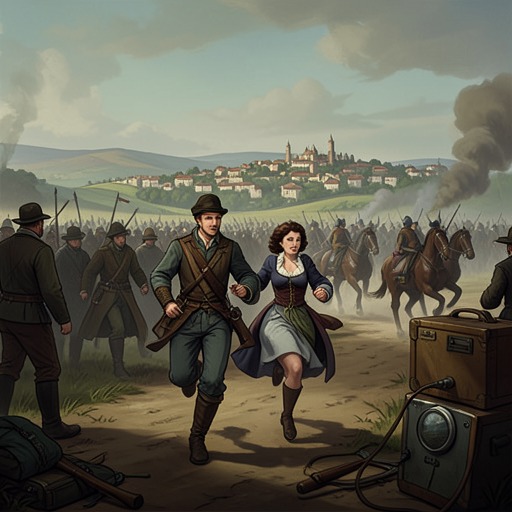
Some residents recognized the danger early. Jessica Elizabeth, the mayor of New Elizabeth, saw how events were turning and organized some of the girls and younger boys to flee across the swamp. She had not yet escaped herself with the women and the men who had not lost their minds when Mayor Prentiss’s men attacked. The account establishes the interruption of the escape effort, but does not detail Jessica Elizabeth’s subsequent fate.
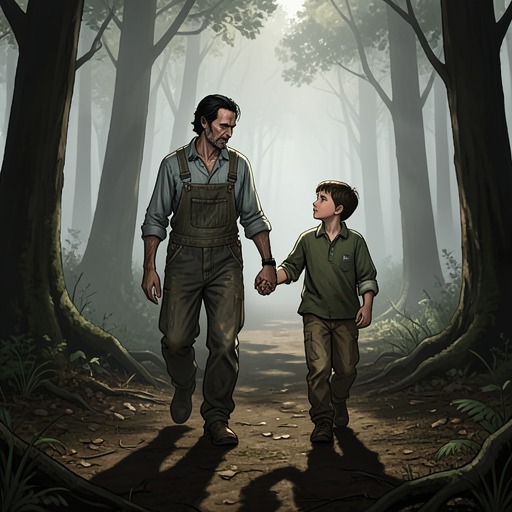
The failed flight marked the destruction of New Elizabeth as a community. Todd Hewitt understands the transformation in stark terms: New Elizabeth became Prentisstown. The change was more than a new name. It signaled the loss of the former town’s civic life and the consolidation of power under Mayor Prentiss. Todd Hewitt’s mother had not believed that the violence would reach this point. When escape became impossible and her son was too young to be sent away, she entrusted him to Ben and Cillian to keep him safe. That decision links the massacre directly to Todd Hewitt’s childhood and to the protectors who later tell him what happened.
Punishment and Isolation
The people who escaped carried news of Prentisstown’s crimes beyond the swamp. In response, all men from Prentisstown were declared criminals. The wider New World authorities did not launch another war against them or confine them in a prison; instead, the law stipulated that any man from Prentisstown who crossed the swamp would be executed. The community was left to itself under that threat. The law imposed isolation rather than repairing the violence or bringing the perpetrators to justice.
That punishment also shaped the town’s later history. The men could not simply leave, and the threat of execution made the swamp a legal boundary around their lives. The distinction between the men who had committed atrocities and those who had not was collapsed into a collective sentence. Ben’s account makes the consequence plain: the escaped residents’ testimony exposed the crime, but the resulting policy confined the population rather than distinguishing individual responsibility or offering a route back into the wider society.
Concealed Violence and Continuing Consequences
The massacre’s legacy is inseparable from the later killing custom that Todd Hewitt discovers was concealed beneath the town’s stories of men who had disappeared or died by their own hand. Mr Royal, Todd Hewitt’s former schoolteacher, was said to have shot himself after turning to whisky. In fact, Seb Mundy killed him on Seb Mundy’s thirteenth birthday, with the other men watching. Mr Gault, whose sheep flock Todd Hewitt’s group took over after he supposedly disappeared, had attempted to flee through the swamp. Mayor Prentiss found him and arranged for Mr Prentiss Jr to kill him on his thirteenth birthday. These were separate later killings, not part of the original massacre, but their concealment shows how the town’s violence persisted across generations.
When no captured escapee was available for a boy’s thirteenth birthday, the men could select someone they disliked and claim he had disappeared. A victim’s life was assigned to a boy to end alone, while the community watched. The custom turned killing into a public measure of adulthood and implicated those who observed, arranged, or accepted it. Todd Hewitt’s realization that everyone was complicit, except himself, exposes the distinction between the town’s official explanations and its actual practices.
Retelling and Significance
The massacre reaches the reader through a charged act of disclosure. Ben takes a deep breath before explaining the origin of the Noise germ and the chain of events that led to war and murder. He pauses as he remembers; Viola’s silence and her correction that the germ did not affect everyone sharpen the account’s attention to what had been excluded from the familiar story. Later, Todd Hewitt names the killing of the women aloud, and Ben confirms it. The pauses and confirmations make the history a painful revelation rather than a detached chronicle.
The account revises several beliefs at once: the Noise germ was natural rather than Spackle warfare; the town’s women were killed by its men; Todd Hewitt’s mother was among the victims; and the men’s isolation followed the exposure of their crimes. It also connects the massacre to the later concealment of deaths and the ritualized killing of boys’ chosen victims. The sequence shows how hardship and scapegoating can prepare the ground for violence, while punishment without reintegration can preserve a closed society in which violence is repeated and shared responsibility is obscured.