There’s just no such thing as silence
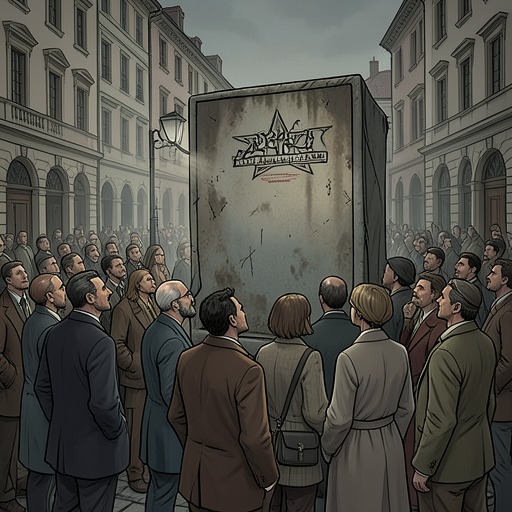
The Knife of Never Letting Go“There’s just no such thing as silence” is Todd’s blunt description of life under Noise, where thought seems impossible to escape and privacy has to be made or imagined. The expression sounds absolute, but the story repeatedly tests it against apparent exceptions: a gap in the Noise, an encounter in which Todd hears nothing, and a waterfall so loud that it obliterates Noise. Its force lies in that tension between a world that never seems quiet and the unstable meanings of quiet itself.
A rule formed by Noise
The expression emerges from a world in which Noise is more than ordinary sound. Todd describes it as the thoughts of men and things pressing in without respite, a condition connected to the Noise germ released during the war. His account links that disaster to the deaths of half the men and every woman, including his mother, and to the madness that led surviving men to take up weapons against the Spackle. Against that history, silence is not merely a peaceful interval; its very possibility seems incompatible with the world he knows.
Todd’s certainty is grounded in daily experience. Returning from the swamp, with his own thoughts churning, he insists that there is no silence in any circumstance: not sleep, not solitude, nowhere. He uses a practice Ben taught him to steady himself: closing his eyes and calmly repeating who he is. That effort does not remove Noise; it gives Todd a way to hold onto his identity within it. The expression therefore describes both an external condition and the inward labor required to remain distinct amid other minds.
The exceptions the phrase cannot settle
Before stating the rule, Todd detects what seems impossible: a hole in the Noise, hidden somewhere in the trees. He cannot see it directly, but senses its shape through the way the surrounding world seems to touch it. Whatever falls into that space stops being Noise, and, in his description, seems to stop being anything at all. He distinguishes this from the swamp’s ordinary relative quiet: this is not simply less Noise, but an apparent absence that challenges his conviction that Noise fills everything.
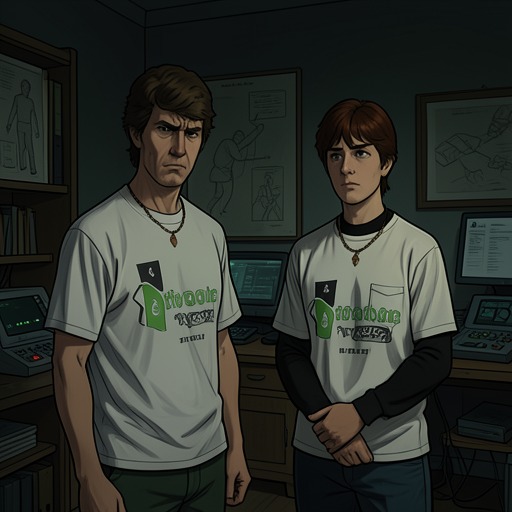
A later encounter unsettles the rule in another way. Looking at Viola, Todd realizes that he is hearing nothing. The moment is emotionally disorienting, and the sudden absence of the sound he expects accompanies his recognition that she is not another boy and is wholly unlike him. The expression does not explain this experience, but its absoluteness makes the contrast striking: what Todd has treated as an unbreakable law of his world can meet an exception at the very moment his understanding of another person begins to change.
Noise, privacy, and control
Noise also shapes how communities attempt to govern thought. In Prentisstown, Mayor Prentiss and the men closest to him practise counting, imagining perfect shapes, and reciting orderly chants. Todd hears these exercises as an effort to sort and harness Noise, perhaps to forge it into a weapon. The contrast is pointed: Noise may expose the mind, but the Mayor’s project imagines it can be disciplined and directed rather than simply endured.
Music offers a different response. At Farbranch, the music plays all day and all night; it is faint at Doctor Snow’s house but so constant in the settlement that, as Viola reports, people cannot hear themselves think. Todd compares it to the pub in Prentisstown, where music played continuously to drown out Noise. Doctor Snow gives the Farbranch practice a further purpose: keeping men’s thoughts private. The distinction matters. The music does not establish silence; it fills the audible space so that thoughts may become less exposed. In a world where Noise makes privacy precarious, a deliberately maintained racket can serve as shelter.
When loudness becomes quiet
The expression’s deepest complication arrives behind the waterfall. The water roars with a force Todd experiences as nearly tangible, and yet it obliterates Noise. Because the sound is so tremendous, it becomes the quietest he has ever felt. The paradox distinguishes silence from simple low volume: the waterfall is not silent, but its overwhelming roar masks the thoughts that ordinarily invade perception.
Across these moments, the phrase shifts from a sweeping claim into a measure of how difficult silence is to define. An apparent void in the swamp, the nothing Todd hears when he faces Viola, the music intended to guard privacy, and the waterfall’s overwhelming noise are not interchangeable experiences. Together they show why silence remains so consequential: it is at once an apparent impossibility, a startling interruption, and a condition people try to create by changing what can be heard.