Viola kills Aaron
The Knife of Never Letting GoViola’s killing of Aaron is the decisive intervention in the waterfall-church confrontation: when Todd cannot prevent Aaron from rising, Viola takes the knife and acts, ending Aaron’s pursuit at the cost of taking a life. The moment turns the scene from Todd’s struggle against Aaron into Viola’s choice and leaves the two young survivors facing the immediate aftermath together.
Causes and Background
Aaron’s violence belongs to a wider history of persecution and collective blame that Todd and Ben have been uncovering. Ben explains that hardship spread across the New World, with failing crops, sickness, and a lack of prosperity. Blame was directed at the Spackle, and prejudice hardened into a movement and then a war. The human advantage in weapons made the conflict radically unequal; Ben says the Spackle were defeated, though some survived and learned to avoid people.
What Happens
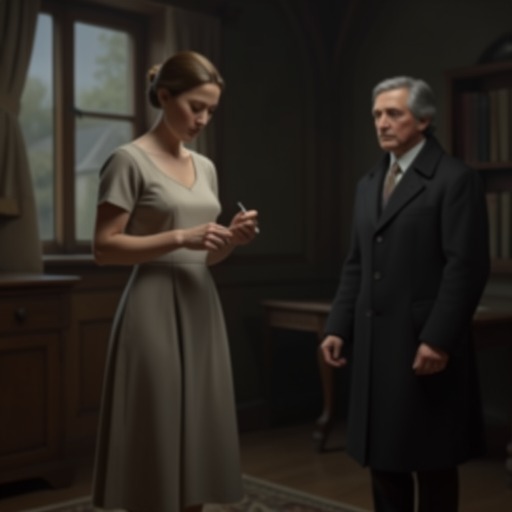
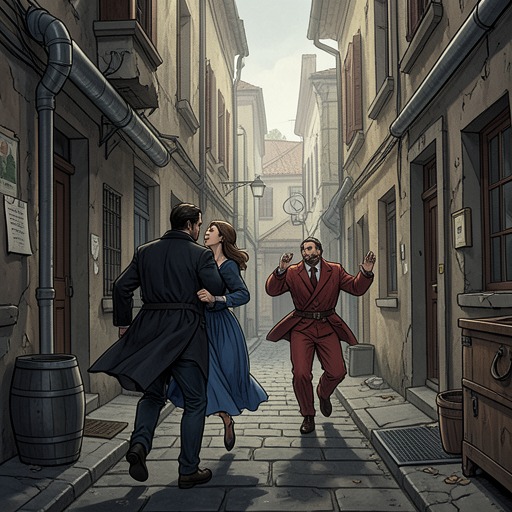
The reversal begins before Todd can act: as he falls toward the ledge, Viola reaches the knife first and takes it. Aaron is getting up, and Todd cannot stop her as she steps toward him. She raises the weapon and drives it into Aaron’s neck, turning the immediate contest from Todd’s attempt to intervene into Viola’s decision to end the threat herself.
Aaron tries to rise with the knife still lodged in him. He catches Todd’s eye, and his Noise stops completely; then his body slumps away from the pulpit, goes over the edge, and disappears beneath the waterfall, taking the knife with him. Viola sits down hard beside Todd. Aaron’s death ends the confrontation, but leaves the two of them together at the scene of the act.
The History Behind the Confrontation
The killing also sits within a history of violence that Todd and Ben have only gradually brought into view. After the war against the Spackle, many men in Prentisstown turned against the women and against men who tried to protect them. Ben identifies Mayor Prentiss’s influence and Aaron’s preaching as forces that helped persuade the killers that whatever was hidden must be evil. The disclosure makes Aaron more than a pursuer in the immediate confrontation: his violence is linked to a doctrine that had helped justify persecution within the town.
That doctrine’s consequences persisted in the town’s coming-of-age practice. Men who were said to have disappeared had in some cases been killed by boys on their thirteenth birthdays, with the adult men watching. Todd learns that Mr Royal was killed by Seb Mundy, and that Mr Gault was captured while trying to flee and killed on Mayor Prentiss’s orders through Mr Prentiss Jr. If no escapee was available, the town could select a man it disliked and call him a fugitive. Todd’s conclusion that everyone was complicit, except himself, places Aaron’s end against a social order in which violence was made into a collective rite. Viola’s act is therefore a direct response to the danger before her, but it also marks a break in a world that had repeatedly made killing serve as proof of belonging.
Noise and the End of the Confrontation
Aaron’s death also reverses the world’s usual condition of ceaseless communication. Ben has described the New World as a place where everything communicates and where information never stops; even pauses leave Noise present. Yet when Aaron catches Todd’s eye, his Noise stops completely, immediately before his body falls beneath the waterfall. The sudden cessation makes the end legible in a way the surrounding turmoil is not: the man whose preaching helped turn fear into violence is, at last, silent. The scene closes not with a spoken judgment or a resolution between the survivors, but with that interruption—and with the knife disappearing beneath the water.