
The Rape Case and the Duel
The Last DuelThe central legal and personal crisis moves from Marguerite’s accusation through failed local justice, royal inquiry, and the fatal combat that settles the case publicly but not historically.
increasing Bearing strength in each event
 decreasing
Bearing strength in each eventdecreasingThe Accusation

The Accusation
An isolated household
Marguerite is left at Capomesnil Castle when Nicole departs for Saint-Pierre-sur-Dives with most of the household. Jacques Le Gris and Adam Louvel arrive, and Marguerite later reports that they attacked her.
A dangerous disclosure
Marguerite initially keeps silent, then tells Jean de Carrouges when he returns. Her allegation transforms a private assault into a public claim whose proof may determine her own life.
The Count’s Acquittal
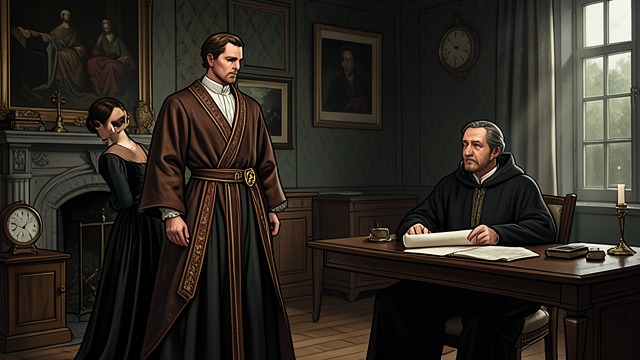
The Count’s Acquittal
A hostile tribunal
Jean and Marguerite seek redress before Count Pierre of Alençon, Le Gris’s patron. The couple do not appear at the appointed hearing, leaving the count to investigate without their direct testimony.
A verdict against Marguerite
The count declares Le Gris innocent and suggests that Marguerite dreamed the assault. The ruling closes the local case but deepens the couple’s conviction that justice is inaccessible there.
The Royal Appeal
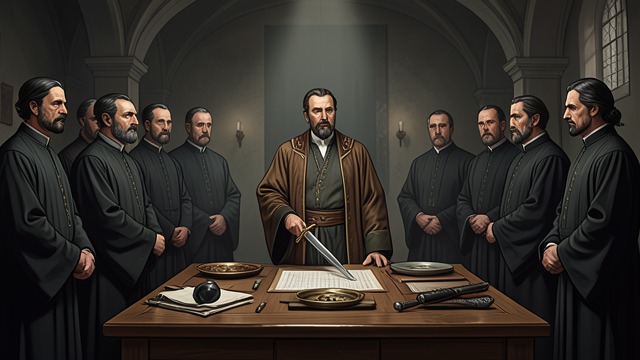
The Royal Appeal
A higher court
Jean appeals to Charles VI, accusing Le Gris and offering to prove the charge with his body. The appeal carries enormous personal risk: the knight’s life and Marguerite’s survival are both exposed.
The case becomes public
The Parlement of Paris receives the dispute and orders written testimony. The accusation now concerns royal authority, noble reputation, and the limits of ordinary evidence.
The Combat Is Ordered
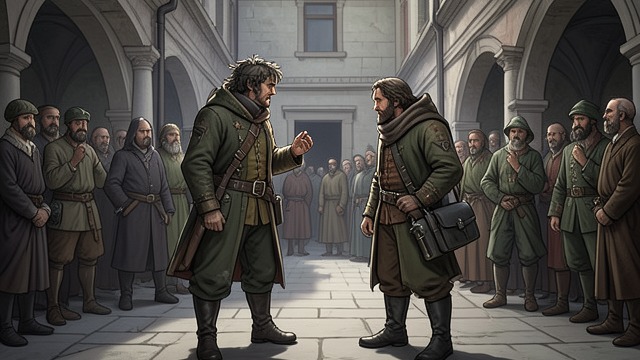
The Combat Is Ordered
Evidence and counterclaims
The inquiry hears the parties’ sharply opposed accounts. Le Gris offers an alibi and attacks Jean’s character, while Marguerite maintains her accusation under repeated questioning.
A judicial wager
The Parlement authorizes combat, leaving the unresolved case to a formal trial by battle. The decision grants Jean a chance to prove the charge while making Marguerite’s fate depend on the result.
The Fatal Verdict

The Fatal Verdict
A fight before the court
Before the king and a vast crowd, Jean and Le Gris fight with horses, axes, and swords. Jean is wounded but finally forces Le Gris to the ground and demands a confession.
Victory without certainty
Le Gris denies the charge, and Jean kills him. The combat saves Marguerite from execution and publicly vindicates her, but it cannot establish historical truth beyond dispute.
18 January 1386
Late January 1386
Spring 1386
15 September 1386
29 December 1386
