
The Crowd and the Spectacle
The Last DuelThe public staging of the duel turns a private accusation into civic entertainment, royal theater, and a collective demand for a visible verdict.
increasing Bearing strength in each event
 decreasing
Bearing strength in each eventdecreasingA City Awaits
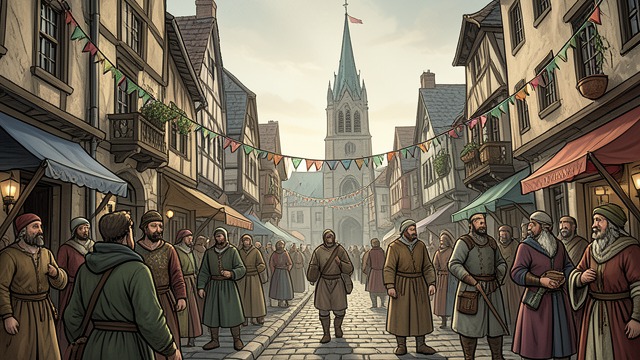
A City Awaits
News travels
Reports of the duel draw spectators to Paris from Normandy and farther away. The rarity of judicial combat magnifies public curiosity.
A festive setting
The fight falls during the holiday season and on the feast of Saint Thomas Becket. Religious observance and appetite for violent spectacle share the same crowded day.
A Field Rebuilt
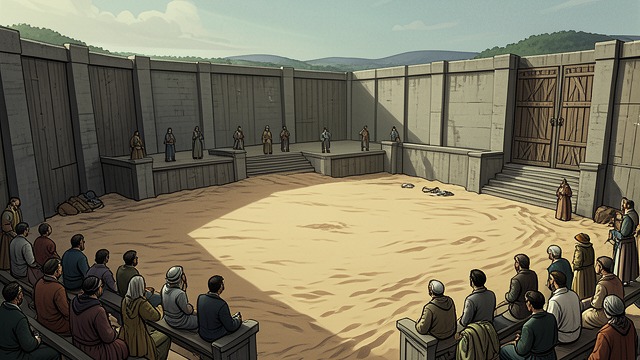
A Field Rebuilt
Architecture for violence
Carpenters prepare a high-walled enclosed field, gates, stands, and platforms. Sand is spread across the ground to provide a smooth surface and absorb blood.
Safety and confinement
The barriers keep combatants inside and spectators out. The elaborate construction makes the duel both a controlled legal event and an inescapable fight.
The Arrival Processions
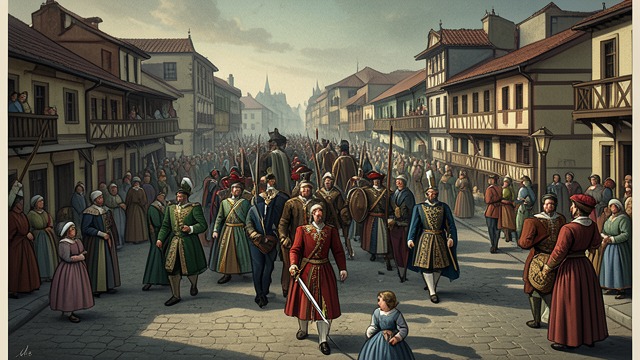
The Arrival Processions
Royal authority enters
Charles VI arrives with his uncles, officials, and the Sword of Justice. The procession establishes that the king presides over the field.
The accused and accuser displayed
Jean, Marguerite, and Le Gris arrive separately before the crowd. Their clothing, rank, and family parties make the private dispute immediately visible.
Silence Before Combat
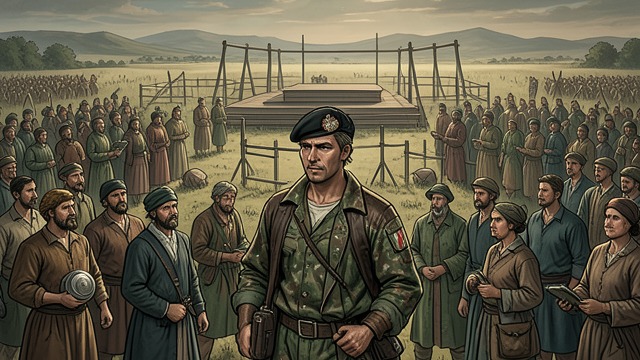
Silence Before Combat
Rules for spectators
Officials prohibit speech, movement that blocks views, weapons, and interference, under severe penalties. The crowd must watch without influencing the fight.
Collective suspense
The enforced silence turns thousands of people into a single audience. Their attention intensifies the pressure on the combatants and Marguerite.
The Crowd Answers
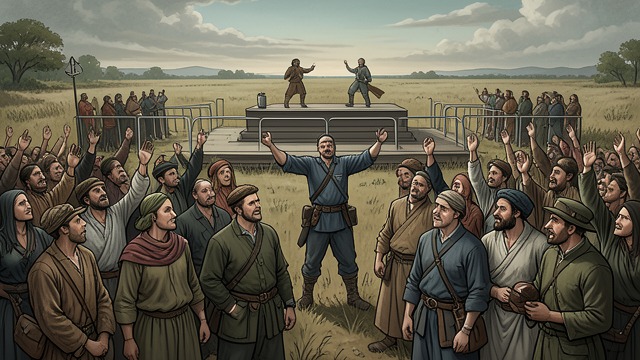
The Crowd Answers
A demanded response
After killing Le Gris, Jean asks the spectators whether he has done his duty. The crowd replies with a collective affirmation.
Public judgment
The shout releases tension and gives the victor immediate social validation. The crowd’s response is powerful, but it is not independent proof of the original accusation.
Late December 1386
Before 29 December 1386
Morning of 29 December 1386
Before the first charge
29 December 1386
