
The Political Reach of a Local Case
The Last DuelThe dispute expands from a Norman household to the royal center, showing how patronage and monarchy reshape a local accusation.
increasing Bearing strength in each event
 decreasing
Bearing strength in each eventdecreasingA Local Feudal Court

A Local Feudal Court
The count’s responsibility
Jean first turns to Count Pierre, his lord, who is expected to adjudicate disputes among vassals. The arrangement gives the count formal authority over the conflict.
A conflict of interest
Le Gris is the count’s favorite. The local forum cannot easily separate legal duty from personal patronage.
The Count Sends Word

The Count Sends Word
A preemptive account
Count Pierre writes to the king about his decision exonerating Le Gris. He appears to anticipate Jean’s appeal and seek royal support for the local verdict.
The case travels upward
The dispute is no longer contained in Normandy. The count’s intervention makes the royal court aware of the conflict before Jean’s formal appeal is resolved.
The Parlement Takes Control
The Parlement Takes Control
Appeal reaches the king
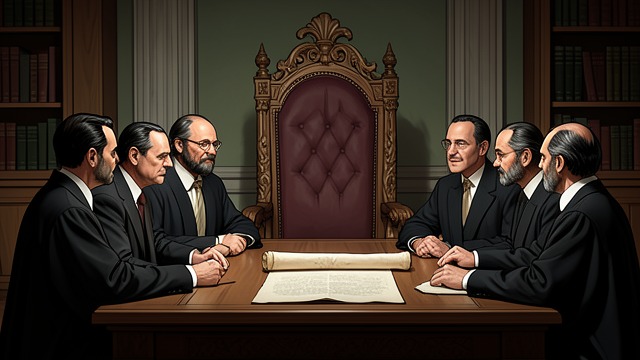
Jean appeals the count’s judgment, invoking the right to challenge an allegedly unjust decision. The Parlement now manages the procedure and determines whether combat is justified.
Political alliances gather
Noble pledges and court connections multiply the people with interests in the result. A local feud becomes a cause célèbre within the elite.
The King Watches

The King Watches
Court attention
Charles VI follows the case and later postpones the duel so he can attend. His interest makes the proceeding a royal event as well as a legal one.
Authority staged publicly
The king presides over the field, while the Parlement’s earlier ruling authorizes the combat. The sequence displays a monarchy that governs through ceremony even when judgment is delegated to violence.
A New Royal Patron

A New Royal Patron
Jean’s advancement
After victory, Jean receives a pension and place in the king’s chamber. His career shifts from dependence on Count Pierre to service at the royal court.
A personal dispute changes scale
The outcome changes Jean’s political position, not simply his reputation. The accusation’s journey through institutions reshapes the hierarchy that first produced the feud.
January 1386
Early 1386
Spring 1386
July–December 1386
After December 1386
