Count of Alençon hears the rape accusation and acquits Le Gris
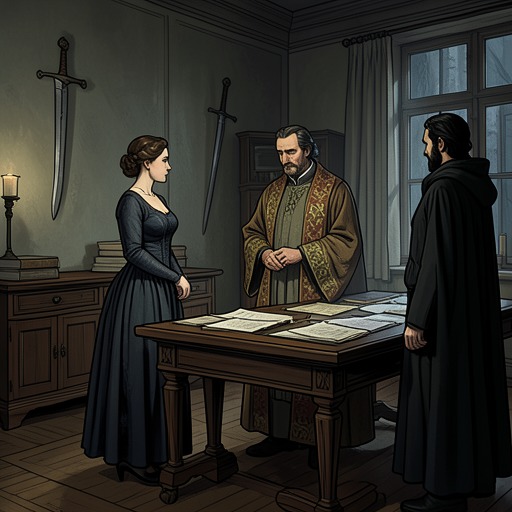
The Last DuelCount Pierre of Alençon’s hearing and acquittal of Jacques Le Gris was the first formal adjudication of Marguerite de Carrouges’s accusation, and its outcome turned a private allegation into an entrenched public conflict. The count convened his court after learning that Jean de Carrouges accused his favored squire of attacking Marguerite while Jean was away. Though he offered the couple a hearing, they did not attend; the court nevertheless proceeded, detained the alleged accomplice, and pronounced Le Gris innocent. The ruling erased the charge from the record and put Marguerite’s credibility under suspicion rather than establishing what had happened.
Background and Stakes
The allegation reached Count Pierre in late January 1386 as a rumor that Jean de Carrouges was spreading: Le Gris, with an accomplice, had surprised Marguerite at home during her husband’s absence and attacked her. Jean was among the count’s most troublesome vassals; Le Gris, by contrast, was the count’s favorite. Their prior bad blood shaped the stakes before any witnesses were questioned. Count Pierre wondered, in effect, how anyone could accept what he regarded as an implausible charge against his favored squire.
Marguerite faced more than the difficulty of substantiating a serious accusation. The social value placed on a noblewoman’s chastity and marital loyalty made the allegation especially perilous for her reputation. Her father’s treason had already left the Thibouville family under a cloud, and the book notes that this history could have made her particularly vulnerable to suspicion. A further danger came from the warning attributed to Le Gris: that if she told her husband, Jean might believe she had been unfaithful. The account presents this as a threat that could exploit both the couple’s strained trust and the lethal consequences that suspected adultery could carry for a wife.
The available paths to justice were also constrained by Le Gris’s position. He was well liked at the royal court in Paris and had the count’s favor; in the count’s court, Marguerite could expect to be judged against her family history and her husband’s reputation as a difficult vassal. Le Gris, as a cleric in minor orders, might also claim benefit of clergy if the dispute went to a secular court, potentially moving it to a church court. The hearing therefore brought together unequal standing, personal allegiance, and obstacles to proving the allegation.
The Count’s Hearing
Count Pierre began by investigating the rumor. He summoned and questioned two respected nobles: Sir Bernard de La Tour, Jean’s brother-in-law, and Jean Crespin, a squire and royal forester. Both knew something of Jean’s affairs. Their later testimony was that Jean and Marguerite had repeatedly said that Le Gris had attacked her, and that the couple wished to present their complaint to the count and obtain justice.
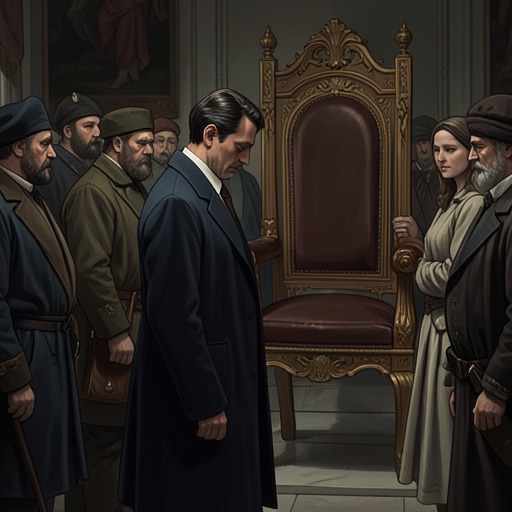
The count said he was prepared to hear them because settling quarrels among his vassals was his responsibility. He assembled a court of prelates, knights, members of his council, and other experienced men; some of the prelates had legal expertise. The hearing was held in the great hall of the Count of Alençon’s Palace, where nobles, clerics, and other courtiers gathered. News of the accusation had spread through the count’s domain, and the crowd came to learn whether the rumor was true. The public setting made the proceeding more than a private exchange between lord and vassals, even though the count’s closeness to Le Gris left the question of impartiality unresolved.
The decisive complication was the absence of Jean and Marguerite on the appointed day. The count had called witnesses, offered justice, and assembled his court, but the couple did not appear to make the charge in person or provide Marguerite’s sworn testimony there. The account does not establish why. It raises possible explanations—including Jean’s illness, Marguerite’s condition after the attack, fear of Le Gris’s supporters, distrust of the count’s court, or a deliberate strategy—but leaves the absence unexplained. That uncertainty mattered: the proceeding moved forward without the complainants present to give their account.
Acquittal and Its Immediate Effects
Perhaps in response to the couple’s absence and the limited testimony available, Count Pierre ordered Adam Louvel, identified as Le Gris’s alleged accomplice, arrested and detained for questioning. The count then deliberated with his court on the accusations. The evidence does not specify what information Louvel supplied, so his detention cannot be treated as proof either of the accusation or of Le Gris’s innocence.
The court, with Count Pierre presiding, found Le Gris completely innocent and without guilt. The count annulled the criminal charge, ordered it struck from the record, and directed that no further questions be raised about it. He also insinuated that Marguerite had lied, suggesting that she must have dreamt the alleged attack. The ruling thus did more than dismiss the complaint: it sought to close the matter officially while leaving Marguerite’s word discredited.
When news reached Château de Capomesnil, about twenty-five miles north of Argentan by the winter road, Marguerite was still in seclusion. The narrative allows that she may have expected an unfavorable outcome, but records the acquittal and the suggestion that she had lied as reasons for fury and despair. Rather than ending her resolve, the verdict may have strengthened her determination to seek vengeance on Le Gris, a resolve she had formed after the attack. Jean, too, would have seen the ruling as another public humiliation and a mockery of justice, though the account qualifies that response as an inference rather than a recorded statement.
Significance and Aftermath
The hearing failed to settle the accusation; instead, it sharpened the conflict between Jean and Le Gris and exposed the limits of justice when the lord responsible for judgment favored one of the parties. The count had accepted responsibility for hearing the complaint, but his personal allegiance to Le Gris, the couple’s failure to attend, and the absence of Marguerite’s sworn testimony left the proceeding vulnerable to doubt. Its formal conclusion and its unresolved factual question stood side by side: Le Gris was cleared by the court, while the book does not present the acquittal as proof of what had occurred.
For Marguerite, the verdict imposed a second burden after the original accusation: the court’s decision marked her as a possible liar and ordered the matter silenced. The account emphasizes the disparity between the dangers she faced in making a public charge and the standing enjoyed by the accused squire. For Jean, the decision added to an existing feud with Count Pierre and compounded his grievances against Le Gris. The failed hearing therefore became a pivotal stage in the wider dispute: rather than restoring confidence or ending the quarrel, it helped propel the couple’s effort to seek redress beyond the count’s tribunal.