Enlightenment
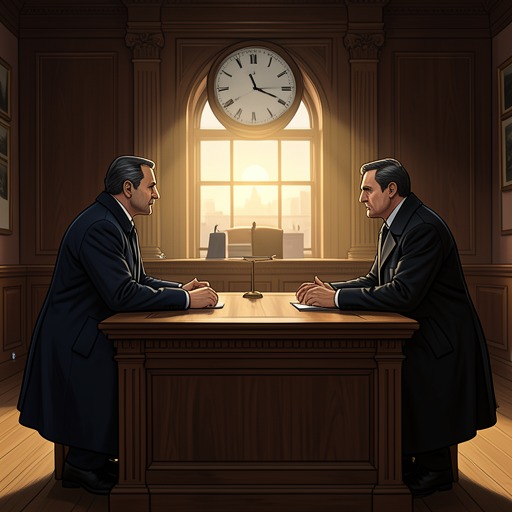
The Last DuelThe Enlightenment was a later stage in the Carrouges–Le Gris affair’s afterlife: eighteenth-century writers made its disputed outcome an example in their criticism of medieval justice. They drew on a legend that Jacques Le Gris had been wrongly accused and executed, and that the real culprit was identified only afterward. The case’s history, however, remained unsettled; the story’s force as an Enlightenment argument did not make its claims about the crime certain.
The Case and Its Unsettled Record
The affair reached later readers through sources that differed in form and perspective. The Parlement of Paris preserved a detailed Latin summary of the proceedings, nearly ten densely written folio-sized pages in a unique surviving manuscript copy. Jean Le Coq, Le Gris’s lawyer, also recorded his own considerations about the case. Yet even with access to the proceedings and his client, Le Coq concluded that “no one really knew the truth of the matter.” The surviving record therefore supplies a basis for understanding the dispute, but not a final resolution of it.
A Legend of Mistake and Delayed Confession
Within a few years of the combat, accounts already differed over its meaning. Jean Froissart reported that the king, court, and crowd rejoiced at the outcome; Le Coq recorded mixed reactions, including the view that Le Gris had been unjustly slain. The Saint-Denis Chronicle, compiled roughly ten or fifteen years after the events, advanced a different explanation: Marguerite had accused Le Gris mistakenly but in good faith, and a condemned felon later confessed. In the 1430s, Jean Juvénal des Ursins repeated the story, changing the supposed confessor into a sick man on his deathbed. These retellings helped establish the pattern later used by Enlightenment writers: a wrongful judgment followed by a revelation that came too late.
The book questions that pattern rather than treating it as a verified solution. Marguerite’s accusation named both Le Gris and Adam Louvel, whereas the tale of a later confession concerned only one culprit. The account also notes that the charge against Louvel added a further burden of proof and risk if Marguerite had knowingly fabricated her story. These considerations make the false-accusation legend doubtful, but do not establish every detail of the attack or settle the case beyond dispute.
Eighteenth-Century Use of the Affair
Enlightenment writers seized on the legend to indict what they regarded as the barbarity and superstition of the Middle Ages. The judicial duel became the central target: the affair served as a prominent example of the folly of allowing combat to determine a legal case. In 1767, Diderot and d’Alembert’s Encyclopédie briefly repeated the story that Le Gris had been wrongly accused and that the true felon was revealed later. Voltaire likewise invoked the case against judicial combat, calling it “an irrevocable crime” sanctioned by law.
This use of the affair turned a disputed historical narrative into a compact argument about institutions: a verdict reached through combat could not prevent the possibility, imagined in the legend, that the truth would emerge only after an irreversible death. The critique depended on the story of mistaken accusation and delayed confession, not on proof that this was what had actually happened.
Later Retellings and Significance
The legend continued beyond the eighteenth century. In 1824, Louis Du Bois adapted the Saint-Denis Chronicle’s account, describing Marguerite as mistaken and adding that she later became a nun in regret. In 1848, Auguste Le Prevost argued instead that Le Gris had attacked her and been justly killed, while stressing the influence of court politics on accounts that discredited Marguerite. Such competing histories show that the Enlightenment version was one influential interpretation, not the final settlement of the affair.
The episode’s significance lies in the gap between evidence and argumentative use. Enlightenment writers could present the duel as an indictment of medieval justice because the legend supplied a stark tale of possible error and irreversible punishment. But the same record that made the case available to later debate preserved uncertainty rather than closing it: the story remained contested even as it became an emblem.