Franco-Scottish expedition to England (1385)
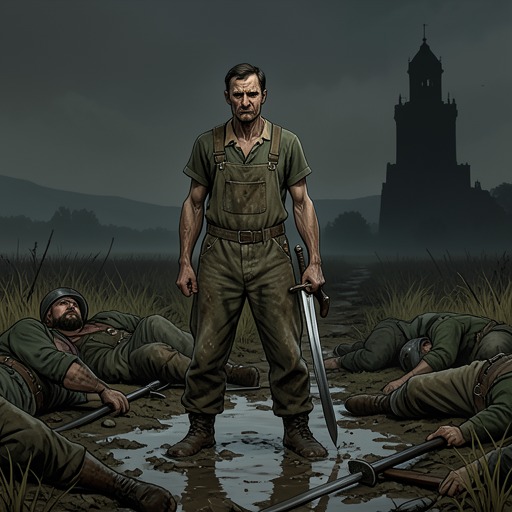
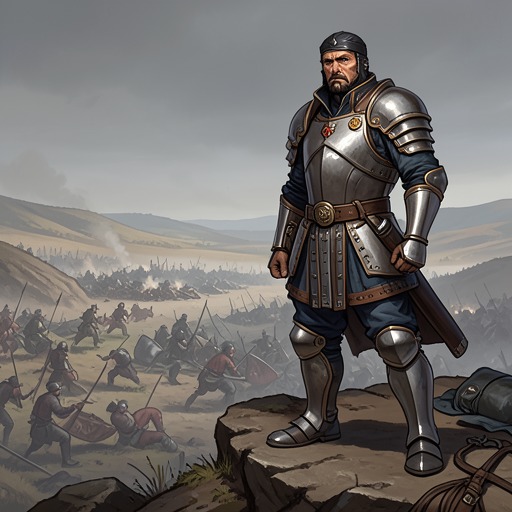
The Last DuelThe Franco-Scottish expedition to England (1385) was a French royal campaign that joined a large force of French soldiers to the Scots for a summer advance into northern England. The intended invasion became a costly raid rather than a decisive military success: the allies burned settlements and farms, failed to draw the English into a battle on their terms, and eventually withdrew amid distrust and shortages. For Jean de Carrouges, who joined in search of plunder and advancement, the campaign brought a knighthood but left him ill, in debt, and without the wealth he had hoped to secure.
A Campaign for Wealth and Advancement
In the spring of 1385, Jean de Carrouges decided to leave Normandy and seek his fortune abroad. Recent setbacks at Count Pierre of Alençon’s court had diminished his standing and reduced his income. The expedition offered a way to escape those disappointments, make a name through military service, and perhaps earn the knighthood that had so far eluded him. He also expected that captured goods from English towns and castles might compensate for his losses at home. Count Pierre released him from his regular military service; the separation suited a lord weary of his troublesome vassal, while Carrouges had reason to hope that success overseas would improve his position.
The French king commissioned the expedition in May. Under the command of Jean de Vienne, the French force was to sail to Edinburgh, join the Scots, and move south into English territory. Its plans included raids on towns, castles, farms, and villages as crops approached harvest. The scale of the undertaking drew nobles from across France. Carrouges joined with nine squires under his command, part of a force of more than a thousand knights and squires, supported by roughly twice as many crossbowmen and armed servants. In all, the French contingent numbered about three thousand fighters.
From Sluys to the English Border
The force gathered at Sluys, where a fleet of nearly two hundred ships was assembled with weapons, armor, supplies, and horses for a campaign that might last up to a year. Before departure, Jean de Vienne paid the army two months’ wages in advance. A muster held on May 8 recorded Carrouges and his nine squires at the port and listed 320 livres in pay for the group. The fleet set sail on May 20 and reached Leith, near Edinburgh, after sailing north along the Flemish coast and then west toward Scotland.
The alliance proved uneasy from the outset. The Scots resented the arrival of a foreign army, and King Robert of Scotland refused to march into England until he had received a substantial payment. Jean de Vienne agreed, judging that the French could not proceed without their allies. In early July, a combined force of about five thousand men finally left Edinburgh, crossed the Tweed, and advanced eastward toward the coast, burning farms and villages along the way.
At Wark, the allied army halted before a fortress on a rocky rise above the Tweed. Its defenses included a four-story keep, ditches, crossbows, and heavy guns placed on the walls. Sir John Lussebourne, the English commander, had reinforced the garrison and refused a demand to surrender. The siege began, but the available account does not establish its outcome. The expedition continued south along the coast into lands belonging to Henry Percy, Earl of Northumberland, where the invaders destroyed more farms and villages and took livestock and valuables. Their advance brought devastation to the countryside, but did not settle the campaign in their favor.
Retreat and the Breakdown of the Alliance
News that an English army was approaching reached the French and Scots through spies. Jean de Vienne wanted to fight a pitched battle; the Scots, worried by the size of the English force and by supply needs, urged a retreat toward their own country. The admiral accepted their advice rather than risk losing his allies. The English crossed the Tweed and retaliated by laying waste to the countryside. The Scots did not fight to stop them and even allowed them to pass through Scottish lands, a decision that further damaged the already strained partnership.
As the combined army withdrew north, burdened by a large quantity of plunder, Henry Percy’s son and heir attacked from the rear at night. The assault killed some men, scattered others, and took twenty-six prisoners of rank. Carrouges and Robert de Thibouville escaped capture. A muster on October 28 showed that Carrouges had lost five of the nine squires who had started the campaign with him. The record does not identify how each man was lost; some may have died in earlier fighting or from disease, and some may have been taken in the attack. The encounter was the campaign’s last battle.
With the season for fighting ending, Jean de Vienne decided to winter in Edinburgh with the depleted army. The French found provisions difficult to obtain even when they could pay, and food and drink for both men and horses were scarce. The admiral’s dispute with the Scottish court added to the insecurity, and French nobles feared they might die from poverty or violence if they stayed. Jean de Vienne eventually allowed those who wished to leave to depart. Many French soldiers returned through Flanders or by other routes, short of arms and horses and angry at the reception they had received.
Carrouges’s Return and the Campaign’s Legacy
Carrouges returned to Normandy late in 1385 after more than six months abroad. The expedition had consumed the money he spent equipping himself, while the plunder he expected to bring home never made good that investment. He also returned with a chronic fever that left him weak and exhausted. The campaign had cost him time, money, health, and five companions from his troop.
It did, however, bring the advancement he had hoped for. A review of the French army after its return to Scotland listed him as Sir Jean de Carrouges, recording his new status as a knight. The title doubled his daily campaign pay, from half a livre to one livre, though the wages due to him remained in arrears. That distinction was the expedition’s clearest personal reward for him, set against the scale of its failures: the allies had raided English lands but never secured a sustained joint campaign, and Carrouges came home with depleted resources rather than the fortune he had sought.