Parlement of Paris record of the Carrouges–Le Gris case
The Last DuelThe Parlement of Paris record of the Carrouges–Le Gris case is the principal surviving official account of the inquiry into Marguerite de Carrouges’s accusation against Jacques Le Gris. It preserves a detailed summary of the case rather than the parties’ spoken testimony word for word, making it both a rich source for the proceedings and a reminder that the surviving account is mediated by the court’s written record.
Compilation and Contents
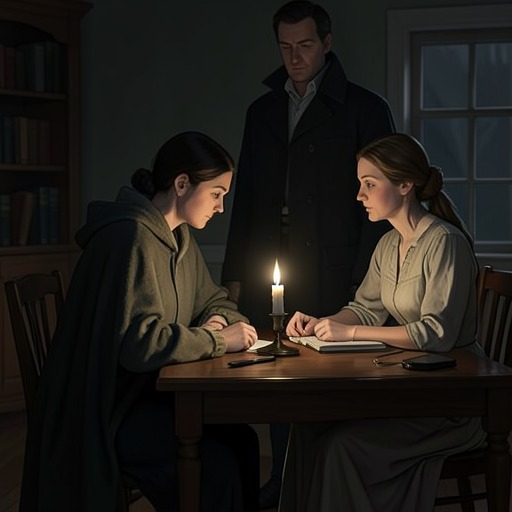
Once the Parlement of Paris announced its inquiry, Jean de Carrouges and Jacques Le Gris prepared testimony in writing, as the court required. Marguerite de Carrouges, although women could not initiate criminal charges on their own, gave evidence as the chief witness. The official record confirms that she made a deposition or oath before the court and was questioned repeatedly about her accusation. Le Gris’s own account places her before the king and the assembled Parlement during the inquiry; by then, in mid-July, she was six months pregnant.
The three parties spoke in their native Norman French, but no transcript of their oral testimony survives. Instead, a professional court scribe rendered a detailed summary into Latin. The account survives in a unique manuscript copy, nearly ten densely written folio-sized pages in faded brown ink. It sets out Jean de Carrouges’s itemized charges, based on his wife’s sworn testimony, and then gives Le Gris’s lengthy defense. In recounting the history between the men, Jean emphasized that he had trusted Le Gris as a close friend and had named him godfather to his firstborn son; he also described their earlier meeting with Marguerite at Jean Crespin’s home, where he had asked her to kiss Le Gris as a gesture of peace and friendship.
The Record’s Evidentiary Limits
The official summary preserves the parties’ competing accounts, but it does not settle the central question of what happened. A separate perspective survives in the diary of Jacques Le Gris’s lawyer, Jean Le Coq, who recorded considerations both for and against his client as the inquiry continued. Among the points against Le Gris, he noted that Marguerite de Carrouges never relented in affirming that the assault had occurred. Her persistence, despite the denials and counterclaims, made an impression on the lawyer, but it did not itself resolve the conflict between the testimony and the defense.
Le Coq also recorded evidence offered in Le Gris’s favor: many knights, the lawyer wrote, swore they had seen the squire with Count Pierre of Alençon throughout the day in question. Yet Le Coq’s notes do not turn that alibi into a conclusive answer. He added that some people said Le Gris refused to confess because a confession would bring scandal upon his sons and friends, particularly after Count Pierre had declared him innocent. The diary thus preserves both the defenses advanced for Le Gris and the possibility that loyalties and reputations shaped what people were willing to say.
The lawyer’s position gave him unusual access to the proceedings and to his client, but not certainty. He recalled Le Gris asking whether he doubted him after noticing him thinking, a moment that records suspicion without establishing guilt. Le Coq’s final assessment was more guarded still: “no one really knew the truth of the matter.” Read alongside the official summary, his diary makes the record’s value and its limit visible at once: it documents testimony, argument, and contemporary doubt, while leaving the underlying event contested.
Later Interpretations and the Case’s Afterlife
The case acquired competing endings almost at once. Jean Froissart, writing around 1390, said that the king, his court, and the spectators rejoiced at the duel’s outcome; Jean Le Coq, whose account came from his role as Le Gris’s lawyer, described reactions as divided, with some regarding Carrouges as vindicated and others believing Le Gris had been unjustly killed. A Latin chronicle compiled at Saint-Denis roughly ten or fifteen years after the events offered a different resolution: Marguerite had accused Le Gris mistakenly but in good faith, it claimed, and a condemned felon later confessed. In the 1430s, Jean Juvénal des Ursins repeated the story in a French chronicle, changing the supposed confessor into a sick man on his deathbed. The later versions preserved the same consoling pattern—a mistaken accusation, an unjust death, and a revelation too late to undo the punishment—even as their details shifted.
The surviving evidence, however, makes that explanation difficult to accept. Marguerite’s account identified two alleged attackers, while the later tale of a confession concerned only one; Adam Louvel, moreover, reportedly confessed to nothing, even under torture. The record also preserves the weakness of an alternative theory that Marguerite knowingly fabricated the charge, alone or under pressure from her husband. Naming Louvel as well as Le Gris added another accusation to prove and another possible alibi to overcome, making the claim more vulnerable rather than simpler. Marguerite testified that she saw both men clearly, heard Louvel name Le Gris before he appeared, and spoke with them before the attack; the account therefore considers mistaken identity unlikely, while acknowledging that the case cannot be conclusively resolved.
In the eighteenth century, the story of the supposedly innocent Le Gris served a new argument. Enlightenment writers used the case to condemn judicial combat as a barbarous and superstitious practice; the Encyclopédie (1767) repeated the mistaken-accusation story, and Voltaire cited the duel as an example of judicial combat as “an irrevocable crime.” Louis Du Bois revived the legend in a popular history of Normandy in 1824, adapting the Saint-Denis account and embellishing its ending: Marguerite, he said, became a nun and died in remorse. Across these retellings, the record’s unresolved evidence repeatedly gave way to a neat moral conclusion, demonstrating how later accounts could turn uncertainty into a durable story about the duel’s justice or injustice.
Jurisdiction and the Shape of the Case
The Parlement’s inquiry followed a local hearing in which Count Pierre of Alençon, Jean de Carrouges’s lord and Jacques Le Gris’s known favorite, had first considered the accusation. Count Pierre questioned two nobles, Bernard de La Tour and Jean Crespin, who reported that Jean and Marguerite had spoken of the alleged attack and wished to seek justice; he then assembled a court of prelates, knights, councillors, and other experienced men. The couple did not appear on the appointed day. Count Pierre ordered Adam Louvel, named as Le Gris’s alleged accomplice, detained and proceeded to a verdict exonerating Le Gris. The law allowed a vassal who believed his lord had delivered an unjust judgment to appeal to that lord’s overlord, so Carrouges could take the case to the king’s court in Paris. This path mattered because the original forum was not neutral: Count Pierre was obliged to judge fairly but had a close tie to Le Gris, while Le Gris’s clerical status offered a possible route to church jurisdiction and away from a duel. The record’s account of the case therefore belongs to a layered legal process in which personal allegiance, status, and choice of court shaped the available avenues for proof and appeal.