Dathomiri Gender Hierarchy
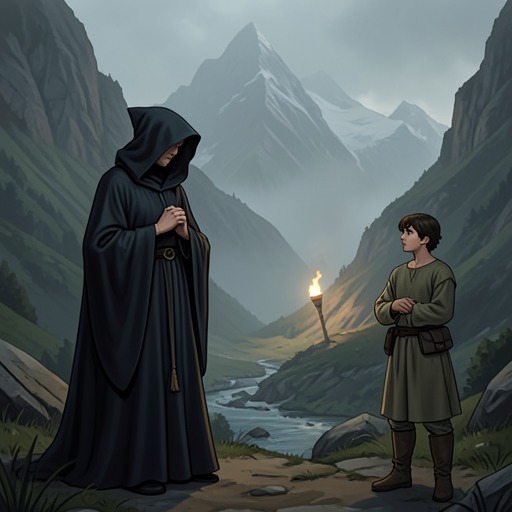
The Last JediThe Dathomiri Gender Hierarchy is a system of female authority and male subordination that treats men as incapable of channeling the Force. In Magash Drashi’s encounter with Jax Pavan, a male Jedi, its central assumptions become newly visible: what her culture regards as an inherent limit may instead be a limit imposed by custom, fear, and the refusal to let men try. The conversation unsettles Magash without resolving the hierarchy or showing that it has changed.
Structure and Assumptions
Within Magash’s culture, women hold authority while men are assigned subordinate roles as food gatherers, workers, and breeding stock. This ordering is not merely a division of labor: men are regarded as inferior beings, with little freedom and no recognized claim to develop their own capacities. Magash initially applies that framework to Jax, whose gender marks him as an outsider in a world where men are not expected to possess power or autonomy.
The hierarchy also governs what Magash believes about the Force. She has been taught that men of her clan cannot channel it, and she considers the idea so implausible that a male adept seems almost inconceivable. Her first interest in Jax is therefore a mixture of fascination and cultural distance. She senses the Force in him, sees him summon and activate his Jedi weapon, and wants to understand how he can use the Force without casting spells. What she witnesses does not fit neatly within the categories her upbringing supplies.
Magash’s attraction to Jax adds another dimension to that encounter, but it does not displace her intellectual curiosity. She recognizes that, among the men of her village, she might have considered him as a mate; more strikingly, she comes to recognize the Force adept she has been speaking with. The prospect of a male companion in the Force forces her to imagine a relationship between men and women that her own social order does not provide.
Jax Pavan’s Challenge
Jax makes the hierarchy concrete by asking Magash to consider what his life would mean if he had been born on Dathomir or exiled there. Despite his Jedi training, he says, he would have been made a slave, denied freedom and prevented from channeling the Force. His potential would be blocked not only as an adept but as a sentient being; the clan, too, would lose whatever he might have contributed. His argument shifts the question from whether Dathomiri men are known to use the Force to whether the culture has ever permitted them to discover that ability.
Magash initially falls back on the lesson she has learned since birth: men of her clan cannot channel the Force. She also defends their subordination by arguing that they are little better than beasts and that, if taught to use the Force, they would turn it against one another and against women. Jax counters with the evidence of his own conduct, asking whether he has used his ability against her. His response does not prove that every man would use power harmlessly, but it exposes the weakness in treating feared behavior as justification for denying an entire group the chance to develop.
The exchange also reveals the unequal freedom attached to gender. Jax explains that, among the Padawans with whom he grew up and trained, there were males and females from many worlds and cultures. On Dathomir, he would instead be classified as inferior and deprived of the opportunity that those other students had. Magash recognizes that Jedi males may train and teach the Force on terms unavailable to men in her society. The contrast makes the hierarchy appear not universal or inevitable, but specific to the rules her people have inherited.
Fear, Custom, and the Limits of Knowledge
Jax asks what prevents the Dathomiri sisterhoods from doing what the Jedi Order has done: teaching adepts of all genders to channel the Force. Magash has no answer, in part because she has never considered the question. That absence matters. Her inherited certainty has not been tested against a different practice; it has functioned as a boundary around what she could imagine asking.
She begins to consider whether male inhabitants of Dathomir might possess latent Force abilities that wither because they are forbidden to develop them. She also wonders whether Augwynne Djo, or Magash herself, would recognize such potential in a man nearby. Perhaps they have simply never encountered it; perhaps the expectation that no ability exists, combined with fear of the consequences, ensures that none is found. The hierarchy may thus sustain its own premise: it denies men the opportunity to demonstrate an ability and then treats the absence of demonstrated ability as confirmation that men lack it.
Magash’s resistance does not vanish when these possibilities occur to her. Jax’s account makes her angry, and her first response is to defend the rule she knows. Yet the sadness she sees in his eyes stops her from answering at once. She has to choose between examining ideas that disturb her and retreating into an unruffled ignorance. Her inward question about whether this retreat is truly the way of the Singing Mountain Sisterhood marks the challenge as more than a debate about training: it concerns what a community must refuse to know in order to preserve its customs.
Unresolved Challenge
The encounter leaves Magash questioning a system she has never previously questioned, but it does not show her rejecting it or changing the status of Dathomiri men. After reflecting on the possibility of suppressed male ability, she turns back toward the ruins and sees Jax moving at the base of the fallen black spires. A shiver passes through her, and she recognizes fear. The scene ends at that point of recognition, with no assurance about what she will do next.
The hierarchy’s significance in this episode lies in the way social prohibition and belief reinforce one another. Men are subordinated because they are presumed incapable of the Force, while the prohibition on their training makes that presumption difficult to test. Jax’s presence supplies Magash with a counterexample from beyond her society, but his argument also asks her to consider the men within it as unrealized possibilities rather than a naturally inferior class. Her uncertainty opens a breach in the logic of the hierarchy; the fear at the scene’s end shows how far that breach remains from becoming change.