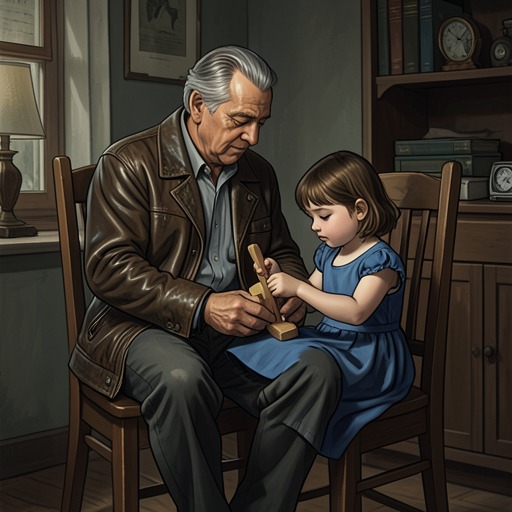
“You can’t tell people to trust you. You have to show them that they can.”
The Last Thing He Told Me“You can’t tell people to trust you. You have to show them that they can” gives language to a change in Hannah’s understanding of how trust is built: it cannot be secured by reassurance alone, but has to take shape through what a person does when another is vulnerable. The expression connects Hannah’s resolve to protect Bailey with the harder question of whether Bailey can believe her, and later acquires an uneasy echo when Hannah performs confidence in a promise she does not truly trust.
Form and Meaning
The expression opposes two ways of approaching trust. Telling someone to trust is an appeal made in words; showing them they can trust is a test answered through conduct. The distinction matters because Bailey has reason to question what she has been told. Her father’s deception reaches beyond a single secret: she asks whether her name and identity were changed too. In that situation, reassurance cannot by itself settle what is true or make her feel safe. The expression instead makes trust conditional on actions that can be observed over time.
Its second sentence shifts the emphasis from the person asking to be trusted to the person deciding whether trust is warranted. The claim does not say that belief can be demanded, or that a promise automatically repairs a breach. It identifies an obligation on the would-be trusted person: to act in a way that gives the other person grounds to rely on them. The statement is therefore both an insight about relationships and a standard Hannah applies to her own behavior.
Hannah’s Recognition
Before Hannah states the expression directly, she arrives at its principle while looking at Bailey’s vulnerability. Hannah recognizes that she has been trying to connect by being nice and sweet, as if enough gentleness would prove that Bailey could count on her. She sees the flaw in that approach: the decisive evidence is not how someone behaves when there is energy to be pleasant, but what they do when both people are tired and kindness takes effort. Trust becomes visible in those difficult moments.
That recognition leads Hannah to a concrete commitment. She resolves to do what her grandfather did for her and to do whatever it takes for Bailey to feel safe. The shift is from managing how Bailey sees her to taking responsibility for Bailey’s security. It does not erase the reasons Bailey may doubt her; it gives Hannah a way to respond without pretending that affection or good intentions alone can settle the matter.
The moment also places the principle beside an unanswered question. Bailey asks why her father lied about who her mother is, and Hannah has no good answer. When Bailey says she is unsure whom to trust, Hannah answers, “Me.” This is a personal offer, not an explanation of the family’s history. Hannah cannot make the concealed facts less disturbing in that instant, but she can identify herself as someone Bailey may test through what happens next.
A Principle Put to the Test
Hannah’s fuller formulation follows Bailey’s uncertainty. Bailey bites her lip, perhaps believing Hannah or perhaps only beginning to do so. Hannah recognizes that this tentative response is more than she could have hoped for, while also acknowledging that she has not had enough time to demonstrate reliability. The expression’s insistence on showing, rather than asking, makes that lack of time important: a declaration can begin an attempt at trust, but cannot substitute for the actions still needed to support it.
The surroundings sharpen the urgency. Doormen are watching the two of them, and Hannah feels the need to get Bailey out of Austin immediately. She tells Bailey to come with her. The offer of trust is thus attached to an immediate protective action, not left as an abstract promise. At the same time, the scene does not establish that Bailey’s trust is complete or that leaving resolves the danger. Its significance lies in Hannah’s recognition of what she must do, not in a guarantee that one exchange has repaired everything.
The Later Irony
The principle returns in a different emotional register when Hannah speaks with Grady Bradford after Bailey has been found safe. Grady describes relocation as the best course, assures Hannah that Bailey will become comfortable, and says they will bring Owen to her when he reemerges. Hannah smiles back as though she trusts his account: that Owen is still gone because he is ensuring their safety, and that relocation will let father and daughter be together safely.
But Hannah’s own description makes the smile a performance rather than proof of confidence. She says she smiles as if she trusts Grady, and as if she trusts that anyone can keep Bailey safe except herself. The moment creates a pointed contrast with the expression: Hannah knows that trust should be demonstrated, yet here she presents its outward sign while inwardly doubting both the promise and her own ability to protect Bailey. The scene does not show her declaring that Grady has earned her trust; it shows her choosing what to display while she feels powerless.
Across these moments, the expression does not function as a simple assurance that trust will follow from good intentions. It sets a demanding measure: reliability must be demonstrated under strain, and a person’s words may get ahead of what their actions have yet proved. Hannah’s understanding of that measure motivates her care for Bailey, while her later performed smile exposes how difficult it is to feel secure when safety and reunion depend on others.