Carole
The Last Thing He Told MeCarole’s lasting significance lies in the way her chosen absence shaped Hannah Hall’s understanding of abandonment and care. After leaving Hannah largely in her grandfather’s hands, Carole became the example against which Hannah measures the pain of losing a mother—and the kind of responsibility she wants to take toward Bailey Michaels.
Family Background and Early Absence
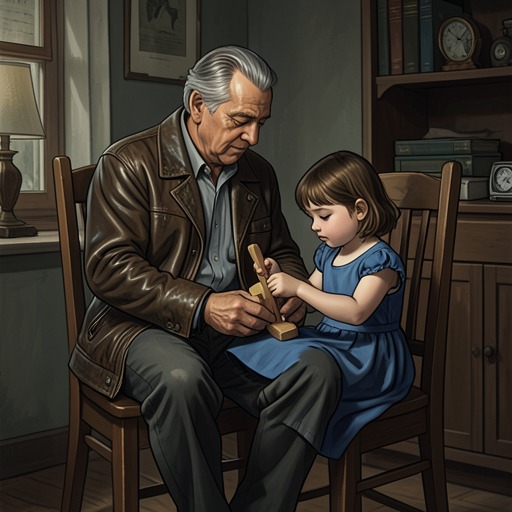
Carole and Hannah’s father, Jack, were largely uninterested in raising their daughter; their attention centered instead on Jack’s photography career. He traveled for work 280 days a year and, when he had time off, stayed at his family’s ranch in Sewanee rather than making the two-hour trip to Hannah’s grandfather in Franklin, Tennessee. Hannah’s grandfather consequently became the steady presence in her childhood, raising her mostly on his own.
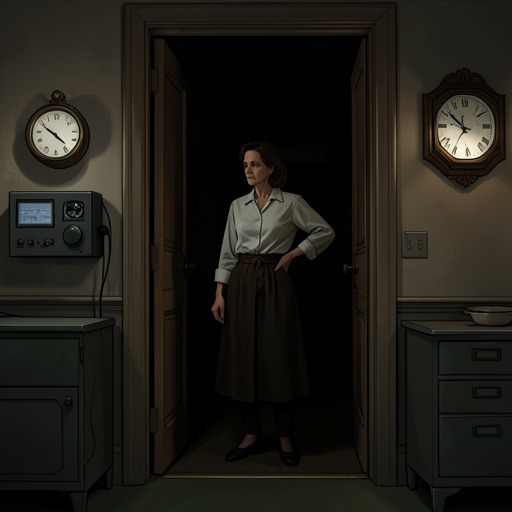
Shortly after Hannah’s sixth birthday, Jack left Carole for his assistant, Gwendolyn, who was twenty-one. Carole pursued him until he took her back, then stopped coming home and left Hannah with her grandfather full-time. The sequence gives Carole’s absence a specific shape: Hannah was not simply deprived of consistent parental care, but left behind as her mother followed the adult relationship that had displaced her.
The Final Departure
Carole’s last departure did not announce itself as permanent to Hannah. She sat on the edge of Hannah’s bed, brushed the hair from her face, and said she had to go to Europe because Jack needed her there. She told Hannah they would see each other soon. Since Carole had repeatedly come and gone before, Hannah understood this as another temporary absence and did not recognize the finality concealed in the promise.
In practice, Carole returned only for an afternoon or evening about twice a year, never staying overnight. Hannah later understands that she had misread the language of departure: the promise to see her soon did not mean Carole would resume a mother’s place in her life. It meant that the relationship would continue only in brief, intermittent visits. Hannah describes the result as losing Carole, even though Carole had not disappeared entirely.
Hannah’s Understanding of the Loss
Hannah does not present her childhood as a simple story of deprivation. She acknowledges that her mother’s near-disappearance hurt, but, looking back, believes Carole’s decisive exit spared her the uncertainty of wondering whether she could somehow make her mother stay. Her grandfather, by contrast, gave her dependable care: he made dinner each night, waited for her to finish, read stories to her before bed, and let her watch him work. Hannah’s recollection therefore holds two truths together: Carole’s choice wounded her, and life with her grandfather was happier and more secure.
That history informs Hannah’s response to Bailey, whose mother’s absence came through tragedy rather than choice. Hannah recognizes that the causes differ but believes the losses can leave a similar imprint: a child must learn to move through the world without the person who should be watching over her. Hannah wants Bailey to draw closer to her for reasons beyond her marriage to Owen Michaels. Her own experience makes that wish emotionally urgent, while also alerting her to the particular vulnerability behind Bailey’s distance.
Legacy in Hannah’s Care for Bailey
Carole is present in the novel’s later family conflicts chiefly through the contrast between abandonment and deliberate care. Hannah’s determination to protect Bailey recurs as a guiding concern while Owen is absent. When she negotiates with Nicholas Bell, she places Bailey’s safety ahead of any personal advantage and offers to preserve the possibility of a relationship between him and his granddaughter without deciding that relationship for Bailey. Hannah says Bailey should determine how much and how often she sees Nicholas, while Hannah will make sure the child understands that the conflict does not mean he does not care about her.
This approach differs from the uncertainty Hannah experienced as a child. She does not promise Bailey that every loss can be undone; when Bailey asks whether Owen is coming back, Hannah answers that she does not think he can. She recognizes that Bailey’s sadness may give way to anger and grief, and commits herself to keeping that grief from becoming despair. Carole’s departure thus remains part of Hannah’s history, but it does not dictate her conduct: Hannah uses what she learned from being left to make room for Bailey’s feelings, safety, and choices.