Carole’s permanent departure from Hannah’s life
The Last Thing He Told MeCarole’s permanent departure from Hannah Hall’s life is the childhood loss that teaches Hannah to scrutinize the difference between a promised return and an actual commitment. Carole had already been largely absent from her daughter’s upbringing; when she finally left, she described the separation as temporary. Hannah understood only later that the departure was permanent in every meaningful sense. The episode links an intimate family history to Hannah’s adult vigilance about abandonment and to the care she takes on for Bailey Michaels.
Causes and Background
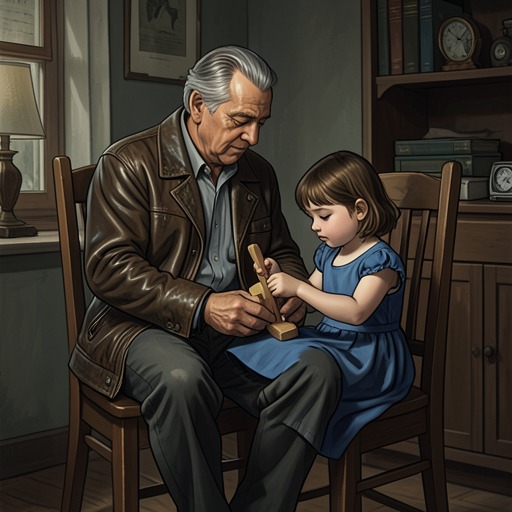
Hannah’s parents, Jack and Carole, were largely absorbed in Jack’s photography career rather than raising her. Jack traveled for work 280 days a year. When he was home, he stayed at his family’s ranch in Sewanee instead of making the two-hour drive to Hannah’s grandfather in Franklin, Tennessee. Hannah barely knew her father, while her grandfather became the consistent adult in her life.
Shortly after Hannah’s sixth birthday, Jack left Carole for his assistant, Gwendolyn, who was twenty-one. Carole pursued Jack until he took her back, then left Hannah in her grandfather’s care full-time. That earlier change established a pattern of Carole coming and going, sometimes leaving Hannah with her grandfather for nights or longer stretches without a clear goodbye. The final departure therefore occurred against a history of separations, but its permanence was not announced plainly.
Hannah does not frame the outcome simply as a story of deprivation. She recognizes that being left hurt, yet, looking back, she also considers Carole’s departure a favor in one respect: it ended the uncertainty about whether Hannah could somehow make her mother stay. In Hannah’s later understanding, Carole’s exit made the limit of her commitment unmistakable, even though Hannah could not recognize that meaning at the time.
The Final Departure
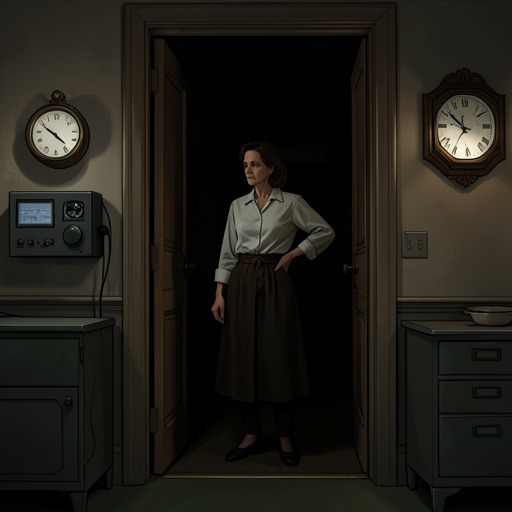
When Carole left for good, she sat on the edge of Hannah’s bed and brushed the hair from her face. She said she had to go to Europe because Jack needed her there, and told Hannah they would see each other soon. Hannah took those words literally. Since Carole had repeatedly come and gone before, “soon” sounded like another interval rather than a final separation.
The promise did not prove to mean a return to ordinary family life. Hannah recalls seeing Carole only about twice a year, for an afternoon or an evening, and never overnight. The contrast between the tenderness of that bedside gesture and the limited contact that followed gives the departure its particular force: the scene offered reassurance, but the years afterward supplied its real meaning. Hannah did not miss the departure itself so much as the finality concealed within its language.
Memory and Its Consequences
As an adult, Hannah describes the childhood departure as a failure to recognize what was happening. She remembers the earlier nights when Carole slipped away, the days or weeks without a return, and the occasional phone call or check-in. Because those absences had been followed by renewed contact, Hannah did not understand that the last promise to see her soon meant Carole would not return in any substantial way. She eventually names the loss as something she had failed to see, and makes a private resolve not to miss such a departure again.
That resolve complicates Hannah’s response when Owen Michaels disappears. She is angry that he has left her to manage the crisis alone and does not claim certainty about his guilt. Still, she rejects the idea that he would abandon Bailey or flee merely to save himself. Hannah’s conviction that Owen would leave only if Bailey were in danger is set beside her memory of Carole: she knows what it is to mistake an exit for a temporary absence, and the fear of repeating that mistake makes her inspect Owen’s disappearance closely. Her belief is not presented as proof of his innocence; it is a judgment shaped by what she knows of his love for Bailey and by her own history of being left.
Later Echoes in Care and Family
Hannah’s childhood experience also gives context to the insecurity she feels about Bailey’s place with her. During the crisis, she worries that because she is not Bailey’s blood relative and has not adopted her, the state could remove the child while Owen is missing. A later discussion of Owen’s guardianship arrangements confirms that he named Hannah as Bailey’s primary guardian in the event of his death or inability to care for her. The provision matters to Hannah not only as legal protection but as evidence that Owen entrusted her with Bailey’s care.
The contrast is significant without making Hannah’s later choices a simple reversal of Carole’s. Hannah’s story begins with a child trying to decode an adult’s departure; her adult role requires her to provide Bailey with steadier care and to make room for the child’s own wishes. When negotiating with Nicholas Bell about contact with his granddaughter, Hannah says Bailey should decide how much and how often she sees him, while Hannah will ensure that Bailey understands the history has nothing to do with how Nicholas feels about her. The priority is not to erase family ties, but to keep Bailey from bearing the blame for adult actions.
The departure’s lasting significance lies in this tension between loss and discernment. Hannah cannot undo the years in which Carole’s meaning remained unclear, but she can attend to what a child is being told, what care is actually provided, and who is allowed to remain family. Her memory does not make her infallible: it makes her alert to the possibility that a reassuring promise may conceal an ending, and determined to respond to Bailey with care rather than leave her to interpret absence alone.