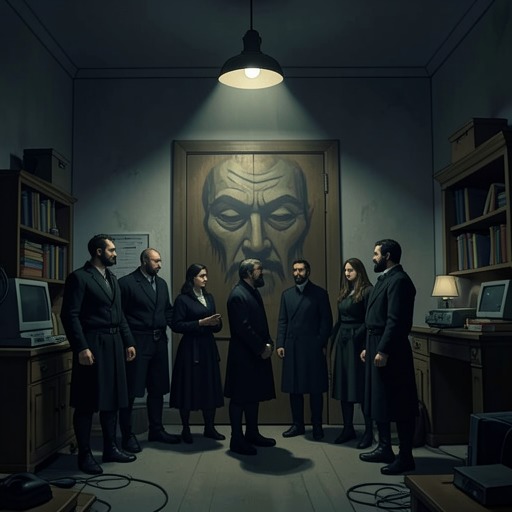
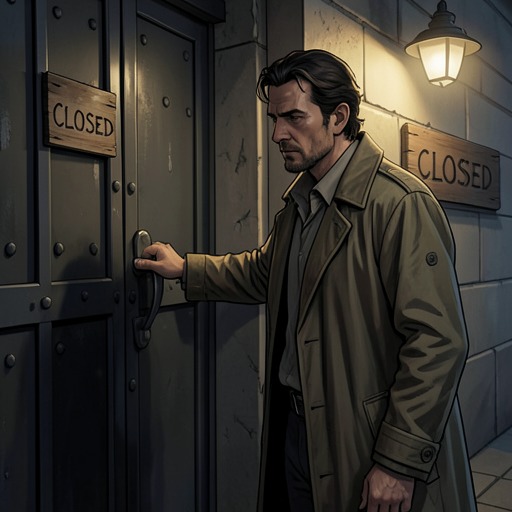
Owen and Bailey disappear and assume new identities
The Last Thing He Told MeOwen and Bailey disappear and assume new identities after a criminal trial turns a family’s private loyalties into public evidence. The disappearance is both an escape from the consequences of the Bell family’s criminal world and the origin of the concealed past that later threatens Owen’s life with Hannah Hall and Bailey Michaels. The novel reveals the event retrospectively: Hannah pieces together that the man she knows as Owen Michaels was once Ethan Young, and that the daughter who vanished with him was Kristin, later known as Bailey.
Criminal history and the break with the Bell family
Before the disappearance, Ethan Young was married to the daughter of Daniel Nicholas Bell, also known as D. Nicholas Bell. Bell was a lawyer whose work defended men involved in criminal organizations. Ethan accepted his father-in-law’s work through a mixture of need, love, and fear, although he understood his allegiance as loyalty. That distinction becomes consequential after his wife dies. Her death changes his relationship to the family and its business: he grows angry with his wife’s relatives, with her father, and with himself for having ignored what he knew in the name of love and loyalty.
The account Hannah uncovers describes a father who had loved his daughter and was devastated by her death, not a man who had wanted her harmed. But grief does not undo the danger or the knowledge inside the family. Bell’s son-in-law knows information Bell had trusted him to keep private. Angry and no longer willing to protect the arrangement, Ethan turns state’s evidence against his father-in-law. He becomes the lead witness in a case that sends Bell to prison and implicates eighteen members of the organization in the sweep. The betrayal is simultaneously legal testimony and a severing of family allegiance: Ethan uses what intimacy has taught him to help dismantle the world he had once accepted.
The disappearance and the identities left behind
After the trial, Ethan and his small daughter disappear and are never heard from again under those names. The girl, Kristin, is young enough to retain only a couple of memories of her mother and grandfather. The account offers no detailed itinerary or mechanics for their departure; what it makes clear is the finality of the break. Father and daughter leave behind their previous names, family history, and any ordinary public trace by which those left behind might find them.
Hannah’s discovery connects that disappearance to the later lives she has known: Ethan Young is Owen Michaels, and Kristin is Bailey Michaels. Their assumed identities are not presented as a fresh beginning free of consequence. The concealment protects a father and daughter from the past, but it also means that Owen’s wife and stepdaughter encounter a history he has not shared with them. Owen’s disappearance from his later home, in turn, makes the old act of vanishing feel less like a closed chapter than a pattern capable of recurring. The novel’s revelation therefore changes the meaning of the family’s present: Bailey’s missing childhood memories and Owen’s absences belong to a history older and more dangerous than Hannah initially understood.
The past returns as a present threat
Years later, the fraud crisis surrounding The Shop makes Hannah fear that the forces closing in on Owen may reach the family. In a busy hotel café, she watches news coverage of Avett Thompson being arrested, a preview of Belle Thompson defending him in an interview, and repeated warnings that further indictments are coming. The broadcasts turn the investigation into a public countdown. Hannah thinks that whatever Owen is running from may be about to catch him, and that he has left her to try to stop it for him.
She reviews what Grady Bradford told her and considers his suggestion that Owen may have erased his online history. The possibility seems wrong to her, but it directs her toward another kind of evidence: what Owen has revealed unintentionally to the people closest to him. This inference matters to the earlier disappearance because it frames identity as more than a name or a record that can be deleted. Shared life leaves knowledge behind. Hannah’s effort to understand Owen proceeds through what he has told her without meaning to, even as his old identity makes clear how much can remain hidden.
Guardianship and the family made by care
The disappearance also has consequences for who can protect Bailey if Owen is absent. Grady Bradford says he has contacted Thomas Shelton, a family-law specialist in California, to help secure temporary custody for Hannah if someone seeks custody during the crisis. Hannah’s relief is sharpened by her legal vulnerability: she has not adopted Bailey, they are not blood relatives, and Owen is Bailey’s only legal guardian. His disappearance thus threatens to turn emotional separation into a question of whether Hannah may remain responsible for the child she has been raising.
Owen’s will gives Hannah a more enduring place in Bailey’s life. It names her Bailey’s primary guardian not only if Owen dies but also if he becomes unable to care for his daughter himself. Hannah understands this as evidence that Owen had prepared for some kind of danger and trusted her to care for Bailey. The arrangement cannot bring him home or explain everything he concealed, but it establishes that their family bond has legal as well as lived significance. The story places blood relation, legal authority, and sustained care beside one another rather than treating them as interchangeable.
A disappearance with no simple restoration
When Hannah later confronts Nicholas Bell, the old disappearance remains part of the choice before the family. She argues that Owen uprooted his life to keep Bailey away from her grandfather and that Nicholas must understand the possibility of losing contact with her again. The alternative she names is WITSEC and another beginning in which Bailey would no longer be able to remain her granddaughter. Nicholas reacts strongly, and Hannah’s proposed bargain is that he use his influence to keep others from interfering with their lives.
Hannah does not promise Nicholas unrestricted access to Bailey. She says Bailey will decide how much and how often she sees him, while Hannah will make sure the girl understands that much of what happened is separate from how Nicholas feels about her. The future relationship remains conditional on Bailey’s wishes and on the adults’ ability to protect her. This ending does not erase Ethan and Kristin’s disappearance or restore the family arrangement that preceded it. Instead, it shows its continuing cost: every possible reunion must be weighed against the risk of another forced departure, while Bailey’s own identity and choice become central to whether kinship can be renewed.