
The Politics of Theft
The Legend of William OhThis flow follows William Oh’s changing relationship with loot, ownership, inheritance, and the moral ambiguity of taking from the dead.
increasing Bearing strength in each event
 decreasing
Bearing strength in each eventdecreasingThe First Relic
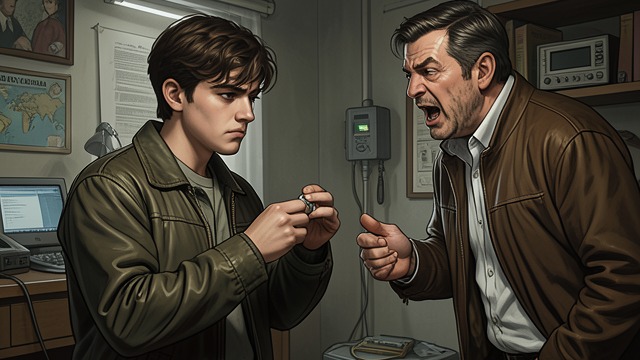
The First Relic
A Small Treasure
Ben buys the Sting Ring with money he earned himself. Its weak acid effect is less important than the feeling of owning a first Relic.
Ownership and Identity
William Oh mocks the ring’s limitations, but Ben treasures it as evidence of personal effort. The exchange reveals how possessions carry emotional value beyond utility.
A Future Echo
The ring later survives Ben’s death and becomes part of Will’s hidden arsenal. An object dismissed as minor acquires significance through the relationship surrounding it.
Looting the Yeti Cave
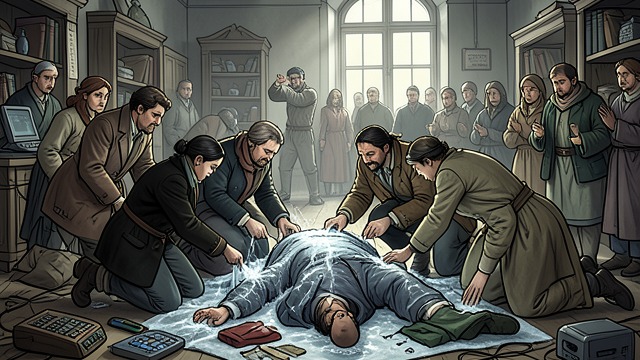
Looting the Yeti Cave
Wealth in the Ice
William Oh’s Party gathers Relics from the corpses of a failed group. The items are valuable because the dead cannot contest ownership.
Ethical Tension
Steve Holland warns that Alicia Zodiac’s equipment belongs to a powerful family. Will could keep everything under Finders Keepers, but doing so would lose a potential political favor.
Choosing Leverage
Will decides to return Alicia’s body and equipment, treating the loot as a means of building influence rather than immediate profit.
The Castle Office
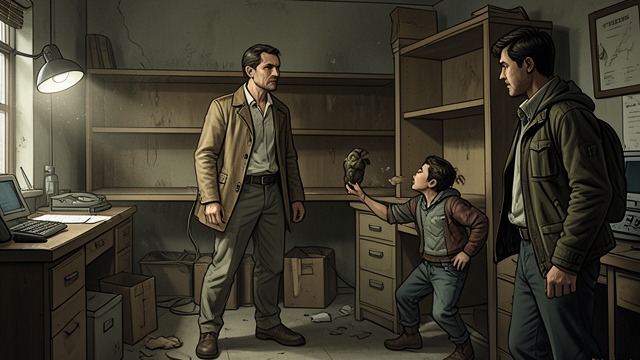
The Castle Office
An Empty Shelf
William Oh finds that someone has already taken the most important Relic from the Lord’s office. The remaining items feel like abandoned wealth rather than true power.
Inheritance Rejected
Travis Oilton resists Will’s claim to the loot, but cannot prove what remains belonged to his family. The dead Lord’s property becomes contested territory.
Necessary Theft
Will takes Relics for his Party and the Bullet Wasp Larva for Loth. Survival and obligation justify theft without making it morally clean.
The Shared Pile
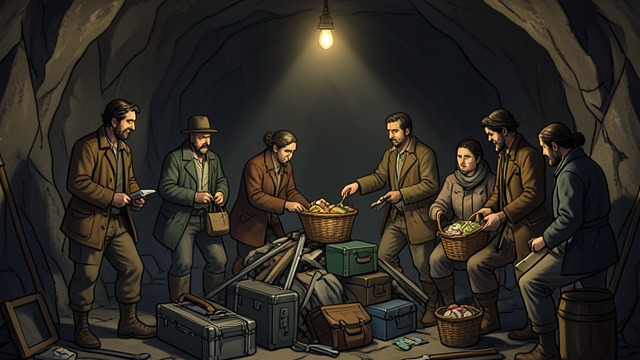
The Shared Pile
A Collective Settlement
William Oh, Loth, Carrie, Travis Oilton, and the others divide the recovered equipment. The process turns a dangerous expedition into a temporary economy.
Build Before Sentiment
Each person chooses according to synergy, stats, or future use. Even sentimental claims are subordinated to survival needs.
Equality Under Scarcity
The round-robin method prevents the strongest personality from taking everything. It creates trust because the rules are visible and repeatable.
Throne and Bread
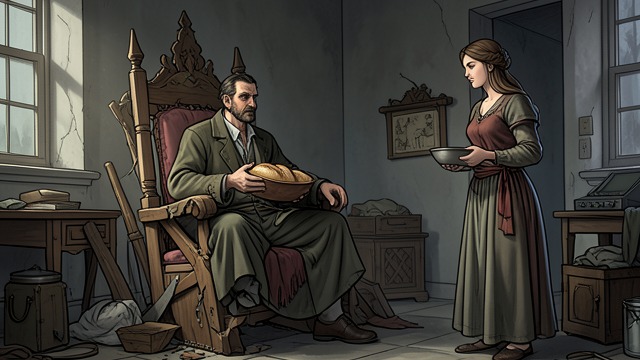
Throne and Bread
Accidental Authority
William Oh sits on the dead Lord’s throne while eating Brianna’s bread bowl. The gesture is accidental, but the room reads it as a claim.
Symbolic Ownership
The throne links food, rule, and possession. Will’s hunger places him in the position of a ruler before he consciously accepts the image.
A Dangerous Joke
His declaration that he is William Oh turns an accident into a public identity. The scene foreshadows the political consequences of his instinctive behavior.
during Ben’s first week of hunting
during Ice Caves Expedition
during the first exploration of Travis Oilton’s family castle
during the splitting of Oilton’s castle loot
after Brianna’s first meal in Oilton castle
