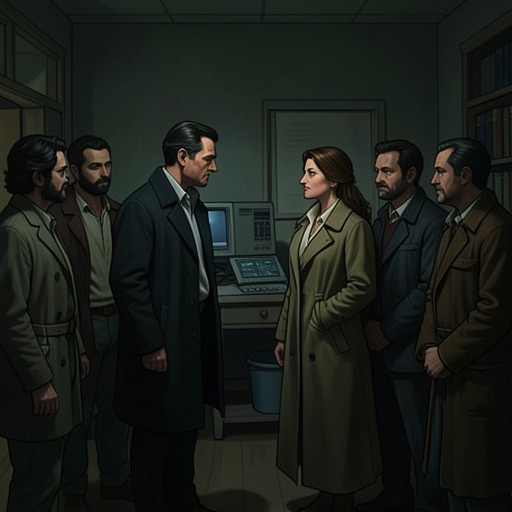
Alton Oil City Explosion
The Legend of William OhThe Oilton explosion is the decisive catastrophe of the operation against the Tangled in Oilton. Planned as a controlled combination of fire, steam, and trapped monsters, it becomes a city-wide inferno when an over-pressured oil line ruptures beneath the castle. The event transforms a tactical purge into the destruction of Oilton itself, while revealing that victory achieved through environmental systems and indirect force can carry a hidden cost: Loth survives the blast, but the damage activates the Wyrd family’s Thorn effect and nearly kills him.
Causes and Preparation
After learning that the Tangled population had risen from just below nine thousand to thirteen thousand in three days, Loth identified the infestation as a rapidly escalating threat rather than a static monster population. The reported growth rate of 14.28 percent per day made delay increasingly dangerous. The Tangled’s method of reproduction explained the figures: one creature collapsed, writhed, and produced a second Tangled from its own body within seconds. Their numbers were therefore tied to a self-propagating biological process, not merely to an approaching army.
The group also found direct evidence that the city had been deliberately doomed. Steel cages disguised as merchant wagons surrounded the water tanks, their coverings stripped aside and their doors open toward the reservoirs. The cages had evidently held Tangled until someone released them inside Oilton. Will concluded that an outside force had planted the monsters, likely to conceal the theft of a single Relic, and the discovery converted the infestation from a natural hazard into an act of deliberate sabotage.
The response was designed around Oilton’s infrastructure. Travis was assigned to lure the swarm of fire-motes, while Will, Loth, and Carrie entered the water tanks and rigged them to explode. Loth intended to create a steam explosion by restricting the water flow, allowing natural heat to rebuild pressure before releasing the water at the chosen moment. He prepared wire and springs from his satchel and selected fireproof rope for the mechanism. The plan depended on timing several nonhuman forces at once: the Tangled sleeping in the water tanks, the fire-motes moving toward their target, heated water under pressure, and the oil lines running through the city.
Course of the Explosion
The trap first announced itself through a blinking light at the top of the water tower. Will saw steam beginning to billow from the engines, gradually increasing pressure in the oil lines. The machinery made the danger measurable before the destruction became visible: pressure accumulated quietly while the group waited, turning an apparently contained operation into a system approaching failure.
About half an hour later, while Will and Loth were discussing Build strategy, Oilton exploded. The first rupture occurred beneath the castle. The over-pressured main line burst, and the castle erupted in burning oil. Its structure shattered, throwing flaming boulders in every direction as a fireball rose above the mountain and dwarfed it. Will felt the heat from where the group watched, making the blast a physical presence even before the city itself was consumed.
The destruction then propagated through the town. Flaming boulders landed in the streets, rupturing additional oil lines and flooding the roads with burning oil. Smoke and fire spread across Oilton until the entire city was engulfed. The result was not the limited detonation of the water tanks that the operation had been expected to produce, but a cascading infrastructure failure in which each rupture created the conditions for the next. A local trap became a chain reaction, and the city’s own energy network supplied the force of its destruction.
Participants and Immediate Cost
Loth was the central engineer of the operation, but the event depended on coordinated roles. Travis served as the lure for the fire-motes, while Will, Loth, and Carrie worked inside the water-tank complex. The earlier observation that the Tangled liked to sleep in the tanks gave the plan its target, and the steel cages surrounding the reservoirs provided evidence that the creatures had been placed there intentionally. The operation therefore combined investigation, field engineering, baiting, and sabotage rather than relying on direct combat.
The explosion’s success immediately endangered its architect. A separate blast went off beside the watching group, and Will saw Loth stagger backward with his clothes burned away and his scales on fire. Will caught him before he struck the ground, ignoring the flames crawling up his own arm. Loth’s scales continued burning as though the heat radiated directly from his body, and he remained unresponsive until he coughed smoke and drew breath. Travis identified the cause as the Thorn effect associated with the Wyrd family. The effect had been triggered by indirect damage, something Travis admitted he had never known to happen, turning the operation’s distance and engineering into an unexpected liability.
Consequences and Significance
The immediate physical consequence is the destruction of Oilton: its castle is shattered, its streets fill with flaming oil, and the whole city disappears beneath smoke and hellfire. The explosion also alters the strategic value of the location. Oilton had been described as critical infrastructure capable of selling crude oil to other Floors for millions of gold each month, and Travis expected older members of his family to arrive within weeks to reclaim it. Destroying the city therefore removes a major economic asset and changes the political stakes beyond the Tangled infestation itself.
The event also exposes the danger of treating a complex environment as a weapon without fully understanding the rules governing the people who operate within it. Loth’s plan succeeds because water tanks, steam pressure, fire, oil lines, and monster behavior are made to interact; it nearly kills him for the same reason. The event’s value shift is stark: the group moves from confidence in a carefully prepared solution to the annihilation of an entire city and the critical injury of a companion. What appears to be a controlled answer to exponential growth becomes an irreversible escalation.
Within the wider narrative, the Oilton explosion crystallizes a recurring pattern of indirect power. Will previously survives threats through tools such as his Phantom Hand, tracers, wrist-mounted fire and acid, and carefully chosen routes rather than by meeting every enemy in a direct fight. The same logic governs the destruction of Oilton, but at a much larger scale. The event demonstrates that tactical ingenuity can defeat overwhelming numbers, while also insisting that infrastructure, collateral damage, and hidden abilities remain active participants in the outcome. Loth destroys the Tangled’s city, but the blast ensures that no one can mistake the victory for a clean one.