Ben
The Legend of William OhBen is William Oh’s earliest substantial partner in The Tower and one of the figures who most decisively shapes William’s understanding of trust, preparation, and survival. A local boy capable of keeping pace with William, Ben begins as a better-equipped companion and informal guide; he ends as the corpse William must carry away after Ben sends him into The Trial under false pretenses. Their relationship therefore moves from competitive friendship to treachery, while Ben’s possessions and choices continue to affect William long after Ben is dead.
Identity and Early Partnership
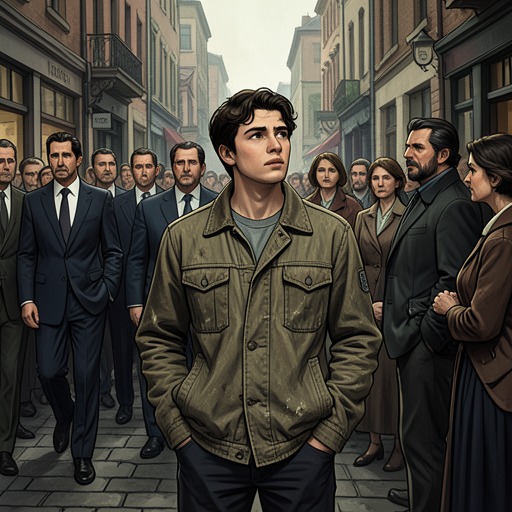
Ben is introduced as one of the local boys who can keep up with William Oh during an outing into The Tower. William regards himself as the one in charge, although Ben would claim the opposite, establishing their bond as both cooperative and lightly competitive. Their familiarity is immediate and unceremonious: Ben greets William casually, and the two compare the supplies they have brought for the day.
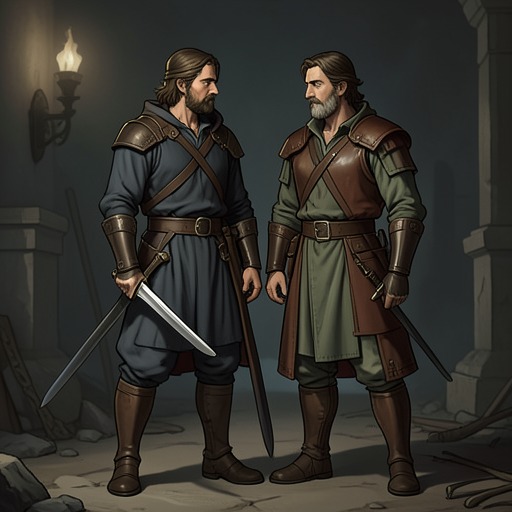
The contrast between them is visible in their equipment. William carries a leather sack containing basic provisions, bandages, and a tiny dagger more suitable for cutting cheese than confronting the wilds. Ben, by comparison, carries a fine wooden bow, a machete useful both for making camp and defending himself, a leather cuirass, flexible pants treated with Gollak glue, and expensive-looking shoes. William’s bare toes beside Ben’s comfortable footwear turn the difference into teasing rather than open resentment, though the unequal preparation also reflects their different circumstances.
Ben’s confidence is partly inherited from his father’s experience. He explains that his father has advised them to kill easier prey and sell it at the bazaar while more experienced hunters soften the dangerous locations. The plan is deliberately cautious: hunt less threatening targets, earn money, shop for equipment, and wait perhaps a week before attempting more hazardous areas. Ben accepts his father’s authority without embarrassment, insisting that his father is intelligent and has Ben’s best interests in mind. The exchange presents Ben as practical, socially supported, and accustomed to guidance that William, an orphan under Gertrude’s care, does not possess in the same form.
Hunting, Advancement, and Pressure
Ben’s importance to William increases when he begins hunting with Kyle Fontaine’s team. The group includes five Climbers, although two members are temporarily absent because they are injured. Ben explains that the remaining hunters have been giving him advice and helping him secure valuable kills, then invites William to join while the opportunity lasts. His position has changed: he is no longer merely William’s equal companion on a local outing but a younger hunter gaining access to a stronger and more knowledgeable team.
The development creates a painful contrast for William. Ben is already a week ahead after William’s wounds leave him stiff and partially recovered. William worries that Ben may have completed The Trial, which would leave William without a hunting partner and place him at a disadvantage. Ben’s progress thus carries two meanings at once. It is evidence of his competence and ambition, but it also intensifies William’s envy and fear of being left behind.
The Trial becomes the point at which Ben’s practical confidence turns coercive. William possesses the three Sacrifices required to summon The Trial, including a dried Uru Drake. Ben recognizes that the Uru Drake would produce a frog-like Class and questions why William has brought it if that is not the Class William wants. When a rare Will-o'-wisp becomes available, Ben presses William to act immediately. He argues that William already has every Sacrifice, that finding another Will-o'-wisp may be impossible, and that the opportunity will not last the day.
William senses that something is wrong and knows he is not in ideal condition to attempt The Trial, but the rarity of the Will-o'-wisp makes refusal difficult. Ben places a hand on William’s shoulder and apologizes before grabbing the strap of William’s satchel. He then kicks William backward toward The Trial. William catches the satchel strap as he falls and pulls at it with all his strength, but the satchel splits open, scattering the Sacrifices across the forest floor just before the yellow doorway swallows him. Ben’s act is not a misunderstanding or an accidental shove; it is a physical betrayal carried out at the moment William is most vulnerable.
Betrayal and Death
Ben’s betrayal leaves him outside The Trial while William is forced through its entrance, but Ben does not remain a continuing antagonist. When William later returns to the place where the group had camped, he finds a week-old fire pit and signs of their former presence, but no living companions. His foot comes down on something soft, and he discovers Ben’s corpse directly beneath him.
The condition of the body makes Ben’s fate brutally concrete. His skin is mottled, the corpse smells of a week-old death, and whatever Ben had promised others, he had evidently been unable to deliver. The discovery reverses the earlier balance between them. Ben had possessed better equipment, more experienced connections, and a head start in the Climb; now he is helpless, abandoned, and physically burdensome.
William does not simply leave him. After recognizing that other Climbers had not considered Ben’s remains worth the effort of looting, William takes a survival lesson from the scene: a person should never present himself as worth exploiting. He removes what remains useful, slips Ben’s new tomahawk into his belt, uses one of Ben’s less-soggy bandages on his own wounds, strips away Ben’s heavy armor, and carries the corpse over his shoulder. William’s increased Strength makes this possible, turning a numerical advantage into the means of performing an unwanted duty.
The act is simultaneously practical and intimate. William salvages equipment because he needs it, but he also bears Ben’s dead weight instead of treating the body as disposable scenery. The friend who once argued over who was keeping pace with whom becomes a corpse whose weight William must physically absorb. Ben’s treachery does not erase the history of companionship; it makes that history inseparable from the burden of his remains.
Material Legacy and Continuing Consequences
Ben continues to shape William’s equipment after his death. William keeps the Sting Ring he had previously sold to Ben, and later discusses replacing it after his own ring was destroyed during the Establishing Quest. Leon notes that the ring taken from Ben’s corpse was the ideal damage type for the first three floors, recommending a more expensive version before William eventually exchanges it for another damage type in the Fourth-Floor swamps. William acknowledges that he had sold the original ring to Ben, while Leon makes clear that he does not believe William killed Ben merely to obtain it or that a high-level Party would have bothered to remove it from Ben’s body.
William asks Leon not to tell Ben’s father that he kept the ring. The request shows that the aftermath is not only a matter of loot. Ben remains connected to a living family, and William understands that possession of the ring could look incriminating even though the evidence does not establish that William caused Ben’s death. Leon’s refusal to make a moral spectacle of the matter reflects The Tower’s broader indifference to conventional justice: what happens in The Tower is absorbed into its economy of survival and ownership.
Ben’s other possessions also become part of William’s progression. William is fond of his first Relic even though selling it would be strategically wiser, and the comparison explicitly recalls Ben, who had similarly been fond of his first Relic. Ben’s death therefore survives not only as trauma but as a pattern of attachment: William recognizes in himself the same reluctance to discard a personally meaningful object for a more efficient Build.
Narrative Role and Significance
Ben functions first as an ally, then as a rival presence, and finally as a negative lesson in the ethics of survival. His equipment and family guidance reveal the advantages available to a local boy with preparation and experienced support, while William’s orphaned status explains why inferior supplies and improvised judgment are normal parts of his life. Ben’s invitation into Kyle Fontaine’s hunting group briefly suggests that their partnership might expand into a more capable team, but his treatment of The Trial destroys that possibility.
The betrayal also gives William’s later caution a personal origin. William learns that danger does not come only from monsters, hostile environments, or the rules of The Tower. It can come from the companion who knows exactly where a satchel is fastened and exactly when a rare opportunity will make hesitation difficult. Ben’s words frame the moment as urgent assistance, but his kick converts urgency into entrapment.
After Ben’s death, William’s public image grows independently of the truth. Jason Salazar spreads exaggerated stories about William’s abilities, tavern patrons claim that William can become lightning or that his severed hand acts as a cursed talisman, and strangers praise his fighting and running. None of these legends preserves Ben accurately. Yet Ben’s absence is part of the hidden structure beneath William’s reputation: the famous Climber’s early advancement rests in part on a partnership that ended with treachery, a scattered satchel, a corpse, and equipment taken from the dead. Ben is thus not merely a discarded companion but the first intimate proof that William’s maxim of never becoming an easy meal applies even to friendship.