Break the Supply Lines
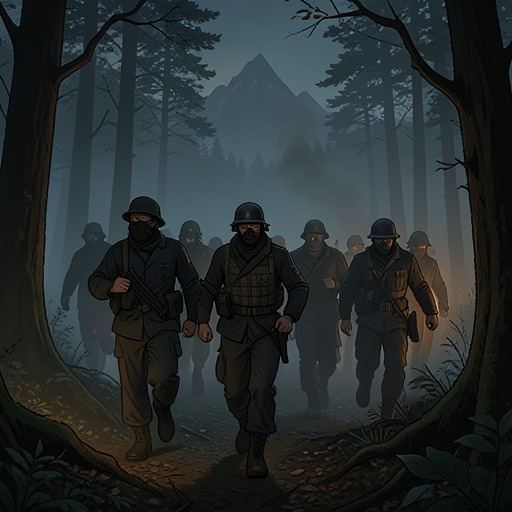
The Legend of William OhBreak the Supply Lines is the first major military operation in which William Oh’s group is taught that survival depends less on winning a direct fight than on understanding movement, infrastructure, and timing. The Establishing Quest sends new Climbers into a cave system used by the Kaith to feed their front lines, and its decisive objective is deliberately narrow: destroy the route that sustains the enemy rather than seek glory in combat. What begins as a supervised expedition becomes a practical model for how underpowered teams can alter a wider conflict.
Causes and Mission Design
Nathan introduces the assignment as the babysitter responsible for the new Climbers and explains that a large hole nearby opens into an extensive cave system. The Kaith use those tunnels to transport food toward battles against higher-level Climbers. The mission is therefore an operation against supply lines, not an assault on the Kaith warriors at the front. The distinction defines the quest’s stakes: the party is expected to weaken an army by interrupting its logistics while avoiding an engagement against opponents who possess the greater direct strength.
The operation also reflects the rules of the Tower. After a Climber reaches level five, experience in the Hunting Grounds and the 1st Floor is reduced, making advancement there inefficient. The System identifies two routes to the 2nd Floor: established routes, which are slow, safe, and reliable, or the dangerous but rewarding clearance of a Key Site, which opens an inter-floor Door. Break the Supply Lines belongs to this wider culture of advancement, where a quest is simultaneously a military task, a test of competence, and a possible step toward Ascension.
Reconnaissance and Improvised Capability
The Climbers divide into seven groups and scout the branching caverns, whose tunnels plunge into darkness and force the expedition to spread out. The apparent division of labor masks a serious navigational danger: once separated, the groups must preserve a route back through an environment that offers few natural landmarks. Loth solves part of that problem by controlling dozens of insect species hidden in a bucket-sized barrel of soil topped with food scraps. At every branch, he marks the return path with arrows drawn in the luminescent juices of crushed glowbugs.
Loth’s role demonstrates why the quest is not reducible to weapon strength. His insects provide reconnaissance and his glowbug markings create a navigational record, converting a hostile maze into a traversable operational space. When William Oh reaches a ledge after a dangerous gap crossing, Loth throws him a rope and directs him to hold it against the wall. The gesture is small but essential: the expedition’s progress depends on tools, signals, and mutual rescue as much as on attacks.
The tunnel battle likewise grows from preparation rather than a single overpowering strike. When dozens of Kaith workers suddenly materialize and charge, William Oh uses his Phantom Hand to shoot tracers across their path. The wrist guard and Sting Ring then provide curtains of fire and acid, forcing each advancing wave through the same lethal corridor. The Kaith are cut down as successive ranks push the ranks behind them forward, turning their numbers and momentum into liabilities.
Retreat, Command, and Completion
The mission does not end with the first successful defense. Nathan, the veteran in charge, is designated to spearhead the defense of the bridge while the others return to the surface. The retreat is organized so that Nathan can be brought back the following day with the remaining Parties, allowing everyone to rest before the next attempt. In this structure, withdrawal is not surrender; it is an explicit part of the plan, preserving the command chain and the fighting capacity required to finish the operation.
When the exhausted group reaches camp, Nathan is directing a chaotic but constructive mobilization. He orders the fresh Climbers to accompany him and assigns the returning survivors to guard the camp and recover. His command recognizes two different kinds of value: experienced members are needed to hold the rear and protect the base, while rested newcomers can be assembled for the next excursion. The quest’s military logic consequently includes camp security, replacement, and recovery rather than treating combat as an isolated encounter.
The System ultimately registers the operation as complete and instructs the Climbers to visit the local Exchange Hall for monetary reward disbursement. The party receives 1,500 XP. Completion therefore has both narrative and mechanical consequences: the supply route has been neutralized, the expedition’s survival has been converted into formal progression, and the rules of the Tower publicly acknowledge the achievement.
Later Echoes of the Same Logic
The operation’s emphasis on routes and infrastructure anticipates later actions across the Tower. A Stronghold on a floating mountain is protected not by conventional walls but by the mountain’s sheer edge, ballistae, and patrols watching for Kaith invasion forces or flying threats. The mine within it exposes layered quartz or salt, making extraction and defense inseparable from the site’s strategic value. The setting repeatedly presents infrastructure as a combatant in its own right: bridges, tunnels, mines, towers, and tanks determine what armies can reach and how they can be supplied.
The same principle later expands from a cave network to an entire city. In Oilton, Loth calculates that the Tangled population has risen from just below 9,000 to 13,000 in three days, an increase of 14.28 percent per day. Rather than fight the growing mass directly, the group plans an operation against its sleeping place and the city’s systems. Travis lures the Fire Mote Swarm while the other three rig Oilton’s water tanks, where the Tangled sleep, to explode. A Tangled collapses and splits, producing two creatures from one body, making the danger’s capacity for multiplication visible before the larger catastrophe.
About half an hour after William Oh and Loth discuss Build strategy, Oilton explodes. The castle erupts when an over-pressured main line ruptures beneath it, sending burning oil, shattered rock, and a fireball into the sky. The scale is far greater than the original quest, but the underlying pattern remains recognizable: local decisions involving routes, pressure, fire, and containment generate consequences at system scale. Break the Supply Lines is thus an early, contained version of the book’s recurring warfare, in which victory depends on identifying the network that makes an enemy dangerous and finding the point where that network can fail.