Disappearance of Mary and Thomas Oh
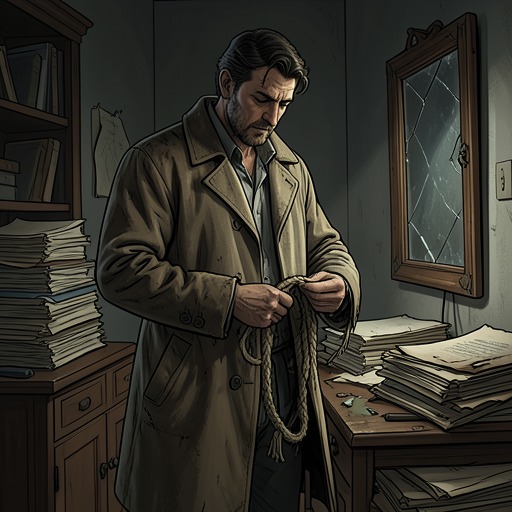
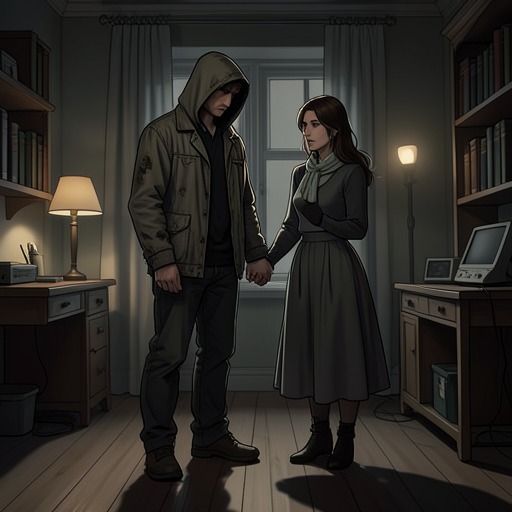
The Legend of William OhThe Disappearance of Mary and Thomas Oh is the defining absence in William Oh’s early life and one of the forces that gives his ascent of The Tower its personal direction. Their disappearance is treated neither as a confirmed death nor as a simple adventure gone wrong. Instead, it remains suspended between bereavement and possibility: Gertrude believes they are most likely dead, while William continues to imagine that they may have climbed farther into The Tower. That uncertainty leaves him pursuing two goals at once—power over the course of his own life and the chance to find the parents whose absence made that autonomy necessary.
The Parents’ Disappearance and Gertrude’s Account
Gertrude tells William that five years have passed since his parents vanished and states plainly that they are most likely dead. William resists the conclusion, pointing out that Gertrude had already said they were gone three years earlier and proposing that they may simply have gone farther up The Tower. His answer is not calm optimism. It is an attempt to keep the missing parents within the realm of recovery, because accepting their death would turn an uncertain absence into an irreversible loss.
Gertrude has unusual authority to interpret what happened. She once Climbed as far as the Twelfth Floor, an achievement that places her experience well beyond ordinary familiarity with The Tower. She recalls meeting many kinds of Climbers, watching good people die and bad people prosper, and eventually abandoning that life after she had endured enough. William’s parents, however, did not stop. Her distinction between Climbers who seek money and power and those addicted to challenge and mystery places Mary and Thomas Oh in the second category: they continued because The Tower’s unanswered questions exerted a stronger pull than safety or domestic responsibility.
The Mystery That Drew Them Upward
The disappearance is connected to a mystery rather than to a known final expedition or a documented death. Gertrude describes strange vestiges of an unknown past that cast doubt on accepted knowledge. One especially disturbing example involves ruins whose outline matched the layout of a hometown precisely, including the location of the father’s bakery. William tries to dismiss the resemblance as coincidence or illusion, but Gertrude says she has seen too many such coincidences to accept an easy explanation.
This detail changes the meaning of Mary and Thomas Oh’s absence. They are not merely missing adventurers who failed to return. They may have been drawn onward by evidence that The Tower contains reflections, remnants, or historical contradictions capable of overturning ordinary assumptions about the world. Gertrude believes that if they ever return, they could illuminate The Tower’s mystery more than any other Climber, living or dead. Yet she immediately tempers that possibility by telling William not to hold out hope, preserving the central tension between a potentially recoverable past and the practical certainty of loss.
William’s Response: Power, Anger, and a Searchable Goal
When Gertrude asks what kind of Climber he wants to become, William first says that he wants money. He then revises the answer: he wants power, specifically enough power to decide the course of his own life. The missing parents make this ambition concrete. He wants to track Mary and Thomas Oh down and punish them for what he experiences as their irresponsibility, even imagining the journey as a route toward confronting his father.
Gertrude challenges the goal by asking what he will do if his parents are already dead and can never be reached. Her question exposes the danger of allowing an unknowable absence to dictate an entire life: William could dedicate himself to pain, struggle, and death in pursuit of a hopeless destination. William responds by converting the emotional objective into a more achievable formulation—he should adopt a goal that allows him to punch his father in the face as a byproduct rather than making that confrontation the destination. The joke does not erase the injury. It reveals his method of surviving it: anger remains active, but it is redirected into an objective he can pursue step by step.
Absence as Inheritance and Rumor
The disappearance also shapes the way William becomes known to others. Jason Salazar serves as William’s hype man, and William recognizes that Jason’s skill with words can turn a person into a story. William even worries that Jason might disappear like his father, showing that missing parents are not an isolated piece of backstory but a pattern William fears repeating in his relationships. The possibility of finding a reliable team member is therefore linked to the old anxiety of abandonment.
As William’s reputation spreads, the public versions of him become increasingly detached from the actual man. Jason tells stories of a figure supposedly born on the Hundredth Floor, bathed in lethal Miasma and granted abilities beyond human comprehension. Later, tavern talk claims that William can turn into lightning, that his missing hand became a cursed talisman, or that he once consumed a lightning bolt. These rumors do not reveal what happened to Mary and Thomas Oh, but they demonstrate how William’s identity is being mythologized while his most important private mystery remains unresolved. The absent parents belong to the hidden history of William’s life; the exaggerated tales belong to the public legend growing around him.
The System’s treatment of William further complicates this split between identity and reputation. When he arrives to claim a quest reward, the clerk says that he is the sixth William Oh to appear, then determines that he is the correct one and gives him the reward for an exceptional performance. The incident supplies no explanation for the other claimants, but it reinforces the instability surrounding William’s name. Even his identity can be copied or contested, while the disappearance of Mary and Thomas Oh remains a singular absence that no substitute can resolve.
Unresolved Consequences
Mary and Thomas Oh’s fate remains open. Gertrude offers the most probable outcome—death—but William refuses to treat probability as proof. No return, recovery, or definitive confirmation is established in the available account. Their disappearance therefore continues to function as a suspended condition rather than a completed tragedy.
That suspension gives William’s progress through The Tower a double structure. Each climb can be understood as an attempt to gain money, power, and practical independence, but it also moves him toward the space where his parents may have gone. The possibility that they pursued the Tower’s deepest mysteries supplies a model William both rejects and inherits: he resents their abandonment, yet he is drawn toward the same vertical world of danger and unanswered questions. Their disappearance is thus not only what William wants to undo. It is also the unresolved inheritance that tells him where to look, what to fear, and why ordinary explanations are never enough.