Establishment of the Dead City Consortium
The Legend of William OhThe establishment of the Oilton coalition is the decisive moment when Will brings the kobolds and Jibleya of Oilton into a common structure. What begins as mutual suspicion and possessive pride becomes an alliance built around extra labor, Loth’s authority, and a shared need to understand the threat facing them. The coalition is therefore less a ceremonial union than a practical reallocation of trust: Will identifies the need for leadership, while Loth supplies the authority that makes cooperation possible.
Causes and Background
The coalition emerges from a dispute over a valuable opportunity. The Jibleya leader objects to abandoning what he calls a score of a lifetime, while the kobold leader speaks of his people as gods among their kin, even when forced to contemplate sharing with the berry-people. Their language reveals the obstacle clearly: both groups possess confidence, resources, and reasons to remain separate, but neither has an adequate structure for combining them. They are allies only in the loosest sense, and their disagreement threatens to turn a common operation into a contest over status and ownership.
Will intervenes by translating the impasse into an organizational problem. Instead of demanding that either side surrender, he suggests that they need extra hands and, perhaps, some leadership. The proposal is deliberately practical. It recognizes that the coalition cannot be created by goodwill alone; it requires labor, direction, and someone capable of making the different groups accept a common purpose. That reframing gives the episode its political force. Will does not merely choose a side in the dispute. He identifies the missing function that both sides need.
Loth as the Coalition’s Authority
Loth initially appears reluctant to assume the role Will has prepared for him. When Will asks him to accept the Bullet Wasp larva, Loth sighs but agrees, then removes the larva from its glass container and holds it toward The Tower as though raising a toast before the creature vanishes in a flash of light. The gesture is both technical and ceremonial: Loth performs an act of expertise, but the scene also gives that act the shape of an offering or public rite. His authority is not established through a formal appointment. It is made visible through control over forces the others cannot command.
The shift becomes unmistakable when the lead kobold, Grak, addresses Loth as the Great One and grovels before him. The other kobolds follow immediately. Their sudden submission surprises the Jibleya, whose leader recognizes that Will has effectively seized control of half the group and that resistance would risk conflict. Loth, irritated by the groveling, tells them to stand, but the command does not undo the hierarchy that has just formed. The coalition now has a focal point, however awkwardly that authority has been produced.
Recognition and Alliance
The alliance becomes more durable when the Jibleya leader introduces himself as Fond. Loth responds with calculated courtesy, praising the Jibleya’s intelligence and natural talent for alchemy and presenting cooperation between their species as a way to create beautiful and deadly things together. Fond’s reply is cautious but receptive. The exchange treats cultural difference as a source of combined capability rather than an obstacle that must be erased.
Fond then recognizes Loth as the author of a treatise on mechanical force and confirms that Loth also investigated how Abilities distort the laws of physics. Loth explains that he discovered the principle while designing a trap. This detail changes the basis of the partnership. Fond is not persuaded merely by Loth’s supernatural reputation; he is impressed by a specific body of knowledge that connects theory to practical invention. The Jibleya leader drops Loth’s hand and bows deeply, declaring that the Jibleya would be glad to work with Loth the Luminary. The coalition thus gains an intellectual and technical foundation as well as a command structure.
The recognition also exposes the asymmetry within the alliance. Grak’s followers respond to Loth as a sacred or superior figure, while Fond responds as an expert recognizing another expert. One group submits through awe; the other agrees through professional respect. Loth can accommodate both forms of allegiance because his authority operates simultaneously as power, reputation, and useful knowledge.
Terms of Cooperation and Immediate Consequences
The coalition is not free of hostility. Grak remembers that the kobolds took the hand Will had touched him with and threatens that, if the human touches the Great One again, they will take all of him. Will reveals his missing hand while explaining that the incident occurred the previous week, leaving the kobolds confused about whether they had already performed the act. The exchange turns a serious injury into an emblem of the unstable memory, dangerous customs, and comic menace that continue to govern relations between the groups.
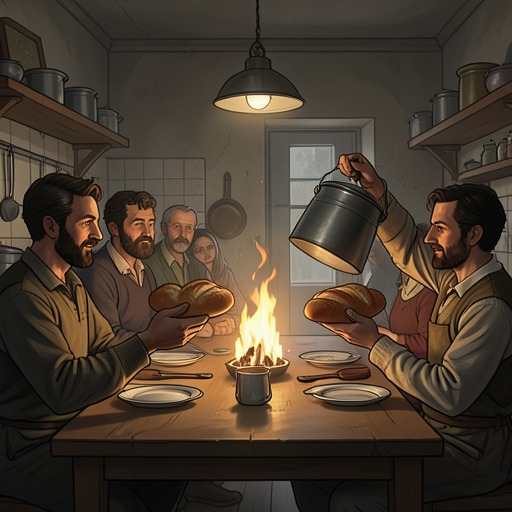
Loth does not dissolve this tension; he manages it. After Fond accepts the partnership and Grak renews his threat, Loth addresses both groups as kin and tells them to show him what they are fighting. The surrounding looters immediately begin competing to satisfy his request, discussing the best observation point and hurrying to carry out his instructions. This is the first concrete proof that the coalition works. The groups do not need to become alike. They need to place their distinct capabilities under a shared operational direction.
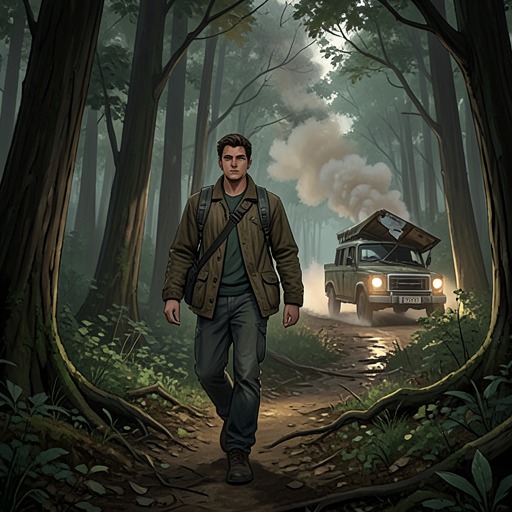
Will’s role is equally important because he remains the organizer behind the apparent elevation of Loth. He recognizes the opening, proposes leadership, supplies the means by which Loth can demonstrate power, and then guides the participants back to the Lord’s castle along a route he already knows to be safe. Loth becomes the visible center of the coalition, but Will’s intervention supplies its political architecture.
Leadership Beyond the Scene
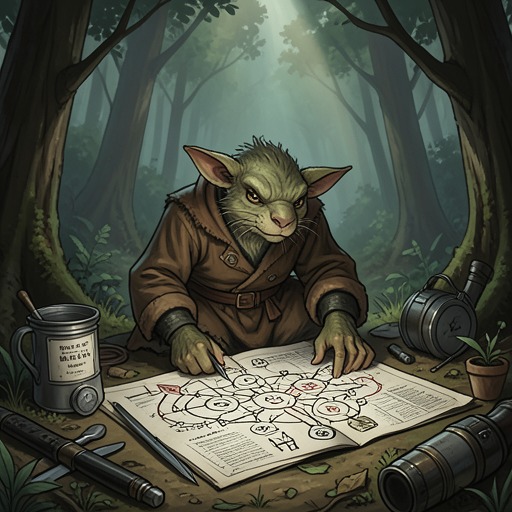
The broader context makes the coalition’s method legible. Earlier, Loth controlled dozens of insect species housed in a bucket-sized barrel of soil topped with food scraps, turning an improvised container into a living tool. In the caverns, he also marked routes with glowbug juices, while a rope thrown across a gap allowed him to help Will cross dangerous darkness. These details establish that Loth’s strength lies in extending agency through systems: insects, tools, routes, traps, and knowledge become coordinated instruments. The Oilton coalition applies the same principle to intelligent beings who previously acted as separate factions.
The alliance also reflects the practical rules of life on The Tower. Climbers can advance most quickly by following a bus and helping clear a Key Site, provided they do not sabotage the other Climbers, but Will and Loth are forced to consider acclimation and the danger of entering a higher Floor below the permitted maximum level. Progress therefore depends not only on individual bravery but on navigating systems, permissions, timing, and cooperative labor. The coalition transforms that lesson into a local political form: collective advancement requires a structure that can direct contributions without demanding that every participant share the same motives.
Its significance becomes clearest in the later plan involving steam, water, and fire. Carrie asks how an explosion of steam can be produced; Loth answers that flow controls could restrict the water until natural heat builds again, allowing the stored water to be released all at once when the curtain of fire reaches the desired position. He searches his satchel for fireproof rope and evaluates wire and springs for the mechanism. The plan shows what the coalition makes possible. Jibleya alchemical intelligence, kobold manpower, Loth’s mechanical reasoning, and the physical infrastructure of Oilton can be made to act as one system. The coalition is established not by sentiment but by the promise that different forms of knowledge and labor will produce an effect none could achieve alone.
As a narrative event, the establishment of the Oilton coalition marks a shift from opportunistic cooperation to organized power. Will supplies the political insight, Loth becomes the recognized authority, Fond legitimizes the partnership through expertise, and Grak’s kobolds provide immediate obedience and force. The resulting alliance remains comic, unequal, and vulnerable to misunderstanding, but it is operationally real. In a world where survival depends on routes, relics, creatures, rules, and rapidly changing hierarchies, leadership means making those separate actors pull in the same direction.