Key Site Ascension Rule
The Legend of William OhThe Key Site Ascension Rule is the System’s progression mechanism for converting control of a dangerous location into access to a higher Floor. Its decisive importance is that advancement is not purely a matter of following roads or accumulating experience: a Climber can force open a new route by clearing a Key Site, accepting greater danger in exchange for speed and reward.
Definition and Operation
There are two ways to reach the 2nd Floor. Established routes are slow, safe, and reliable, while clearing a Key Site on the 1st Floor opens an inter-floor Door. The rule therefore presents ascension as a choice between dependable movement and hazardous initiative rather than as a single mandatory path. The System explicitly asks whether the Climber wishes to clear a Key Site to gain access to the 2nd Floor, making the objective a formal progression option rather than merely an informal discovery.
The rule becomes increasingly important above the 5th Floor. Established routes cease to exist there, leaving secured Key Locations as the only means of ascending or descending. The System recommends acclimating to these trials early, because the apparently optional shortcut on the lower Floors becomes the essential infrastructure of later travel. Key Site clearance thus functions both as a reward and as training for the Tower’s higher-level geography.
The First-Floor Threshold
The rule is introduced after reaching level 5, when experience gain in the Hunting Grounds and the 1st Floor is nerfed. Continued accumulation of power requires climbing to the 2nd Floor, so the experience reduction creates pressure to leave familiar territory. Against that pressure, the two routes embody contrasting risk profiles: established paths preserve safety at the cost of time, whereas Key Site clearance compresses the journey into a dangerous but rewarding act of conquest.
This structure makes the rule part of the System’s leveling economy. A Climber cannot simply remain indefinitely in an efficient hunting area after the level-five threshold; progression is redirected toward spatial advancement. The Key Site is therefore both a physical objective and an institutional gate, linking level progression, resource access, danger, and movement between Floors.
Clearance and Consequence
When Will clears the relevant Key Site, the System confirms that the site has been cleared and states that he may advance to the 2nd Floor at his discretion. The immediate reward is 200 XP, while the larger consequence is the opening of the route itself. The wording preserves agency: clearance creates permission and access, but it does not compel immediate ascent. Will and Loth can decide when to use the newly secured passage rather than being pulled through it automatically.
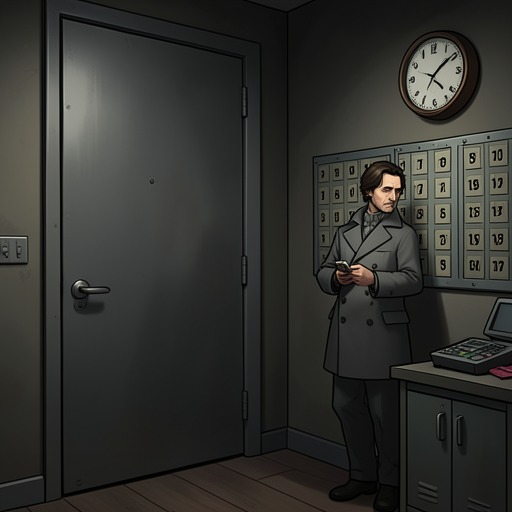
The rule’s threshold quality is reinforced by the physical experience of the inter-floor Door. When Will later accepts such an opening outside Leon’s shop, a doorway appears in front of him, identical to the one that had previously trapped him in a featureless box for two days. The same kind of doorway consequently carries opposite meanings: it can signify imprisonment when encountered without control, or advancement when activated through the System’s terms. Leon insists that Will accept it outside the shop, refusing the risk of an interdimensional doorway damaging the floor or returning Will there in a bloody state.
Space, Risk, and Narrative Function
Key Site clearance transforms geography into a system of power. The route upward is not simply discovered; it is produced by an act of domination over a designated location. This makes every Key Site a threshold between physical space and institutional space: the site must be conquered in the world, but its reward is recognized and administered by the System.
The rule also gives danger a measurable exchange value. A clear route is safe but slow; a Key Site is quick but dangerous; successful completion grants both experience and a new vertical option. The ascent from the 1st Floor to the 2nd Floor therefore becomes a compact expression of the wider Climb, in which progress depends on choosing when safety has become too costly and when danger can be converted into access.
By removing established routes above the 5th Floor, the rule has consequences beyond Will’s immediate advancement. It establishes the long-term logic of the Tower: movement, expansion, and survival will increasingly depend on securing strategic locations. What begins as an optional shortcut becomes the governing architecture of ascent and descent, making Key Sites the hinges on which the Tower’s vertical world turns.