Lordship
The Legend of William OhLordship is the Tower’s formal condition of territorial rule: a Climber who survives long enough, gathers the required Vassals, and claims an unoccupied plot can be recognized as a Lord and establish a Demesne. The status promises land, money, influence, and the means to organize power for higher-floor advancement, but it also exposes the Tower’s harshest contradiction. Lordship is presented as a structure for concentrating strength, yet the path toward it is governed by scarcity, coercion, predation, and the constant possibility that a promising Climber will be forced into Vassalage or killed before reaching it.
Definition and Requirements
Lordship is not merely a title or an increase in personal prestige. It is a territorial and political status acknowledged by The Tower. Mark Wyrd’s accession makes the procedure explicit: he has the required number of people, an empty plot, and no prior claim or residents obstructing the claim. Twelve young Climbers are selected to become his first Vassals, and Mark orders them to swear fealty. They kneel together and pledge their lives to his service, after which The Tower confirms that he has reached the minimum number of Vassals needed to be considered a Lord.
The recognition is immediately connected to territory. The Tower scans the local Territory, finds no prior claim or residents, and asks whether Mark wishes to establish the location as his Demesne. He accepts and walks toward the throne overlooking his new responsibility. The system then acknowledges him as a Lord and instructs him to rule with courage and dignity. Lordship therefore joins three elements that are otherwise separable: a ruler, a dependent base of people, and a piece of territory. Without the required Vassals, an empty plot alone is insufficient; without an available plot, a group of followers cannot become a territorial lordship.
The ceremony also gives the status a deliberately unromantic texture. Mark has expected difficulty from the surrounding dangers, including the kobolds, and does not want to risk having a finger chopped off while opening his new desk. He abbreviates the grandstanding speech prepared for the occasion and moves directly to the demand for fealty. The Tower’s grand announcement follows, but Mark’s attention is diverted by possible bread crumbs on the throne’s arm and the click that comes after he sits. The contrast places a bureaucratic, almost mechanical recognition beneath the language of dignity: Lordship is majestic in its consequences, but its acquisition can look like paperwork, bodily risk, and an awkward new office.
William Oh’s Ambition
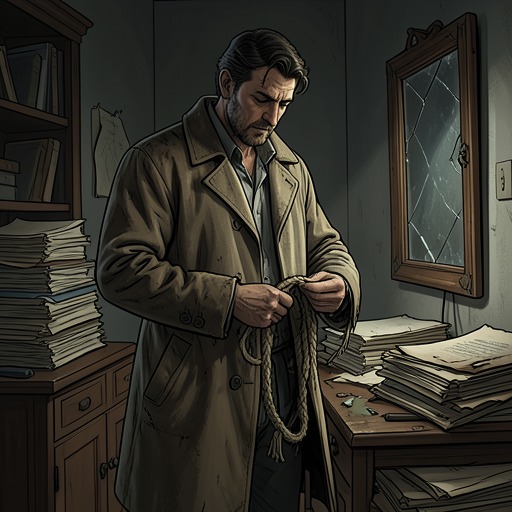
For William Oh, Lordship is the destination that gives shape to his otherwise dangerous ascent. After the door of Saint Gertrude’s Orphanage opens, he imagines a future in which the many powerful Abilities granted by the Uru Drake Sacrifice allow him to acquire Relics, become a Climber, and claim a large range on one of the upper floors. He sees himself becoming Lord William and sending supplies and money back to the people who remain subject to the old woman’s sermons. The fantasy is extravagant, but it is not detached from material responsibility: his imagined rule is measured by the resources he can return to the orphanage.
His goal becomes more concrete when he declares that he will reach the Tenth Floor and carve out a Lordship there. From that base, he plans to push farther upward while funneling money and Relics back down to his Demesne, pacifying an entire floor before repeating the process. The ambition expands from personal escape to systematic conquest of The Tower. It is a plan of accumulation and administration as much as combat: advance, claim, secure, supply, and advance again.
The older Climber who advises him supplies the crucial corrective. Every Climber who becomes a Lord, he argues, shares one decisive characteristic: that person is alive when it happens. Stories preserve Baron Akul, Lord Bakton, and the Rotwitch, but not the names of Climbers who died ignominiously on the First Floor after committing themselves entirely to offense. Lordship thus converts survival from a passive condition into the foundation of political success. William’s grand design can exist only if the Build that carries him upward does not destroy him before the title is reached.
Lordship, Vassalage, and Coercion
The status depends on a hierarchy that is not always voluntary. William explains the practice of a bus in which a person enters a contract with a Lord, receives rare Sacrifices for a valuable non-combat Class, is carried by veteran Climbers up to the Lord’s Stronghold, and then works there for ten, fifteen, or twenty years. Loth identifies the arrangement as indentured servitude, and William agrees. The arrangement may eventually leave the worker with highly sought-after skills and the ability to charge independent Strongholds whatever they wish, but the initial bargain remains a long period of service purchased through dependence on a Lord.
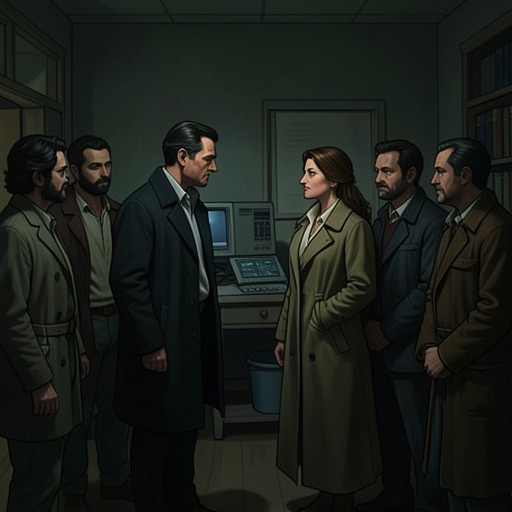
The danger is sharper for talented Climbers who have not yet acquired institutional protection. Steve Holland warns William that promising newcomers are often disappearing or dying, particularly those without the backing of a powerful family. Steve suspects that Lords station Vassals on the lower Floors to watch for exceptional talent, then have those agents seize promising young men and women and bring them to a Stronghold. The targets may be forced to become Vassals, ending any possibility of Lordship, or killed outright. Steve admits that this is a theory rather than proven fact, but he treats the pattern as sufficiently credible to change how William understands advancement.
The Tower offers little protection against such force. When William asks whether someone can simply be compelled to become a Vassal, Steve gestures toward William’s tomahawk and the coercive arrangement they have just imposed on a Healer. The answer is practical rather than legal: power can make a bargain real even when consent is compromised. Steve describes The Tower as very loose about fairness, and once a person becomes a Vassal, the consequences are permanent in the most important respect. A Vassal may switch Lords under the right circumstances, but can never become a Lord themselves.
This makes Lordship a gatekeeping status. Lords do not merely govern those below them; they can absorb or eliminate the very people who might one day challenge their position. The possibility of advancement is therefore also a reason for surveillance. Talent attracts attention, and attention can terminate the future it detects. Lordship promises upward mobility while preserving itself through downward control.
Political Purpose and Material Power
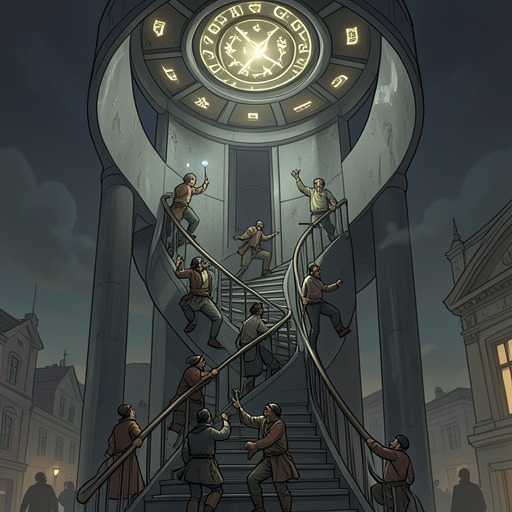
Steve offers a broader interpretation of why the Lordship system exists. It may have been designed to propel a select few toward the top of The Tower by gathering powerful people beneath them and focusing that strength into individuals capable of exceeding their apparent weight class. Vassals provide more than obedience: they create a supply chain and a concentrated force capable of tackling and claiming upper floors. On this reading, a Demesne is not only land to possess but an engine for continued ascent.
The apparent correlation between power and the number of Vassals supports that interpretation, although its direction remains uncertain. The most powerful Lords seem to have the most Vassals. That may be because powerful Lords attract more followers, or because possessing more Vassals produces power; the Lords themselves know the answer and do not share it. Lordship therefore operates through an opaque feedback loop. Authority draws resources, resources strengthen authority, and the resulting concentration of power makes the original source difficult to identify.
Its economic value is equally concrete. Travis Oilton explains that Oilton is critical infrastructure capable of producing millions of gold each month by selling crude oil to other floors. He expects his older siblings to arrive within weeks to reclaim the city, making clear that a territorial claim can be contested not only for prestige but for revenue. A Lordship in such a place controls access to an industrial resource and the flows of wealth that sustain higher-level political structures.
William’s dealings also show that information and territory can become assets within this system. After the Ice Caves expedition, he considers information about the Floors valuable because discoveries are difficult to obtain and those who find something new usually keep it secret for an advantage. He agrees to a one-percent arrangement. Lordship is consequently embedded in a wider economy of exploration, secrecy, contracts, Relics, labor, and supply. Territorial rule is the visible summit of a network whose inputs include knowledge as much as force.
William Oh and Mark Wyrd as Contrasting Lords
William imagines Lordship as a long campaign of expansion anchored in reciprocity. His envisioned Demesne sends supplies and money back to Saint Gertrude’s Orphanage, and his stated plan is to pacify floors while directing wealth downward to those who supported him. The ambition is still imperial in scale—he intends to make the entire Tower his—but its emotional origin lies in escape, protection, and repayment.
Mark Wyrd reaches the same status through a more institutional and inherited structure. He approaches Oilton expecting his first Lordship to be grander: perhaps a hostile wilderness on the Eleventh Floor where he would fight to advance civilization, or a golden city like the gleaming centers of the Fifth Floor. Instead, he receives a modest oil city on the Third Floor. He knows better than to complain because the practical conditions are satisfied: he has enough people and an empty plot. Whether the setting fulfills his imagination is irrelevant to the system’s recognition.
His accession is also accompanied by family power. Steve states that among the Lords represented at the Ice Caves, Wyrd had enough influence to make the others drop the matter of a lost child, with Zodiac close behind. The observation places Lordship within dynastic privilege as well as individual achievement. Mark’s first territory is not simply a reward for a solitary Climber’s journey; it is connected to the authority and reach of the Wyrd family.
The contrast between William’s projected rule and Mark’s completed one gives Lordship its central ambiguity. William treats it as a future earned through endurance and used to distribute resources. Mark receives it as a practical obligation within an existing power structure, even while finding the territory beneath his expectations. Both understand that rule requires people, land, and wealth, but the route to those conditions differs sharply: one begins from an orphanage and imagines ascent, while the other arrives with the backing of a powerful family and formalizes command over twelve Vassals.
Narrative Significance
Lordship is the Tower’s answer to the problem of collective strength. Individual Climbers can earn Levels, select Primary Abilities, acquire Relics, and survive Trials, but the system reserves territorial permanence for those who can gather others beneath them. The minimum-Vassal rule turns personal advancement into social organization, while the Demesne turns exploration into governance. A Climber’s success becomes politically meaningful only when it can support a population, claim a place, and generate continued power.
At the same time, Lordship exposes the cost of converting survival into sovereignty. The system acknowledges Mark’s claim with a congratulatory message about courage and dignity, but the surrounding evidence shows how little fairness protects the people who make that claim possible. Vassals can be recruited through debt-like contracts, talented Climbers may be abducted or killed, and even agreements can be enforced by weapons. The formal language of fealty conceals unequal bargaining power without eliminating it.
The status also makes mortality the hidden criterion beneath every grand ideal. William’s adviser reduces the mythology of Lords to one blunt fact: they are alive when they become Lords. That principle governs the entire structure. Lordship is aspiration made territorial, power made hereditary or contractual, and survival made political. Its throne may contain bread crumbs, its ceremony may end with a click, and its first domain may be a disappointing oil city, but once The Tower recognizes the claim, the Climber’s relationship to the world has changed permanently. A person no longer merely climbs through the system; that person becomes one of the forces the system is built to serve and fear.