William Oh–Ben friendship and betrayal
The Legend of William OhWilliam Oh–Ben friendship and betrayal is one of the earliest relationships to define William Oh’s life in The Tower. It begins with practical companionship between two orphanage boys who can survive the wilds together, then turns sharply when Ben kicks William Oh through The Trial doorway. The later discovery of Ben’s corpse does not erase their friendship; it makes its cost material, unavoidable, and grimly useful.
Friendship in the Orphanage
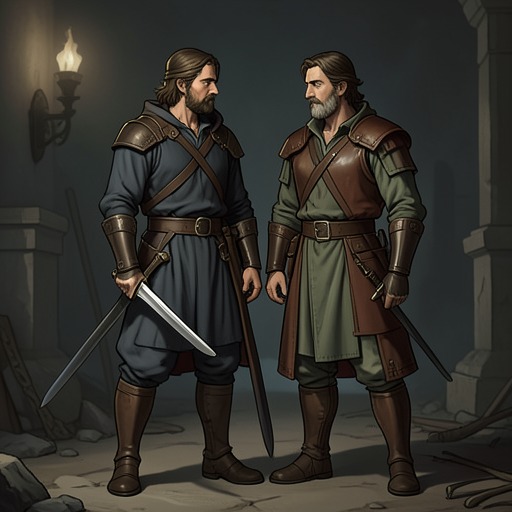
William Oh and Ben are introduced as partners for an outing, with Ben described as one of the local boys able to keep up with William Oh. Their rivalry is affectionate but clearly structured: Ben might claim that William Oh is the one struggling to keep pace, yet both boys know who is actually in charge. The exchange establishes familiarity, confidence, and a shared language of teasing rather than formal loyalty.
Their different equipment also marks the unequal resources within the friendship. William Oh carries a leather sack containing supplies, bandages, and a tiny dagger better suited to cutting cheese than confronting monsters. Ben arrives with a fine wooden bow, a machete, a leather cuirass, durable flexible trousers treated with Gollak glue, and expensive comfortable shoes. William Oh’s bare toes prompt the insult "Try-hard," while Ben answers that the proper target is The Hunt rather than the hunter. The banter keeps their hierarchy playful, but the contrast in gear shows that companionship does not mean equality.
Ben’s plan reflects both practical experience and dependence on family guidance. He says that his father has instructed them to kill easier prey, sell it at the bazaar, and wait roughly a week while experienced hunters weaken the more dangerous locations. Ben openly admits that he follows his father’s advice because his father is intelligent and has Ben’s best interests in mind. William Oh, by contrast, is framed through the orphanage and Gertrude, making the comparison between the boys’ forms of protection part of their conversation.
The Trial and the Betrayal
The relationship changes when the pair acquire the Sacrifices needed to summon The Trial. A pale yellow archway opens from thin air after William Oh is injured and exhausted, revealing that the system has presented an entrance to those who possess the required materials. Ben notices the dried Uru Drake in William Oh’s satchel, the third Sacrifice responsible for summoning the Trial, and asks whether William Oh intended to choose a frog-like Class associated with a jump-y, tongue-y creature. William Oh rejects that possibility, exposing that the Uru Drake has been carried for a purpose he has not explained to Ben.
When the opportunity returns, William Oh is in poor condition and senses that something is wrong. Ben argues that William Oh already has all his Sacrifices, that the Will-o’-wisp was exceptionally difficult to obtain, and that it will not last through the day. His reasoning presents the betrayal as urgent pragmatism: delay could mean losing a rare opportunity forever. Yet the apology comes before the violence. Ben places a hand on William Oh’s shoulder, says he is sorry, grabs the satchel strap, and kicks William Oh backward toward The Trial.
William Oh’s response is immediate and physical. While falling weightlessly toward the yellow doorway, he catches the satchel carrying his Sacrifices and pulls at it with all the strength he can summon. The bag splits open, scattering its contents across the forest floor just before the doorway swallows him. The gesture is more than an attempt to preserve equipment: it shows William Oh trying to retain control over the choice Ben has taken from him. Their partnership, once expressed through shared preparation and banter, ends with one boy using the other’s trust to force him across a threshold.
Death and the Material Cost of Betrayal
When William Oh later returns to the campsite, the friendship’s unresolved future has become a corpse. The fire pit is about a week old, the camp shows only traces of movement, and Ben’s body lies directly beneath William Oh’s foot. Ben’s skin is mottled, his corpse smells strongly of decay, and his gear remains on him. Rust has begun forming on the chainmail sleeves, while his satchel is soggy and scattered, suggesting that someone searched it violently for the payment Ben had promised.
The scene also reveals a reversal in the boys’ earlier relationship. Ben had seemed better equipped, better protected, and more prepared for the Tower’s dangers; now his expensive equipment cannot protect him, and his pockets have been turned inside out. Even a ring worth twenty silver was left behind because the Climbers who encountered the body did not consider Ben worth the effort of robbing. William Oh recognizes the lesson in that indifference: survival depends not only on strength or possessions but on avoiding the appearance of being an easy and profitable target.
William Oh does not abandon Ben’s remains. He takes a new tomahawk from the campsite, uses one of Ben’s less-soggy bandages to wrap his own wounds, strips away Ben’s heavy armor, and carries the corpse over his shoulder. His increased Strength makes the burden physically possible, but the act remains a stark form of responsibility. Ben’s betrayal has not produced a simple emotional severance. William Oh responds to the dead boy with anger, practicality, and a final act of care shaped by the brutal conditions of The Tower.
Memory, Reputation, and Aftermath
Ben’s death closes the intimate portion of the relationship, but it helps launch William Oh into a larger and stranger public identity. After William Oh gives his account to the magistrate, he is released while the town begins putting up wanted posters connected with the wider circumstances. At Brenda’s Inn, William Oh is approached by Jason Salazar, who asks whether he has heard of William Oh. William Oh smiles and denies knowing him, turning his own name into a joke at the moment his reputation is beginning to spread.
That reputation quickly separates William Oh from the private history Ben knew. Jason Salazar advertises William Oh as exceptionally talented and formidable, while later stories claim that William Oh was born on the Hundredth Floor and gained incomprehensible abilities from its lethal Miasma. Other Climbers repeat increasingly impossible accounts, including claims that William Oh can turn into lightning or that he absorbed a lightning bolt fired into his face. The exaggerations matter because Ben knew William Oh before the legend: as a barefoot orphan with inadequate equipment, an injured hunting partner, and a boy who could be pushed into danger by someone he trusted.
The contrast between Ben’s intimate knowledge and the public mythology is reinforced by the System’s treatment of William Oh. When William Oh claims his quest reward, a clerk notes that five other people have attempted to steal it, although the System identifies him as the correct William Oh and rates his performance as exceptional. The name has become valuable enough to attract impostors, just as Ben’s satchel and pockets attracted scavengers. In both cases, identity and material worth invite exploitation, but William Oh’s experience with Ben gives that exploitation a particularly personal history.
The betrayal also precedes William Oh’s increasingly dangerous life as a Climber. He eventually earns praise for fighting above his apparent level and running with extraordinary speed, while Jason Salazar continues to build the William Oh legend for paying audiences. Yet the defining fact of the relationship remains simpler and harsher: Ben was close enough to know when William Oh was vulnerable, and he used that knowledge to force him into The Trial. Ben’s death then leaves William Oh carrying both the corpse and the lesson that closeness is not the same as safety.