
Shame Passed from Father to Son
The Leopard (Jo Nesbø Edition)This thread traces how humiliation becomes an inherited wound, first shaping Tony Leike’s violence and then turning his history into the Kavalier’s instrument of revenge.
increasing Bearing strength in each event
 decreasing
Bearing strength in each eventdecreasingThe Boy at the Disco
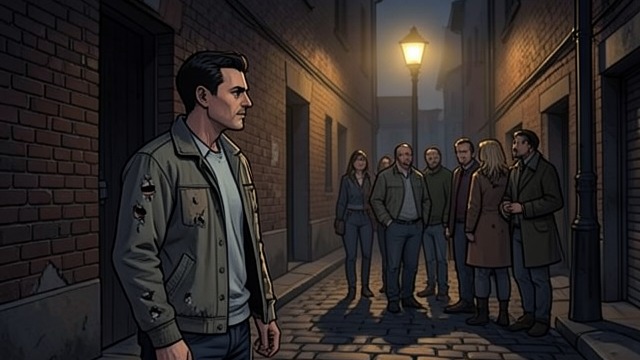
The First Humiliation
A wound made public
Tony Leike’s encounter with Ole outside the disco begins as a dispute over Mia, but rapidly becomes something more lasting than a quarrel. Tony cuts half of Ole’s tongue, transforming a moment of jealousy into a permanent, visible mark.
Violence as authorship
The injury gives Tony power over Ole’s future voice: every attempt to speak can recall the attack. For Ole, the damage is not only physical. It is a public humiliation that helps drive him away from the community where the event occurred.
A memory with an afterlife
The incident becomes the private origin of a later revenge plot. Tony may leave the scene with his reputation intact, but Ole carries the event as a defining story, waiting for a chance to reverse who is exposed and who is made to bear shame.
The Witness in the Hut
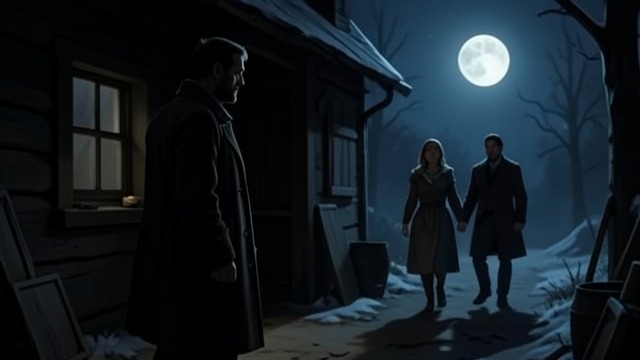
A Familiar Voice in the Dark
The past returns
At Hävasshütte, Ole recognizes Tony’s voice before he can fully accept what he is seeing. The man associated with his old humiliation is again pursuing a woman, Adele Vetlesen, and the sight makes the earlier injury feel present rather than finished.
Witnessing as a second wound
Ole hears and sees the encounter from a distance. What he understands as Tony’s sexual betrayal of him becomes an intolerable repetition: once again, Tony appears to possess the power to choose the scene, while Ole is left watching from outside it.
From memory to motive
The episode does not simply revive resentment; it gives resentment a new target and a new audience. The other guests become witnesses whose presence intensifies Ole’s sense of exposure, preparing the emotional logic of his later attempt to make Tony suffer public disgrace.
Revenge by Proxy
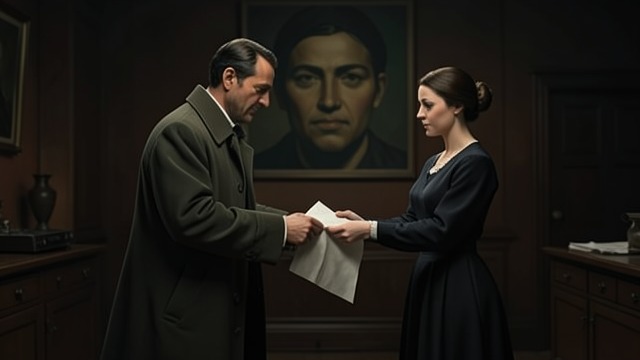
Turning Shame Outward
An indirect assault
Ole does not begin by confronting Tony face to face. Instead, he sends threatening letters under the names of people connected to the hut, seeking to make Tony fear discovery and to direct police attention toward him.
A manufactured public story
The plan uses murder, evidence, and media attention as instruments of humiliation. Tony is meant to look guilty, lose his future with Lene Galtung, and become the visible culprit in a story whose hidden author is Ole.
Revenge becomes its own trap
Ole’s scheme grows beyond the original grievance. Each death is supposed to strengthen the accusation, but the escalating violence also creates a separate moral reality: the avenger who wanted to expose a wrong becomes a killer controlling other people’s lives.
The Son as Executioner
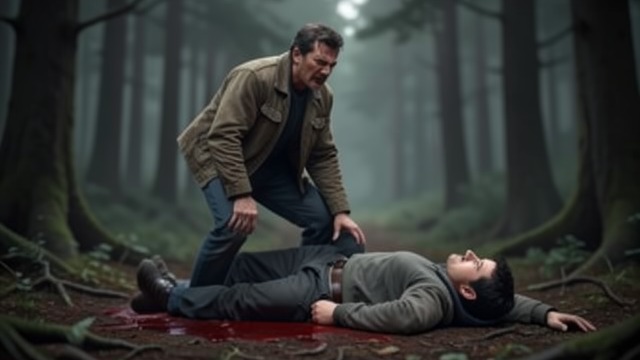
The Inherited Violence Reverses Direction
Recognition without reconciliation
Tony discovers that the man he has been hunting is his father, Odd Utmo. The revelation does not heal the old family rupture; instead, it gives Tony an opportunity to enact the violent power he once feared and resisted.
A punishment staged as justice
Tony tortures and kills his father, making the punishment resemble the cruelty of the childhood household. He can describe the act as revenge for his mother, but the violence also repeats the family pattern he claims to condemn.
The wound reproduces itself
The father-son conflict demonstrates how grievance can become inheritance without any formal transfer. Tony sees himself as the one who breaks the cycle, yet his choice to dominate and destroy his father makes him another participant in the same brutal legacy.
The False Ending of Shame

Exposure Replaces Revenge
The confession as a performance
In Africa, Tony tells Lene Galtung the story of his childhood and his murders while demanding that she accept his account of love and loyalty. He presents confession as intimacy, but uses it to make her hear the full truth while trapped in his power.
A proposed marriage under coercion
Tony asks Lene to sign a marriage agreement and wear the golden instrument he presents as a wedding token. The gesture turns his desire for recognition into another threat: he wants obedience to confirm that he has won.
Shame cannot be transferred cleanly
Tony’s pursuit of humiliation does not restore what happened to him as a boy. It produces new victims and repeats the abuse he attributes to his father. The revenge narrative collapses at the crater, where the surviving characters must confront consequences rather than the redemptive ending Tony imagines.
Years before the present murders
The night of November 7 at Hävasshütte
After Adele’s death and before the later murders
After Tony finds Odd Utmo at the isolated mountain cabin
Near the final confrontation at the Nyiragongo crater
