Botsen Prison
The Leopard (Jo Nesbø Edition)Botsen Prison is both a working district jail and an austere extension of the police story around it: joined to Oslo Police Headquarters by an underground passage, it supplies the setting for an improvised office beneath the prison’s cell block. Its gray walls and concealed corridors make the institution a physical reminder of confinement, authority, and the history carried by the building.
Setting and Position
The old gray walls of Botsen stand beside Oslo Police Headquarters, connected to it by an underground passage. From the entrance to the headquarters, the city falls away toward Grønland and the fjord-side harbor. In winter, the façades appear pale and dirty, as though ash had fallen over them; at the water, cranes rise against the sky like gallows. The prison is thus placed within a bleak urban landscape, close to the machinery of policing but visibly marked as a place of confinement.
The Underground Tunnel
The passage between the headquarters and the prison is 400 meters long. At 6:58 a.m., Harry Hole, Kaja Solness, and Björn Holm walk through it toward the prison. Water drips from the ceiling and echoes against the dimly lit walls, turning a practical connection into a damp, oppressive route. The tunnel has served several purposes: prisoners have been taken through it for questioning, it has been used as a winter running track when snow makes outdoor training difficult, and in earlier, less honorable times it provided a place for unofficial rough treatment of especially resistant prisoners. These uses give the passage a history in which routine movement, exercise, interrogation, and abuse occupy the same concealed corridor.
An Improvised Office
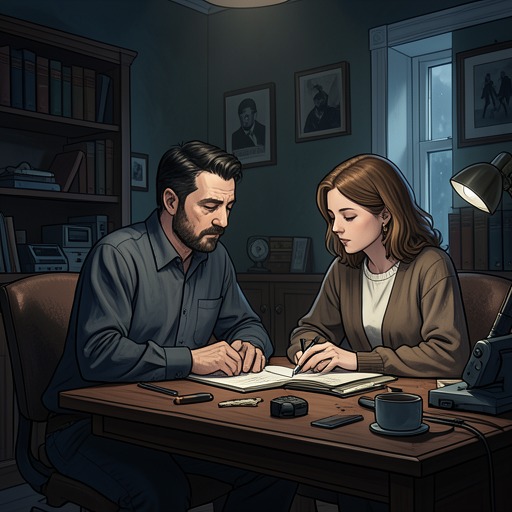
The prison also provides space for the three investigators to work. Their room lies beneath the stairs leading to the cell block; they have to duck to pass under the staircase before Harry unlocks its iron door. Warm, stale damp air meets them inside. When he switches on the light, cold blue neon reveals a square concrete room with a gray-blue linoleum floor and bare walls. It has no windows or heating, and none of the ordinary comforts expected of an office for three people. The location turns the prison from a backdrop into a workplace: the investigators’ base is literally tucked beneath the route to the cells, separated from the outside by concrete, iron, and the tunnel joining it to police headquarters.