Gunnar Hagen
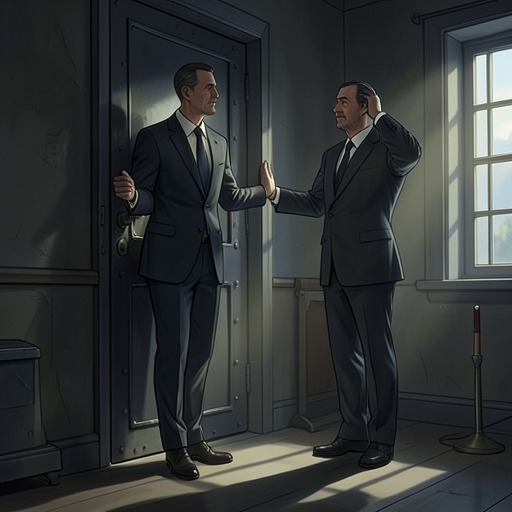
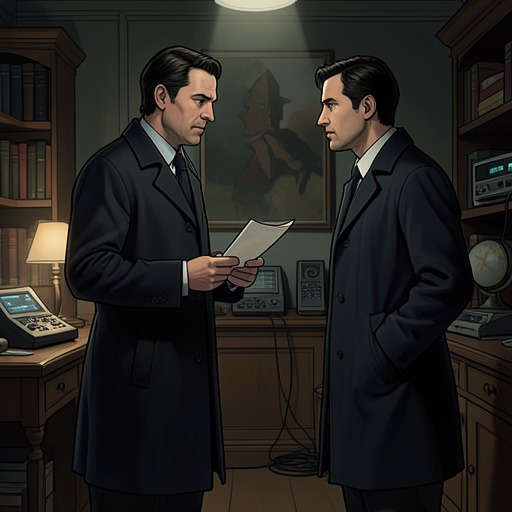
The Leopard (Jo Nesbø Edition)Gunnar Hagen is the head of Oslo’s Violent Crime Division and Harry Hole’s former superior, a police leader whose work is defined by an uneasy balance between institutional command and personal loyalty. He helps Harry pursue investigations even when they threaten his own position, but also sets limits, ends operations when ordered, and weighs the survival of his division against the interests of the police as a whole.
Identity and outlook
Hagen’s professional perspective is shaped by the daily possibility of death. At Gardermoen Airport, watching children in rain suits walk hand in hand, he recognizes the image as one of community and mutual care; his work as head of the Violent Crime Division instead makes him think of a human chain searching for a person presumed murdered. The contrast gives his public-service role a grim double vision: the social bonds he wants the police to protect are continually exposed to violence and loss.
His office door carries a joke about seeing dead people, a macabre shorthand for the work associated with Harry and the division. Hagen’s response to the children shows that he is not indifferent to what the work costs. Rather, he has acquired the habit of translating ordinary scenes into the terms of an investigation, because that is what leadership of a homicide unit requires.
Harry Hole and the clandestine investigation
Hagen’s relationship with Harry combines authority, familiarity, and concern. When Harry returns after a damaging previous case, Hagen acknowledges that the case has affected him and those close to him, and even recognizes why Harry might wish for another life. He nevertheless insists that investigative work is what Harry can do. With two murders already linked by an identical method, Hagen calls on the experience they have paid dearly to acquire and persuades his former subordinate to take the case seriously.
The arrangement is not simply an ordinary assignment. Hagen tells Harry that the dispute between the Violent Crime Division and the Norwegian Criminal Investigation Service has intensified over police savings, rationalization, and overlapping jurisdictions in a small country. Mikael Bellman, newly returned from Europol to a senior post in the Criminal Investigation Service, has become a focus of that conflict. Hagen understands that the institutional dispute could determine who controls the investigation, and that information about Harry’s work may reach Bellman before the team is ready.
Harry asks for a three-person team, consistent with his preference for small investigations. Hagen accepts the proposal partly because fewer participants mean less risk that the Criminal Investigation Service or the Ministry of Justice will learn about the inquiry. He supports secrecy but makes it a strict operational condition: Harry’s team must not discuss its work with colleagues at police headquarters because there is a leak. Hagen is to be their sole authorized contact. That rule places him between the covert team and the institution whose interests he is also obliged to serve.
Hagen’s support does not spare him from the consequences of Harry’s methods. After Harry arranges for information about a rope factory to reach the Criminal Investigation Service through Beate Lonn, Hagen is summoned to face Bellman’s knowledge of the team’s work on Marit Olsen’s murder. Hagen has already worried that forming a group to investigate against ministerial instructions could bring him serious trouble; appointing Harry to lead it compounds the risk. When the Criminal Investigation Service has learned of the operation, Hagen tells Harry and Kaja Solness that he has no choice but to stop it. His decision is a real exercise of authority, not merely a warning: the investigation has crossed the boundary of what he can conceal.
Limits, setbacks, and renewed cooperation
The order to stop does not end Hagen’s dealings with Harry. After Harry is held in an arrest cell, Hagen comes to release him following a conversation with the prosecutor. He explains that the cells are for temporary custody, not punishment or conviction, and asks what happened after hearing that two Criminal Investigation Service officers brought Harry there. The scene places Hagen once again in the role of superior who can intervene, while making clear that he must work within legal procedures rather than simply overrule them.
Later, after the team has failed to find Adele Vetlesen, Hagen says that the search has run out of time and that Kaja’s services are needed elsewhere. Harry responds by asking for unrestricted resources for a new search. Hagen rejects the request, pointing out that the team has already spent half the travel budget on a failed trip to Congo-Kinshasa; he declares the operation over. Harry turns the exchange into an attempt to persuade him, and Hagen listens, though his initial response reflects both the cost of the failed search and the exhaustion of the authority available to him.
A further jurisdictional limit arises when a missing-person inquiry uncovers connections to a murder case assigned to the Criminal Investigation Service. Hagen says that they cannot go to the media: the information must be handed over, and the other service must take responsibility for what follows. Harry objects that Bellman may receive the credit for their work. Hagen is unconvinced that there are laurels to claim and tells the team to prepare to move. His position exposes a recurring tension in his leadership: even when the team’s work has produced something consequential, jurisdiction determines who may continue it and who may speak about it.
That tension is not a permanent break between Hagen and Harry. When Harry proposes returning to Congo-Kinshasa to find Lene Galtung, he presents the mission as a search for a missing person rather than an extension of the murder case. Hagen questions both the premise and the risks. Harry explains that someone could have entered Congo-Kinshasa using Odd Utmo’s passport: the number of a deceased person can take up to a year to be removed from the relevant register, the countries have no police-cooperation agreement, and bribery could make an arrest avoidable. Hagen suggests locating Galtung in Zurich and having Swiss police meet her at the airport instead. Harry argues that surveillance will lead them to Tony Leike.
Harry also offers to accept the consequences himself, including dismissal for disobeying orders, and says he intends to resign after the matter is over. Hagen warns him, then gives his approval. His assent is significant precisely because it is not unconditional or easy: he knows the danger of the plan and the likelihood that Harry will act regardless, but chooses to authorize it rather than leave the investigation wholly outside his control.
Institutional conflict and leadership
Hagen’s decisions repeatedly unfold against the possibility that police structures themselves may be reorganized. He discusses the division’s conflict with the Criminal Investigation Service not as an abstract administrative issue, but as a contest over resources and responsibility. Later, he meets journalist Bent Nordbo, who brings him material suggesting that Bellman protected his wife in a drug case. Hagen recognizes the press risk: even if the old case is beyond legal prosecution, public exposure may still damage Bellman. The exchange shows Hagen receiving information that could change the balance between the rival leaders, although the evidence does not establish that he uses it to secure a particular outcome.
When Harry strikes Björn Holm and the prospect of a complaint arises, Hagen’s response is restrained: after asking whether Holm is the leak, he tells Harry to take a few days off. The instruction does not resolve the underlying crisis, but it shows Hagen managing the immediate fallout without treating Harry’s conduct as irrelevant. He must protect working relationships inside the unit while continuing to question where information has escaped.
Resolution and narrative role
After Olav Hole’s funeral, Hagen stands among the police colleagues who attend with Harry and Kaja. The gathering is modest, and the condolences come from people Harry barely knows, but the presence of Hagen alongside Beate Lonn, Kaja, and Holm marks him as part of Harry’s working community as well as his chain of command. The funeral places the professional relationship within a wider context of personal loss, without turning Hagen into a substitute for Harry’s family.
In a later encounter with Bellman, Hagen frames his priorities in institutional terms. He wants to spare the police corps another public scandal and protect the integrity of ordinary officers. He acknowledges that the Ministry of Justice might consolidate resources despite the division’s position, and says he would consider leading such a unit if offered the role. At the same time, he argues that the existing arrangement can continue if the other side accepts his assessment and the murderers receive their punishment. As he speaks, Bellman is caught by a rope and remains alive, leaving the immediate physical outcome distinct from the unresolved organizational question Hagen is discussing.
Hagen’s narrative role is therefore neither that of a simple ally nor that of a fixed obstacle. He enables Harry’s small, secretive investigations, enforces confidentiality, stops work when institutional authority demands it, and sometimes reopens a path when Harry presses beyond the permitted limits. The division’s future remains uncertain, but Hagen’s repeated choices make his governing principle visible: he tries to preserve a functioning police service without surrendering the work of finding and punishing killers.