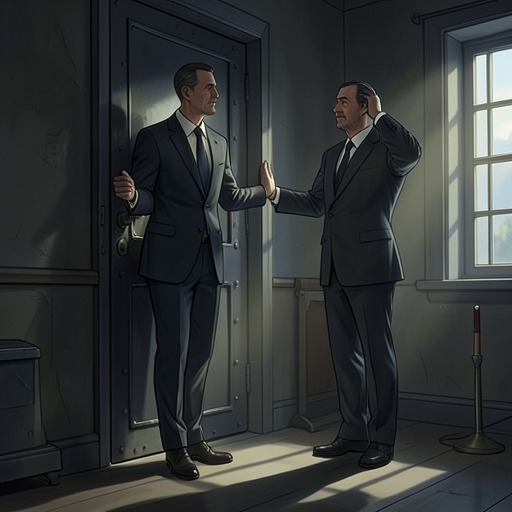
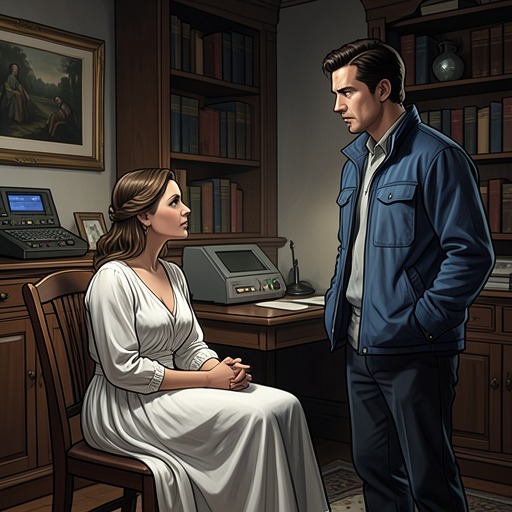
Harry Hole
The Leopard (Jo Nesbø Edition)Harry Hole’s skill at investigating serial killers makes him indispensable to Gunnar Hagen, but the work has also drawn people close to him into danger. The novel introduces him at a point of retreat: Kaja Solness must find him and persuade him to return, while Hagen recognizes both the cost of the previous case and the ability Harry cannot easily leave behind.
Identity and Recall
Harry Hole is a former chief inspector with a reputation built on catching serial offenders. When Kaja Solness locates him, she identifies herself as Norwegian and explains that she has been sent by Gunnar Hagen. Her task is not simply to deliver a message: Hagen wants Harry back because the department has few investigators with his experience. Kaja reminds him that he caught Schneemann, making his past success the strongest argument for taking on the new investigation.
Hagen approaches the request with an awareness of what the last case did to Harry. He acknowledges that the case reached beyond Harry himself and pulled people close to him into its dangers, an experience that could make anyone wish for another life. Yet Hagen also insists that this work is what Harry can do. The appeal rests on a tension that will define Harry’s return: his ability is real, but so is the personal damage attached to using it.
Investigative Method and the Emerging Pattern
Harry returns to the investigation by treating its apparent mysteries as connections to be tested rather than conclusions to be accepted. He describes his approach as keeping his mind empty and receptive: the point is to avoid deciding too early what the evidence means. That discipline suits a case in which the victims’ movements, identities, and possible links have to be reconstructed from scattered records rather than from a single witness or a clear crime scene.
The records begin to place several women on the same route. Adele Vetlesen, a 28-year-old from Drammen, was reported missing by her partner in November. A search of the Norwegian State Railways ticket system showed that she had bought a ticket online from Drammen to Ustaoset for November 7. On that same date, Borgny Stem-Myhre had purchased a ticket from Kongsberg to Ustaoset. The parallel journeys give the investigation a concrete point of contact between a missing woman and a murder victim, but they do not by themselves explain what happened to either of them.
A further record points toward a sequence of mountain huts. Iska Peller’s account was charged on November 20 for two beds in each of four huts belonging to the Norwegian Trekking Association, with the huts about a day’s walk apart. Harry’s attention to this itinerary helps turn a list of isolated locations into a possible route. When he later asks whether the information about Hävasshütte has reached the investigators handling the three murders, he is pressing the team to connect the hut evidence with the wider pattern, not treating the missing-person inquiry and the murder investigation as separate problems.
Harry’s method also draws on experience beyond ordinary police casework. He recalls his earlier work assembling threat models in state security, where investigators searched for possible connections without first interviewing people. A NATO-based search engine gave them access to a broad range of material online, allowing them to scan widely for links. He proposes applying the same principle here: cast the net across available information, then follow the relationships it reveals. His planned trip to Bergen to speak with an unemployed former colleague shows the practical counterpart to that broad search—records can expose a lead, but a person with relevant knowledge may still be needed to interpret it.
Forensic Reconstruction and Misread Evidence
Harry Hole’s reconstruction of Elias Skog’s bathtub death turns the physical traces into a sequence of deliberate actions and a final struggle. He concludes that the killer glued Elias down and waited for the adhesive to set before turning on the tap, leaving him to drown slowly as the water rose. Elias eventually tore his right leg free, ripping skin from his heel and calf that remained stuck to the tub; blood entered the water as he struck the floor with his foot to alert the landlady below. She heard the blows. Harry’s account makes the delay itself part of the killing: Elias was left time to understand the danger, but not enough freedom to escape it.
A witness at Hävasshütte had earlier seen two people beneath the overhang of the outhouse on a moonlit night. The woman faced him while the man stood behind her, his face hidden; the witness saw the man cover her mouth and the woman move in a way he mistook for a belly dance. He assumed they were preparing for sex and went back to bed, disappointed that he had not seen more. Only after reading about the murders did he reconsider the scene. The episode shows how an observation can be accurate in its details yet misleading in the story a witness builds around them—and how Harry’s investigation depends on returning to details that seemed unimportant at the time.
The same habit of separating an apparent record from the event it claims to describe shapes Harry’s explanation of Adele Vetlesen’s journey. The passenger list showed Adele’s name on a Brussels Airlines flight to Kigali on November 25, but no passenger under that name was registered at Kigali passport control. Harry explains the discrepancy through a forged passport: a woman left Oslo carrying a passport issued in Adele’s name, then presented her own genuine passport on arrival. Because officials at passport control did not require the ticket, the difference between the ticketed identity and the traveler’s real identity could pass unnoticed. The journey therefore supplied evidence not that Adele had reached Kigali, but that someone had used her identity to conceal a traveler’s movements.
Betrayal, Loyalty, and the Idea of Home
Kaja Solness eventually comes to Harry Hole in person to explain that her betrayal began in what she calls blind infatuation. She does not ask him to forgive her; she says she came so he would hear the truth face to face. Believing herself incorruptible, she had failed to recognize how desire could make her susceptible to influence. The betrayal has injured her own sense of herself as well as her relationship with Harry: she says that betraying herself hurts even more. Her admission makes their partnership more than a professional arrangement, because the breach is measured against the trust she knows she has broken.
Harry’s answer to Mikael Bellman complicates any simple picture of him as either loyal to the police or wholly estranged from them. He says that even someone who feels entirely alone and isolated may discover that he has a home: a place where he can imagine being buried. For Harry, that place is the park in front of police headquarters. He rejects the usual defense of police solidarity, describing it as cowardly, self-interested loyalty in which colleagues may later avenge one another, provide exculpatory testimony, or turn a blind eye. He says he hates that compact, yet still names the institution’s grounds as his chosen resting place. His attachment is not an endorsement of the force’s habits; it is a more conflicted recognition of belonging that survives his contempt for its abuses.
Physical Limits and Survival
Harry Hole’s competence does not make him physically invulnerable. When Krongli attacks him from behind, Harry recognizes the police restraint being applied to his wrist, a technique he had trained in from his first year at the police academy. Recognition comes too late: two days of drinking have slowed him, and Krongli twists his arm and wrist with such force that Harry pitches forward and strikes his temple against the felt-covered table, on the side of his already broken jaw. Pain blacks out his vision for a moment. The scene strips away the authority of the experienced investigator; knowing what is happening cannot compensate for a body no longer quick enough to respond.
Buried beneath snow, Harry faces a more absolute limit. He cannot move even a finger, and the pressure on his chest and diaphragm prevents his lungs from expanding. He identifies the condition as Panzerherz, which Olav Hole had explained as the compression of the chest and diaphragm by snow. Harry calculates that the blood in his body holds about a liter of oxygen and, at an average consumption of a quarter-liter per minute, gives him not quite four minutes. His father’s instruction—to hold a hand in front of the face and make a hollow—has become an immediate survival measure, though Harry cannot tell whether the space contains breathable air. His panic is sharpened by the thought that Olav must outlive him: even in the struggle to breathe, Harry measures survival through the father-son bond.
When Harry manages to move, he kicks and starts digging in front of the net that confines him. His fingers find the edge of the fireplace guard. He pushes both hands behind it and pulls; the guard has held against the snow, and the chimney remains open. The air he finds is stale and smells of ash, but it is air. Feeling a piece of material like polystyrene, he realizes it is half-burned wood and continues to clear the snow. Survival arrives not as a sudden rescue but through the small physical discoveries that let him make room, reach the fireplace, and keep digging.
Another fall reduces the drama of survival to the mechanics of a rope. Harry drops five meters, thinks of nothing, and feels the climbing harness tighten at his groin and lower back. The elastic rope softens the abrupt stop; then he feels himself being pulled upward again as wind drives snow into his face. The moment offers no consoling life review or revelation: the immediate facts are the short fall, the restraint of the harness, and the return movement of the rope.
Reassessment, Pursuit, and Departure
Harry continues to test the apparent solution against details that do not fit. In a briefing in the Odin meeting room, he tells the investigators that the hand glimpsed beneath a snowmobile belonged to Tony Leike: its fingers were bent by gout. He has also laid out a theory for the team and waits for its response. The identification turns a fleeting sight under the snow into a specific lead, though it does not by itself explain what happened to Tony.
A search of a room associated with Tony Leike offers no trace of anyone else. Björn Holm and the investigators have searched drawers and cupboards, used special lamps to look for blood, and taken fingerprints with a small scanner connected to Holm’s laptop. Every print found so far belongs to Tony. The thoroughness of the search makes the absence striking, but Harry does not treat a clean room as proof that the case is settled.
A possible tooth changes the direction of the investigation. When Björn holds the small find to the light and says it may be a tooth, Harry’s neck hairs rise; he says they must return at once and rejects the assumption that Altman killed them all. The moment is a reversal rather than a completed solution: the object is only tentatively identified, but Harry recognizes that the prevailing account may have placed the killer in the wrong role. Earlier, he had challenged Sigurd Altman over the identity behind the name, asking whether he could call him Ole Sigurd. Across these confrontations, Harry treats names and physical traces alike as evidence that may expose a constructed version of events.
His attention also extends beyond the immediate crime-scene logic. Before seven in the morning, Harry calls Katrine Bratt, who is already awake and due to leave the clinic that day. She is expected to return to the Bergen police headquarters after the weekend, and Harry hopes she will take things quietly at first, while doubting that quietness comes naturally to her. The brief call shows him keeping track of a colleague’s recovery even as the investigation presses forward.
Harry’s own vulnerability becomes stark when he wakes on a mattress at Eddie van Boorst’s, with a single bare bulb above him and no clothes on. The familiar image of Edvard Munch’s head impaled on a nail appears as it has in a recurring dream, but this time he is awake: the Ketanomin is wearing off, and pain from his damaged jaw leaves no room for further dreaming. He is alone and not tied up, so he can get to his feet; the scene gives him some physical freedom without easing the pain or clarifying how long he has been there.
The pursuit then places Harry in a setting where the threat is explicit. As he and the others ride toward a plateau above a crater, Kinzonzi has told him that Tony is accompanied by the girls and a driver, and that both men carry automatic weapons. Harry does not know what they will find at the top. The information makes the approach more than a search for a missing suspect: it is a movement toward an armed group, with the girls’ presence adding urgency to the danger.
Afterward, at a hotel room beside a silver-shimmering lake, Harry replaces the wet bandage around his head with a new one from reception. The makeshift stitches are holding his skin together, but his jaw is worse; his packed bag stands beside the bed, and the clothes he plans to travel in are laid out on a chair. He takes his cigarettes onto the balcony and sits in the cold, which numbs the pain in his cheek and jaw. Looking across the lake, he knows he never wants to see it again. Back in the room, the telephone rings, and Rakel asks what he is doing. The exchange begins a personal contact at the edge of his departure, without yet revealing what either of them will say next.
Detention and the Return to Work
After spending two hours on a cot in a holding cell, Harry Hole opened his eyes to find Gunnar Hagen outside, struggling with the key. Hagen apologized and explained that he had been in a meeting. The scene offers no account of how Harry came to be detained, but it places his return to police work amid interruption and institutional friction: even the man who recruited him has to come back from a meeting to let him out.
Harry’s re-entry into the murder inquiry is strikingly unsentimental. Asked what he is investigating, he identifies the case as the triple murder and yawns. The weary response contrasts with the scale of the case, without diminishing his commitment to it. Later, while Harry is on the phone at a computer, Kaja Solness greets him warmly and he acknowledges her and Mikael Bellman with an offhand invitation to sit and have coffee, as though the department head’s arrival had already been expected. His manner is casual, but the exchange places him back inside the working investigation, among colleagues whose presence and authority shape the case around him.
Borgny Stem-Myhre’s Last Known Movements
The investigation’s account of Borgny Stem-Myhre’s disappearance narrows to a gap after she left the Mono. Investigators assumed she had meant to walk to the nearest taxi stand, but neither the taxi drivers thought to have been nearby nor the records from Norgestaxi and Oslo Taxi produced a driver who recognized her in photographs or recalled taking her to Sagene. In practical terms, she vanished from view after leaving the establishment. The next people known to encounter her were two Polish bricklayers arriving for work: they noticed that the padlock on the iron cellar door had been broken, went inside, and found Borgny fully clothed in the middle of the room, her body twisted. The uncertain taxi lead and the abrupt discovery leave the interval between her departure and the cellar as an evidentiary void, making the broken lock and the workers’ arrival the first firm points in the account of her death.