Johan Krohn
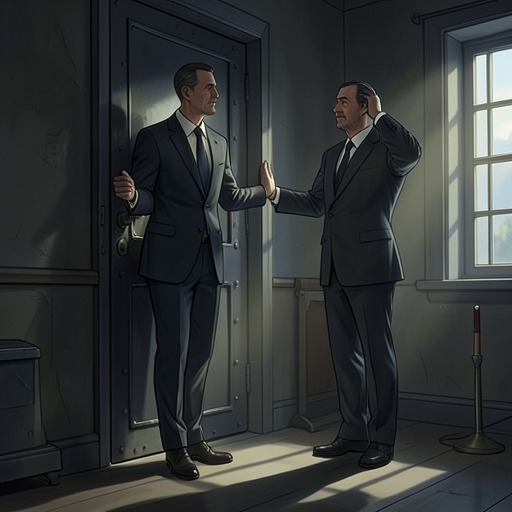
The Leopard (Jo Nesbø Edition)Johan Krohn is Sigurd Altman’s defense attorney and the broker of a bargain that reshapes the investigation into Tony Leike. Ambitious enough to see Altman’s case as a route back to the top, Krohn is also guided by a professional duty he takes seriously: the lawyer serves the client, not the other way around. That tension makes him more than a polished negotiator. He recognizes the moral and political stakes of the deal, but insists that his client’s interests remain its terms of reference.
Identity and Professional Ambition
Krohn is an established criminal-defense lawyer whose public profile has brought him invitations to lecture, appear in radio and television debates, attend premieres with his wife, and join work dinners. Young assistants and trainee judges respond to his compliments, while colleagues and institutions continue to solicit his presence. Yet these signs of visibility mask a professional decline: his wins, major media appearances, and new clients have all begun to fall. The downturn is not yet severe enough to threaten his reputation, but it has made him eager for a demanding case that can restore his position at the summit of his profession. Altman’s case arrives at that opportune moment. Krohn can already imagine himself in court as a brilliant rhetorician and agitator, commanding a jury and judge without losing sight of justice. His self-image is theatrical, but not simply cynical: he wants distinction and believes he can pursue it through advocacy. The case offers both a client whose story he finds extraordinary and an opportunity to demonstrate his own ability.
Taking Altman’s Case
Harry Hole learns that Altman refuses to speak to anyone except his lawyer. When Harry identifies Krohn as that lawyer, he calls the office and is put through immediately. Krohn listens to Harry’s concerns but refuses access to his client. Unless Harry can provide more concrete evidence that Altman is holding someone captive or otherwise endangering a person through his silence, Krohn will not permit an interview. He stresses the seriousness of the accusations and his obligation to protect Altman’s interests. Harry accepts the point without pressing further. Krohn’s later account of taking the case complicates the image of a lawyer simply chasing a headline. He listens as the thin man with round glasses tells what Krohn regards as the most incredible story he has ever heard, and he believes it. But he becomes disappointed when he understands Altman’s plan. Before accepting the mandate, he recalls his father’s repeated instruction that a lawyer is there for the client, not the client for the lawyer. He takes the case on that basis, and the narration presents him as, at heart, not a bad man. His ambition and his sense of obligation coexist; neither cancels the other.
Negotiating with Bellman
After Altman is transferred to Oslo District Prison, Krohn recognizes fresh potential in the mandate. He calls Mikael Bellman, whom he has met once before in connection with a murder case. Krohn believes he understood Bellman’s character at that first encounter, describing their resemblance as one hawk recognizing another. He can also appreciate Bellman’s humiliation after the day’s headlines about his arrest by a village policeman. Their shared appetite for advantage gives Krohn a useful point of contact, though it does not make the two men’s interests identical. Krohn arranges a meeting with Bellman and Altman in a prison visitors’ room, insisting on a neutral place because the meeting is not a formal interrogation. The publicity surrounding the case makes it impossible to take Altman out of the prison, so they use a windowless room ordinarily reserved for private visits with family. Its sparse furnishings include a crocheted blanket, a wall clock, and a deeply worn sofa. Against this makeshift domestic setting, Bellman and Altman sit opposite one another at the table while Krohn takes the sofa. Bellman says that the conversation technically violates the rules and demands that nobody take notes or tell third parties what is said. Krohn answers by insisting that the prosecution must fulfill the conditions for a confession. When Bellman offers his word, Krohn asks what else Bellman has to offer and accepts his suggestion of a written agreement. He slides a sheet across the table. The document, he explains, will remain unseen unless necessary and will be returned once the conditions have been met; he gives Bellman a S. T. Dupont pen with which to sign. The exchange makes the negotiation tangible: Bellman’s informal assurance is not enough, and Krohn puts the terms on paper.
The Bargain and Its Consequences
Krohn frames the bargain as a way for Bellman and the Kriminalamt to obtain the real killer, resolve Bellman’s internal problems, claim the credit, and secure a witness who can testify that he saw Tony Leike murder Adele Vetlesen. He also draws a boundary around what the bargain will expose: whatever else has happened is to remain between them. Bellman asks whether Altman will be released; Krohn confirms that release is the agreement. The offer is therefore not a simple exchange of information. It connects Altman’s liberty to testimony against Leike and Bellman’s institutional and personal recovery to the same arrangement. The later outcome confirms that the agreement is carried through. Bellman receives reassuring calls from the ministry, understands that the developments will benefit both the Kriminalamt and his own prospects, and goes upstairs into daylight. Krohn gets out of his blue Audi and extends his hand to Altman as they cross the street. Bellman watches the released man and his lawyer leave together until the car turns toward Tøyen. Krohn’s role ends not with a courtroom performance but with the visible consequence of negotiation: Altman is free, and Bellman has reason to believe the arrangement has improved his standing.
Character and Narrative Role
Krohn’s significance lies in the gap between the ideal of justice he imagines and the practical machinery of the deal he constructs. He wants to return to the top, and he recognizes the case’s value to his career; at the same time, his father’s maxim places the client’s interests ahead of his own. His response to Altman’s plan—disappointment followed by acceptance—shows the strain between private judgment and professional duty without resolving it into a simple choice between virtue and opportunism. His dealings with Harry and Bellman reveal two distinct forms of that duty. With Harry, he refuses access until the danger can be substantiated, protecting Altman against accusations he considers serious. With Bellman, he uses procedure, written terms, and a carefully limited promise to secure Altman’s release and a witness against Leike. The story gives Krohn neither the final moral verdict nor a purely heroic role: he is a capable advocate whose ambition is openly part of the scene, while his loyalty to the person he represents determines the shape of the bargain.