Mikael Bellman
The Leopard (Jo Nesbø Edition)Mikael Bellman’s ascent through the police is bound to a contest over who controls the murder investigation: he seeks greater authority for the Kriminalamt while attempting to shape the case’s public meaning. His command of procedure and image produces real institutional gains, but the investigation repeatedly exposes the distance between a polished performance of control and the uncertain facts beneath it.
Identity and Institutional Ambition
Bellman is a senior official in the Kriminalamt and its newly appointed deputy head when the dispute over murder jurisdiction intensifies. He appears as a man whose authority is legible before he speaks: in an elegant gray trench coat, watched by two armed companions who seem to act as extensions of his power. The impression is less that he personally needs to hold the weapon than that others already hold it for him. His carefully composed appearance and forceful presence establish the public persona through which he operates.
The conflict has a concrete administrative history. Bellman’s predecessor arrangements and the old rivalry between the Violent Crime Division and the Kriminalamt have been reopened by proposals to rationalize police spending and responsibilities. The police must decide whether a small country can maintain two specialist departments with overlapping powers. Bellman’s appointment gives new force to that debate, and his next move is to interpret the rules so that, in major murder cases, the Kriminalamt can decide for itself whether a case belongs to it or to the local police. Previously, that decision had rested the other way around. The change is not merely technical: it shifts power toward the institution Bellman represents.
His recruitment of Jussi Kolkka also illustrates his readiness to work around institutional obstacles. Kolkka has police training in Finland but lacks the formal qualifications required for police status in Norway. After the union objects, the solution is to employ him temporarily through an exchange arrangement. Bellman’s methods thus combine procedural maneuvering with the creation of a team able to act under the new order.
Taking Control of the Murders
The jurisdictional conflict becomes open when Charlotte Lolles is found dead behind a Datsun and investigators recognize similarities to the earlier murder of Borgny Stem-Myhre. Although both bodies are found in Oslo, the Kriminalamt insists that the linked murders belong to it and begins investigating independently. The fight is sharpened by the belief that the Ministry’s future support for the agency depends on the case. Bellman is therefore pursuing more than a solution to individual killings: the investigation has become a test of the Kriminalamt’s claim to national authority.
The crimes themselves resist easy mastery. Borgny is found fully clothed in a basement after two Polish construction workers notice that the iron basement door’s padlock has been forced. No driver questioned can place her in a taxi after she leaves the Mono. The medical examiner estimates that she died between ten and eleven in the evening; the cause was drowning in blood from wounds in her mouth, which contained twenty-four symmetrically arranged punctures, each seven centimeters deep except those that pierced her face. The cleaned concrete floor yields no fingerprints, DNA, or footwear impressions. A later report notes two unusual gray-black stones that do not match the gravel at the scene. These details make the murders a difficult evidentiary problem, not simply a contest between rival departments.
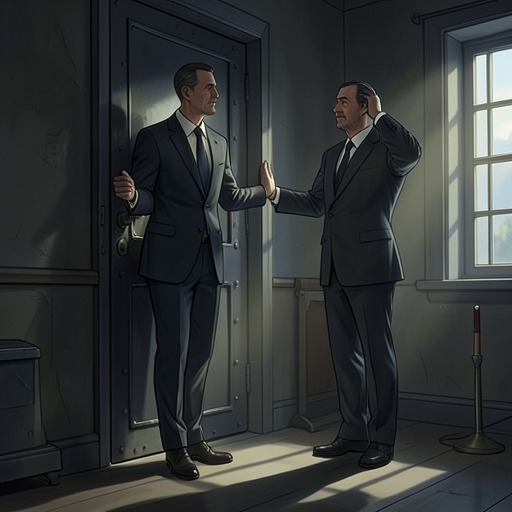
Bellman’s appetite for authority is also visible in his dealings with Harry Hole. He orders Hole to leave and never again come near a crime scene being investigated by the Kriminalamt. When Hole is later found at Lyseren in connection with Marit Olsen’s murder, Bellman presses Gunnar Hagen to accept a version in which Hole’s presence was accidental and unrelated to the case. At Lyseren, Bellman arrives by helicopter, stops the men carrying a stretcher, and lifts the covering to examine the naked, swollen body. He then warns Hole that both Hole and Hagen may lose their jobs and face charges for misconduct. The threat turns the investigative dispute into a direct confrontation over who may act, and at what institutional cost.
Evidence, Error, and the Public Story
Bellman’s handling of Tony Leike shows both his capacity to exploit a promising lead and the risk of treating it as a conclusion. The investigation has thirty-six people—three times the ordinary murder-investigation complement—and Bellman tells them that the arrest of Leike is a triumph. He has reason to believe the case may be close to resolution, but Leike is released after producing an alibi for at least two of the murders. Bellman had also relied on information from Kaja Solness: he later tells her that her tip led him to arrest Leike and to suggest publicly that the case was nearly solved. Now he fears a lawsuit backed by Kaja’s father-in-law’s lawyers and expects the Minister of Justice to demand an explanation. His anger focuses on the consequence for his own position: he believes that he, rather than Hole or Hagen, will pay for the mistake.
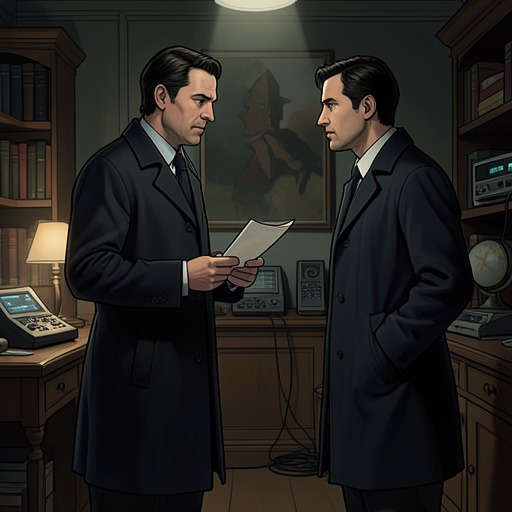
The reversal does not erase the evidence pointing toward Leike. At a meeting, Beate Lonn observes that the alibi does not account for the other indications: a call from Leike’s landline to Elias Skog’s phone, and the murder weapon’s connection to the Congo, where Leike has a business project. Bellman asks Hole why he did not say sooner that he believed the body was Leike’s, while search conditions improve enough for dogs and a helicopter to be deployed. The exchange captures an investigation in which an alibi changes the standing of a suspect without dissolving every clue associated with him.
Bellman also tries to turn uncertainty into a new investigative opportunity. He identifies the unknown seventh man at Hävasshütte as the Kavalier Adele Vetlesen brought with her, and lays out a plan to draw the hidden man out. He eventually asks Hole to help. Publicly, Bellman announces that Iska Peller, who has called after the appeal for witnesses from the night of the murders, will fly in from Australia and revisit Hävasshütte with an investigator to reconstruct the evening as far as possible. In these moves, his command is not simply coercive: he can organize a larger inquiry and recognize the value of a witness and a reconstructed timeline.
The arrest’s public framing remains as important to him as its evidentiary basis. When the Kavalier is arrested by the village police of Ytre Enebakk, Bellman declines to discuss why that force made the arrest or what he will say before questioning the suspect. Instead, he stresses that police work is teamwork and that the Kriminalamt does not care about prestige. This public language contrasts with Hole’s accusation that Bellman, having failed to secure a home victory, has allowed an unqualified rural policeman to take the honor and credit. The conflict leaves the official version poised between collective service and Bellman’s evident concern with who controls the achievement.
Kaja Solness, Harry Hole, and Power
Bellman’s intimate relationship with Kaja Solness undermines the dependable image he presents elsewhere. Kaja understands him as a man she fell in love with at first sight, who seduced her and said he would leave his wife and children for her. She recognizes that she believed him partly because she wanted to believe in love. Her account makes the relationship more than a private complication: it helps explain how she became the source of information that led to Leike’s arrest, and how Bellman’s personal and professional interests became entangled.
After the false arrest threatens to damage his standing, Bellman proposes to take responsibility in a press release. The proposed account would say that, as head of the investigation, he chose to defend the arrest publicly even though the police already suspected that one of their own officers had made an error; it would also say that he allowed Hole to step out of the shadows because Hole was an experienced chief inspector and did not work for the Kriminalamt. The statement is an attempt to define the mistake before others define it for him. It would absorb blame while preserving Bellman’s role as the official who decides how the case is presented.
Yet Bellman is not only an adversary to Hole. He later tells Hole that he wants to thank him for getting Kaja out in time. That acknowledgment briefly cuts across their institutional hostility: Hole remains someone Bellman can threaten, recruit, blame, and thank, depending on what the moment requires. Bellman’s relationships repeatedly show authority as a form of dependence as well as command; he needs other people’s information, judgment, and intervention even when he tries to control the terms on which they act.
Reputation, Success, and the Unfinished Threat
A report about Bellman’s past circulates as rumor rather than established fact. According to Roger Gjendem, Bellman allegedly beat a colleague at a police Christmas party after the colleague danced several times with Bellman’s wife. The colleague suffered a broken jaw and skull fracture but lacked evidence to identify the attacker because the assailant wore a balaclava. Gjendem says that Bellman applied to Europol amid the resulting trouble, hoping to get out of the line of fire. The story cannot be treated as a confirmed account, but its presence contributes to a reputation in which aggression, personal jealousy, and institutional advancement are difficult to separate.
For a time, the political calculation seems to reward him. Bellman receives calls from the Ministry—not from the Minister personally, but enough to tell him that the response is favorable. He concludes that the events will have positive consequences for the Kriminalamt and for his own career. The case has supplied the institutional visibility and political leverage he sought.
That apparent success does not produce security. In the closing glimpse provided here, Bellman stops breathing and feels himself losing his footing; his hair rises and his stomach tightens. The sensation recalls the nightmare that has pursued him, but now it belongs to waking reality: a fall without a rope, like a free climber’s descent. The image reverses the assurance of the earlier political victory. Bellman has worked to make himself the man who controls the case, the department, and its public narrative, yet the story leaves him confronting a danger that his authority cannot simply manage.