Oppsal
The Leopard (Jo Nesbø Edition)Oppsal is both a place of childhood memory and the setting of Harry Hole’s return to his family home during his father’s final illness. The old house gives his memories a physical address: its rooms, familiar smells, and quiet make a return to the past feel immediate, while its emptiness reflects the loss approaching within the family.
Childhood and the Oslo Landscape
As a boy, Harry skipped the first school lesson with Oystein and went to the Wehrmacht bunkers in Nordstrand. From there they watched pea-soup-colored fog cover central Oslo. The recollection makes Oppsal part of a wider map of Harry’s early life: home and childhood companionship lie close to the city, but the boys’ excursions also take them toward its edges and remnants of wartime construction.
The fog is remembered as part of a changing urban landscape. Over the years it became less common as industry and wood-burning stoves disappeared. This recollection links Harry’s personal past to a transformation in Oslo itself: the city he knew as a child is not quite the city surrounding him now. Oppsal carries that temporal contrast without being presented as an untouched refuge; it is a point from which both the city and Harry’s life have changed.
The Family House and Harry’s Return
When Harry visits his father in hospital, the two speak about the father’s condition and Harry’s injured jaw. Harry describes the injury only as a foolish mistake, and privately wonders when children begin protecting their parents from reality. He places that reversal at about age ten. His concern is not only that his father is ill, but that their roles have shifted: the son now measures what his father can bear to hear.
Harry asks whether he may stay in Oppsal for a few days. His father welcomes the offer, saying that somebody needs to look after the house, though he had not wanted to ask. Harry keeps to himself that the electricity in his own apartment has been disconnected. The exchange gives his return a practical reason while leaving its fuller circumstances unspoken: the house needs care, and Harry needs somewhere to go.
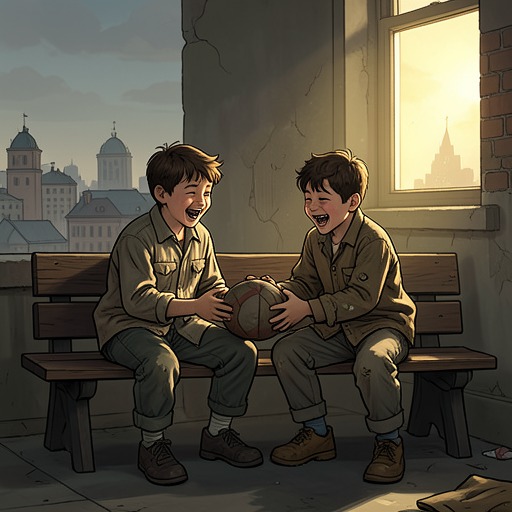
Oystein drives Harry to the garage of the old yellow wooden house in Oppsal. On the way, Harry tells him that his father is seriously ill and has little time left. Oystein responds with sympathy, then contrasts the fathers’ lives: Harry’s father never drank, took long Sunday walks, and worked as a teacher, while Oystein’s father drank heavily, worked at the Kadok Factory, where workers developed asthma or unusual allergies, and scarcely moved once home on the sofa. Yet Oystein’s father is still fit. The comparison makes the unfairness of illness tangible through the two men’s different histories, rather than offering any explanation for why one father is dying and the other remains well.
Rooms of Memory
After Oystein leaves, Harry waits until the car’s tires have receded over the gravel before unlocking the door. Inside, the smell, silence, and light falling on the coat cupboard bring the house’s past back to him. He moves from room to room, from year to year, through memories of his mother and father, Søs Hole, and finally himself. The sequence turns the house into more than a place to sleep: walking through it becomes a passage through the family’s shared history and Harry’s own successive ages.
In his childhood bedroom, a Clash poster shows a guitar about to be smashed against the floor. Harry lies on the bed and breathes in the smell of the mattress; then he begins to cry. The scene locates grief in precise, ordinary details—the poster, the bed, the familiar air—rather than in an account of what he says. Oppsal’s house holds the past close enough to comfort him and to overwhelm him at once.
A Refuge Under Strain
Harry returns to the same bedroom after meeting Kaja Solness and falls asleep in the large, empty house. He dreams again of a Sydney marina, a chain being hauled up, and what first seems to be a fire jellyfish but resolves into red hair framing a white face. A second, newer dream, which had first appeared in Hong Kong shortly before Christmas, returns as well: a nail projects from the wall, bearing the face of a sensitive-looking person with a neat moustache, while something in Harry’s mouth seems capable of making his head burst. In the dream, Harry jerks his head three times before falling asleep.
The house therefore shelters Harry without quieting what follows him. His dreams cross locations and recur in the bedroom at Oppsal, placing this familiar family interior beside images associated with Sydney and Hong Kong. The narrative gives the house two functions at once: it is the place where Harry can return to his father and childhood, and the setting where old and new disturbances continue to surface. That tension makes Oppsal central to the emotional circumstances of his return, even as the dreams point beyond it.