Press Release Signed by Harry
The Leopard (Jo Nesbø Edition)The Press Release Signed by Harry is the instrument through which Mikael Bellman turns Harry Hole’s coerced signature into a public account of Tony Leike’s wrongful arrest and release. It makes Harry the apparent bearer of responsibility while allowing Bellman to present himself as the official who managed the mistake.
Purpose and Proposed Account
Bellman’s proposed statement begins by acknowledging that he, as head of the investigation, had accepted responsibility for publicly defending Leike’s arrest even though the police already suspected that one of their officers had made an error. It then says that when Harry later insisted on stepping out of the shadows, Bellman let him do so because Harry was an experienced chief inspector and did not even work for the Kriminalamt. The wording thus recasts a disputed arrest as a failure for which Harry can be made publicly answerable, while preserving Bellman’s account of his own actions as responsible leadership.
The document is tied to Leike’s immediate release. Bellman demands that Harry sign the press statement and say nothing more about the case. Harry recognizes the coercion behind the arrangement: if he refuses, Bellman will have him charged with drug smuggling and possession. The statement therefore operates not simply as a public explanation but as part of a bargain enforced by the threat of prosecution.
Harry’s Signature
Harry questions whether the press will accept the story after Bellman had recently taken the credit for Leike’s arrest. Bellman answers by insisting that the statement will present him as having acted responsibly and Harry as the experienced outsider who eventually stepped forward. Harry weighs the proposal against the threat and agrees.
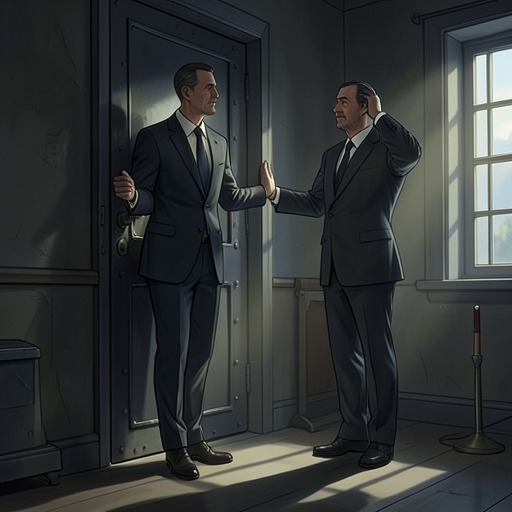
Bellman slides the paper and a pen across the table. It is too dark for Harry to read the document, but he signs anyway. That physical detail makes the signature especially consequential: Harry’s name authenticates a statement whose precise wording he cannot see, and his assent is secured by leverage rather than informed review. Bellman retrieves the paper, rises, and tells him to rest; Harry experiences the gesture as the victor’s gracious solicitude and follows him toward the stairs, exhausted.
Public Use and Significance
At a later gathering, Bellman presents Harry as having taken full responsibility, calling that outcome only fair. The newspapers’ front pages show how the case is being framed publicly: two of the three largest papers feature Leike getting into a car outside police headquarters, while the third uses an archive photograph of Harry from a television appearance about the Snowman. The competing images place the released suspect and the signed-for investigator in the same public story, even as Bellman’s words assign the burden to Harry.
The statement’s significance lies in the gap between its official account and the circumstances of its signing. Bellman controls the wording and the public explanation; Harry supplies the name that makes the account usable. The document also closes down further speech: Harry is instructed not to comment on the case again, while Bellman publicly repeats the version that makes Harry responsible. Its function is therefore both documentary and political, converting coercion behind closed doors into an apparently settled account before the press and the police.