Sofies gate 5
The Leopard (Jo Nesbø Edition)Sofies gate 5 is Harry Hole’s Oslo address and the first domestic space he re-enters after coming back to the city. Its familiar blue façade, courtyard rubbish container, and dim apartment anchor a return shaped as much by neglect and concealed purpose as by the powerful recognition of home.
The building and Harry’s return
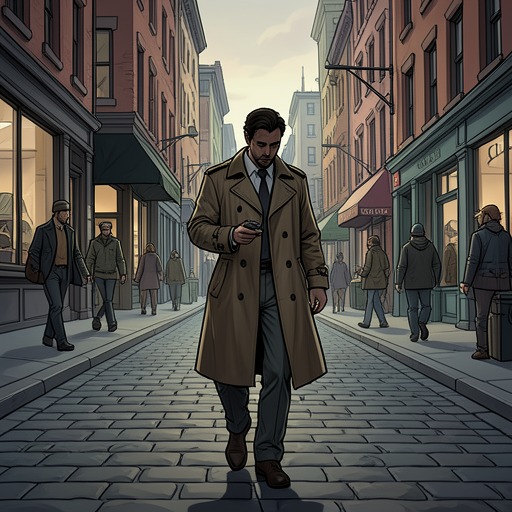
Harry watches Sofies gate 5 as Björn Holm’s Amazon drives away. There is more graffiti on the façade than when Harry left, but the blue beneath it is unchanged: a small, exact measure of what has altered and what has endured. His return to the address follows an intensely felt homecoming to Oslo, though that sense of belonging briefly eclipses the reason he came back.
The building is not merely a backdrop to that return. Harry has refused to work on the case and has told the others that he came because his father is in hospital; privately, he recognizes that he returned not out of love but out of shame. The familiar address therefore receives a man whose outward explanation and inward reason do not match.
The courtyard and the concealed file
In the courtyard, the rubbish container stands in its usual place. Harry lifts its lid and pushes a folder of report copies into a gap among torn garbage bags spilling coffee grounds, diapers, rotten fruit, and potato peels. He had promised Gunnar Hagen that he would look at the papers, but he hides them rather than examine them, chiefly to keep his chief from losing face; the costly passport Harry used to return is part of his calculation.
The scene makes the courtyard an extension of Harry’s evasions rather than a place of uncomplicated refuge. He registers the garbage’s smell as unexpectedly international, while the folder disappears among ordinary household waste. The papers remain physically close to him but are deliberately kept out of sight, matching his refusal to take up the investigation even as he preserves the possibility of doing so.
The apartment and what it holds
Harry’s apartment has not been disturbed, yet its familiar rooms seem changed. A powder-grey sheen lies over everything, compared to the condensed frosty breath left behind by a visitor. In the bedroom, he sets down his bag and takes out an unopened carton of cigarettes. The grey appears there too, likened to the skin of a corpse two days old, so that the homecoming is coloured by an image of death rather than uncomplicated comfort.
The apartment also contains equipment Harry hid before leaving. When his taxi first heads for Rikshospitalet, he changes the destination to Sofies gate 5. He runs upstairs while considering the Triads, Herman Kluit, or paranoia as possible reasons for retrieving it. The tools are still in the toolbox in the bread cupboard: an expired police identification card, two pairs of Hiatt handcuffs with sprung arms for speedcuffing, and his .38-calibre Smith & Wesson service revolver. The abrupt detour turns the address from a private home into a cache for a former investigator who has insisted that he does not want to work.
Neglect, time, and the threatened power supply
Back in the bedroom, Harry lies on his back and listens to the familiar sounds, including water dripping from a holey roof gutter onto the metal window ledges. He distinguishes this hectic patter from the slow, soothing dripping he associates with Hong Kong. At Sofies gate 5, the sound instead seems to drive seconds toward an ending; it calls to mind La Linea, the cartoon figure that falls out of view when its creator’s drawing line breaks off. The apartment’s ordinary leak thus joins the book’s recurring attention to deterioration and time running out.
That neglect is not only atmospheric. A call from the Oslo utilities warns Harry that he has ignored bills and reminders, and that electricity to Sofies gate 5 will be cut off at noon unless the outstanding amount is paid. The threatened loss of power gives material consequence to the apartment’s condition: Harry has returned to a home that remains recognizably his, but its continued comfort is uncertain. The address holds both the equipment of possible action and the accumulating evidence of a life left unattended.