Chungking Mansions
The Leopard (Jo Nesbø Edition)Chungking Mansions is a sprawling Hong Kong complex that serves both as a tightly packed refuge for people living at the margins and as one of Harry Hole’s most charged images of loneliness. Kaja Solness enters it while searching for a man whose last registered address leads her into a world of cheap rooms, crowded corridors, and improvised privacy; Harry later makes the place shorthand for a state of abandonment that persists even when someone else is present.
A self-contained city
The Norwegian embassy secretary explains that Chungking Mansions is not, strictly speaking, a hotel or a mansion. It is an assemblage of shops, food stalls, restaurants, and numerous guesthouses, some registered and some not, spread across four enormous towers. Individual guesthouses may rent as few as two rooms or as many as twenty. The accommodation ranges from clean and plain to squalid, with conditions compared to rat holes and bad prison cells. A person with modest expectations could sleep, eat, live, work, and raise a family without leaving the complex: it functions like a world enclosed within itself.
That self-containment is not presented as comfort. When Kaja reaches the entrance on Nathan Road, a busy commercial street of polished façades, brand-name boutiques, and tall display windows, the contrast is immediate. Inside, fast-food cooking smells mingle with shoemakers’ hammering, Muslim prayers sounding from radio speakers, and the tired expressions of secondhand sellers. Kaja passes through a place of work and residence compressed into the same dense interior, where visitors, traders, and lodgers share the traffic of narrow passages and lifts.
Kaja’s search inside the complex
Kaja’s inquiry begins with the address of the man she is tracking. A uniformed guard checks her note and directs her to Lift C. At a guesthouse, a turbaned Muslim proprietor proudly shows her a tiny room: it contains a bed, a television mounted above its foot, and a gurgling air conditioner. His enthusiasm fades when Kaja interrupts the tour, produces a photograph, gives the name listed in the man’s passport, and asks where he has gone. The ordinary business of renting a room is abruptly recast as a search for someone who has disappeared into the complex’s many layers.
Kaja follows a man in a leather jacket back toward Chungking Mansions after seeing him leave a suction bottle at the base of a bronze sculpture of a gallows with an empty noose, sit briefly with a newspaper, and retrieve the bottle on his way out. The route takes her past a stairway and through a revolving door into a deserted, dilapidated space. She hears a door close below, runs down, and opens a battered metal door into what she first experiences as darkness. Beyond it is not an ordinary courtyard but a small lightwell between two towers, its soot-black walls tangled with pipes, wires, twisted metal, and collapsed rusting frameworks. Stars show through a small opening high above; water still falls onto Kaja’s face beneath a cloudless sky, condensing on the many rusty air-conditioning units fixed to the walls.
The building’s hidden spaces make Kaja’s pursuit physically disorienting. After encountering two hash dealers, she is helped by a man who takes her upstairs and points her toward the ground floor and Nathan Road. He dismisses the men as guest workers who are alone and bored, while Kaja, embarrassed by how readily she accepted his help, recognizes that she had let the situation unsettle her. Chungking’s crowdedness does not make every encounter safe, but it gives her a route onward through the maze.
The discovery of Harry Hole
By the time Kaja finds Harry Hole, she has been awake for forty hours. She has spent three hours mapping the H-block in her head and systematically checking accommodation, cafés, street kitchens, massage clubs, and prayer rooms before reaching the cheapest sleeping quarters. There, African and Pakistani guest workers without private rooms sleep in partitioned spaces that offer neither televisions nor air conditioning nor any meaningful privacy. A night porter studies Harry’s photograph, then the hundred-dollar bill Kaja holds out, before pointing her to one of the cabins. Her search ends not in a private suite but in a shared dormitory.
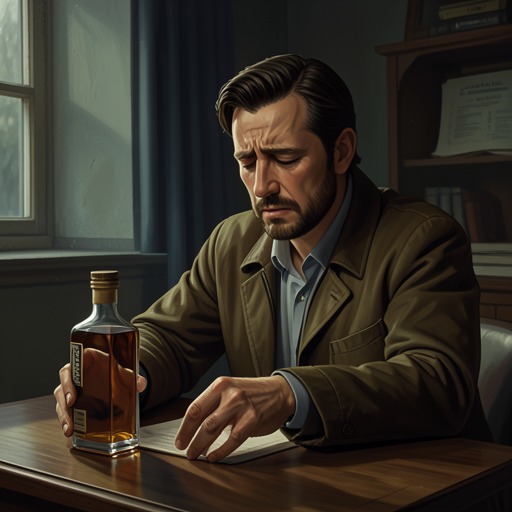
Harry lies asleep on a mattress, nearly silent among coughing and snoring men. Water drips from the ceiling onto the stone floor, and bluish light from the reception neon slips through the opening in the curtain. A wardrobe stands before the window, with a chair nearby and a plastic bottle of water on the floor. The room also contains an ashtray beside the suction bottle and a burning cigarette. In Harry’s hand Kaja sees a greasy yellow-brown lump; her experience as a patrol officer tells her it is not hash, but the evidence does not identify it further. She sits and waits. It is nearly two in the morning when he wakes.
From crowded rooms to inner emptiness
For Harry, Chungking Mansions becomes more than an address or a place to sleep. During a later crisis, he measures the loneliness of being trapped beneath snow against the worst nights he experienced there. The comparison is striking because the Mansions are anything but empty: their bunks, corridors, stalls, and guesthouses hold people at every turn. Yet physical proximity offers no assurance of companionship. Harry’s terror is not only that he may die, but that he may die without anyone he loves—his father, Søs Hole, Oleg, or Rakel. Chungking is the remembered measure against which that isolation becomes legible.
When Kaja later tells Harry she would go with him even if his life led downward, he answers that what waits there is emptiness, a condition he compares to being in Chungking and to the moments immediately after the avalanche: in the same hut, but alone and abandoned. The comparison transforms the location into an interior landscape. Its crowded human world and its private rooms remain part of the image, but what Harry recalls is the possibility of being cut off within a place full of people.
The association also changes with time. At Rikshospitalet, Harry finds a steady rhythm in the passage of hours and thinks of asking for a mattress; the arrangement, he reflects, would be a little like Chungking Mansions. The reference is no longer only a mark of his darkest isolation. It can also suggest a stripped-down place to rest, where the days flow without being broken into a succession of crises. The Mansions thus hold two seemingly opposed meanings for Harry: a refuge reduced to bare necessities and a name for the desolation from which Kaja once found him.