Jussi Kolkka
The Leopard (Jo Nesbø Edition)Jussi Kolkka is a Finnish investigator whose formidable close-combat ability and record of excessive violence make him both an asset and a liability to the Kriminalamt. Recruited by Mikael Bellman and assigned to Harry Hole’s team at Hävasshütte, he is eventually buried by an avalanche during the operation to protect a witness. His career and death bring the investigation’s practical need for force into uneasy contact with the institution’s tolerance of brutality.
Identity and Background
Kolkka is Finnish, speaks Swedish with a conspicuous Finnish accent, and is introduced as a terse, physically imposing presence rather than a talkative colleague. Harry Hole tests whether he understands Norwegian, but receives no answer; Kolkka identifies himself as being from the Kriminalamt. In another early encounter, Harry examines a credit card bearing Kolkka’s name while trying to establish who sent him. The exchanges establish a recurring feature of his characterization: he offers little explanation, and other people must infer his affiliations and intentions from what he does.
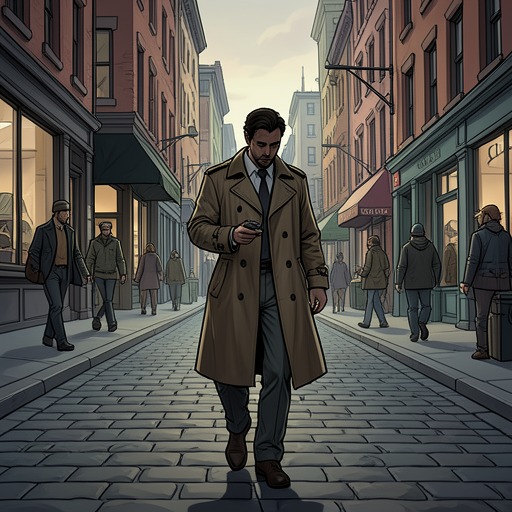
His physical description emphasizes compact strength. He is short and stocky, with unusually pronounced bow legs; his hands stay buried in his coat pockets, where Harry knows he carries a gun and identification under a Finnish-sounding name. The description also places him in a group whose attention appears organized around a third man in a grey trench coat, as if the others were extensions of that man’s authority. Kolkka’s power is therefore not presented as merely personal: his weapon and disciplined physical presence operate within chains of command and influence.
Before joining the Kriminalamt, Kolkka served as a police officer in Helsinki and spent four years working for Europol. He left Europol after going too far during an investigation into a series of rapes of teenage girls in Southern Europe. He beat one of the suspects so severely that the suspect’s lawyer had difficulty recognizing him, while finding it much easier to threaten Europol with a lawsuit. The account gives a concrete reason for Kolkka’s departure and shows how an effort to pursue a serious crime crossed into violence with institutional consequences.
Recruitment and Reputation
When Mikael Bellman returned to Norway and the Kriminalamt, he contacted Truls Berntsen on his second call, asking whether he was ready to work with explosives again. His first call had been to recruit Kolkka. That sequence places Kolkka among Bellman’s chosen instruments: a man brought in for his capacity to act forcefully, not because his professional history is uncomplicated.
Kolkka’s reputation precedes him. Truls tries to draw out more information about the Europol incident but gets only a silent stare. Truls, who understands the strategic value of withholding information himself, recognizes that Kolkka’s silence may encourage others to underestimate him. The gap between the sparse explanation Kolkka gives and the story circulating about him leaves his past as both a professional record and a warning. Later, Roger Gjendem says that the investigation into the Hävasshütte avalanche has prompted renewed scrutiny of Kolkka’s background, including the assault during interrogation. He connects this history to Bellman’s apparent tolerance for such misconduct and notes that Bellman’s associate Truls is no model of propriety either. Kolkka’s case thus becomes evidence in a wider question about the standards Bellman accepts among the people working for him.
Role in the Investigation
Kolkka’s combat expertise shapes his assignment to Harry Hole’s investigation. At Hävasshütte, Harry sits near him while Kolkka oils a disassembled Weilert PI 1, a German close-range weapon recognizable to Harry by its missing front sight. Harry has pushed for Kolkka to accompany the investigation, not because he has forgotten the earlier confrontation at Justisen, but because he calculates that Kolkka’s hand-to-hand experience may matter if the plan goes wrong. The choice is pragmatic: Harry distrusts Kolkka’s history, yet sees the same capacity for violence as a possible means of keeping the group alive.
The operation is built around the possibility that the killer will approach the hut. Harry hopes the suspect will make a daytime attempt and be stopped by one of the groups waiting outside in the snow. If the approach comes at night and the intruder is not discovered until reaching the hut, Harry, Kaja Solness, and Kolkka may have to handle the situation alone. Harry’s intuition tells him the perpetrator is heading for Hävasshütte, and the team has been given twenty hours. Kolkka’s weapon and skill are not ornamental details in this setting: they answer a specific tactical risk, while also making Harry’s decision to rely on him morally and professionally uncomfortable.
The wider case leads into the huts through evidence of travel and accommodation. Adele Vetlesen and Borgny Stem-Myhre had each bought train tickets to Ustaoset for the same date, from Drammen and Kongsberg respectively. Iska Peller’s account was charged for two beds in each of four huts, situated about a day’s walk apart. The mountain landscape itself is exposed and disorienting: Kaja Solness travels by snowmobile through snow and wind that blur the contours, with the mass of Hallingskarvet rising like a wave. Those circumstances give the operation its isolation and help explain why the team anticipates having to defend the hut without immediate assistance.
Confrontation and Death
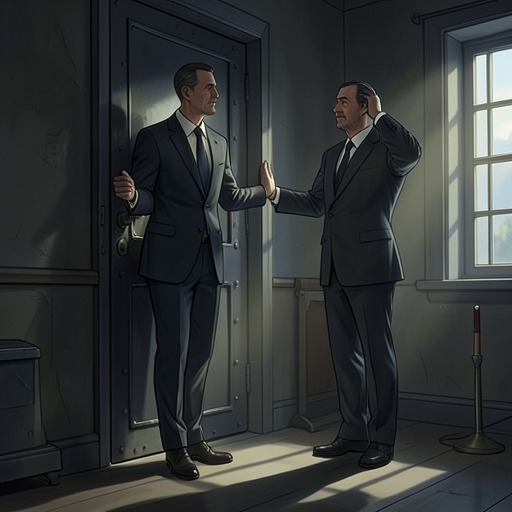
Harry directly raises the Europol assault while the team is at Hävasshütte, asking whether the report that Kolkka beat a convicted rapist during questioning is true. Kolkka’s fork strikes the plate; he stands, reaches under his jacket, draws his pistol, and leans over Harry. Harry does not move and looks up at him calmly. The moment makes the earlier history immediate: Kolkka’s violence is not only a story attached to his record but a force that can enter the room between colleagues. Harry’s composure does not erase the threat; it exposes how precarious their working alliance is.
The avalanche buries the people at the hut, and Harry searches through the snow for Kaja Solness and Kolkka. He uses a stick to probe the area in a grid, stabbing quickly and forcefully, aware that he could strike an eye or throat. When the stick meets a springy resistance and is pulled back, someone grips its tip to signal that they are alive. Harry pulls in response, but the other person holds with surprising strength. The brief exchange offers a sign of life through touch and resistance in a landscape where sight cannot be trusted.
Harry later clears Kolkka’s head from the snow in front of the fireplace. He cannot tell how much time has passed. He strikes a match and sees the Finn’s large, empty eyes before the flame goes out. The scene confirms that Kolkka did not survive. His death follows the same operation for which Harry had selected him: the dangerous attempt to protect a witness in an isolated mountain hut.
Aftermath and Significance
The public account of the avalanche gives Kolkka’s death a formal, restrained shape. In Aftenposten, Mikael Bellman calls it a great loss, while emphasizing that the witness Kolkka had been protecting was rescued and is now safe. The report converts a confused and lethal operation into a concise institutional narrative: a police officer died, but the protected witness survived. Kolkka’s individual history, including his removal from Europol, sits uneasily behind that statement of public service.
That tension is central to Kolkka’s role. His skills make him useful in a case where the team expects violence, but the assault that ended his Europol career shows the cost of treating force as an acceptable shortcut. Bellman’s recruitment and Harry’s tactical decision both depend on what Kolkka can do; neither makes his past harmless. His death does not resolve the contradiction. Instead, the official tribute and the renewed scrutiny of his conduct preserve both sides of his legacy: he died protecting a witness, and he had already crossed professional boundaries in the name of confronting a rapist.