Oslo University Hospital National Hospital
The Leopard (Jo Nesbø Edition)Oslo University Hospital National Hospital is where Harry Hole returns to see his gravely ill father, Olav Hole, and where the present encounter draws Harry into a painful comparison between them. The hospital is more than a destination: its parking area, corridors, and patient room hold a family visit alongside Harry’s suspicion that he is being followed, while a doctor’s conversation makes Olav’s worsening illness explicit.
Arrival and the hospital’s setting
Harry directs a taxi to the hospital, then changes the route to stop first at Sofies gate 5. When he reaches the hospital, the city’s scale and weather sharpen the atmosphere around the visit: high façades rise toward low clouds, and Harry takes a deep breath before going inside. The account later places him outside the hospital building beneath a pale-blue sky, with Oslo below, hidden under fog spread between green hills. The hospital thus appears both as a working institution and as a vantage point from which Harry looks out over a city partly obscured.
That view brings back a specific childhood routine. In Oppsal, Harry and Øystein used to skip their first lesson and travel to the German bunkers in Nordstrand, where they watched pea-soup-colored fog cover central Oslo. Harry recalls that the morning fog became less common as industry and wood-burning stoves disappeared from the city. The changing landscape makes the view from the hospital a measure of time: the fog links the adult visit to childhood, while its gradual disappearance registers a city and a life that have changed.
Olav Hole’s room and Harry’s recognition
In the patient room, Olav lies on a hospital pillow and gives Harry a gentle, weak smile. Harry has to swallow at the sight. On a later visit Olav seems to look better, though Harry allows that the light may be responsible; Olav notices Harry’s smile and asks what has happened to his jaw. Harry dismisses the injury as a foolishness. His answer also reflects the reversal he senses in their relationship: he wonders when children begin protecting parents from reality and concludes that this happens at about ten.
The visit reaches beyond ordinary concern for a sick parent. Outside, Harry smokes and thinks about the idea that sons are altered copies of their fathers, and about his former belief that he had escaped that inheritance. Looking back at Olav’s wasted, bare face on the pillow, Harry had felt he was looking into a mirror; his father’s words had sounded like his own. The hospital makes that resemblance concrete, not as a settled explanation of Harry’s identity but as a recognition he resists and cannot dismiss.
The parking area, corridors, and surveillance
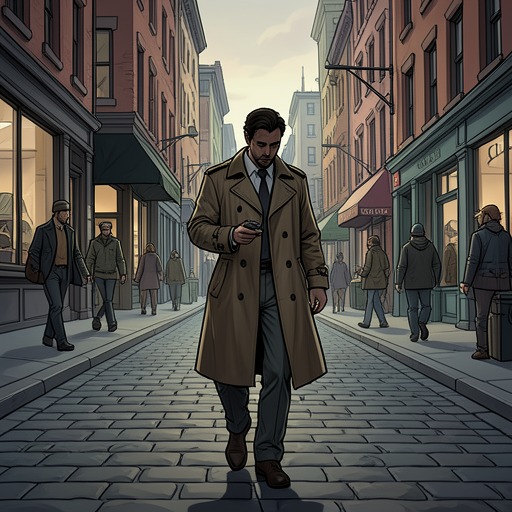
The grounds also become a place of alertness. While standing by a low wall overlooking the parking area, Harry sees a white Corolla. Its color seems chosen for inconspicuousness, but the car is not an isolated detail: Harry connects it to a Corolla outside Schrøders and to the same face, whose slightly slanted eyes had looked at him less than a day earlier. The recognition interrupts his thoughts about his father. Harry throws away his cigarette and hurries inside, then moderates his pace in the corridor near Olav’s ward rather than openly searching for the watcher.
At a widened part of the corridor that serves as a waiting area, Harry pretends to choose a newspaper from a stack while watching the people seated there from the corners of his eyes. The man has hidden behind an issue of Liberal. The sequence turns ordinary hospital features—the parking lot, corridor, waiting area, and newspapers—into parts of a quiet search. It also places Harry’s private family visit under the pressure of an unresolved threat without establishing who the man is.
Medical news and narrative significance
The hospital’s clinical role comes into focus after Olav’s parting words to Harry: he has done everything he was asked to do except one thing. A nurse then leads Harry to a storage room, where he finds a key in a suitcase, and tells him that the doctor wants to speak with him. Harry knocks at the indicated door. The doctor invites him in, gestures toward a chair, and explains that the cancer has spread; the hospital visit thus ends with a direct statement of Olav’s worsening condition.
These scenes gather several kinds of exposure into one location. The patient room forces Harry to confront resemblance and vulnerability; the view outside returns him to childhood; the grounds and corridors draw his attention to a possible follower; and the doctor’s office supplies the medical fact that had remained unspoken. Oslo University Hospital National Hospital is consequently both the setting for a father-son encounter and a threshold where Harry’s inward reflection is interrupted by surveillance and by the advancing reality of Olav’s illness.