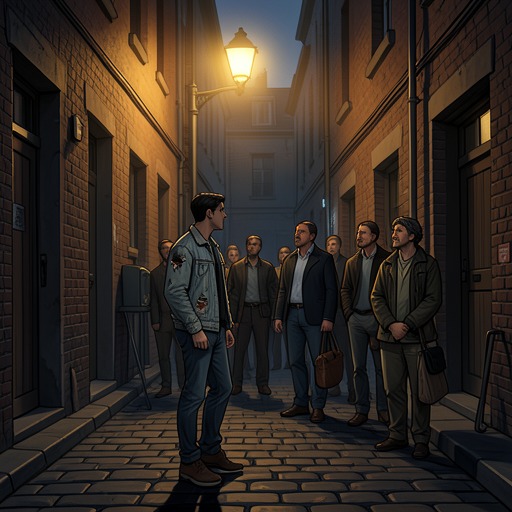
Utmo Family Photograph
The Leopard (Jo Nesbø Edition)The Utmo Family Photograph is a family portrait found in a drawer at a mountain tourist hut, and the decisive object in Harry Hole’s identification of Tony Leike as the killer. Initially mistaken for a photograph belonging to Tony, it proves to be Odd Utmo’s family picture. Its importance lies in what its faces disclose: a physical resemblance, read alongside a hereditary illness, links the killer to the missing Utmo boy and to the family history surrounding Utmo Farm.
Identity and Provenance
Harry finds the photograph in a drawer at the hut and recognizes that it is not Tony Leike’s own picture but a photograph of Odd Utmo’s family. The image is therefore not merely a portrait left behind in an isolated place. It carries the family connection that the investigation has failed to see, joining the Leike farm and Ustaoset to the rumors about the vanished boy from Utmo Farm.
The photograph’s meaning becomes clearer against the circumstances Harry reconstructs around Odd. Believing the Hävasshütte murders had made him a hunted man, Odd fled his farm for a remote, difficult-to-reach tourist hut and brought with him a photograph of the family he had destroyed. The picture’s presence in that refuge makes it a surviving trace of the past Odd carried into his flight.
Faces as Evidence
Harry studies the differences and resemblances in the family portrait. Tony, as a boy, already had large white teeth; as an adult, he had inherited his mother’s looks. Odd, by contrast, held his lips tightly closed. The visual distinction between father and son matters, but it does not erase their more consequential likeness: both suffered from the same hereditary illness.
The photograph does not identify Tony through resemblance alone. Harry’s recollection of the image converges with his knowledge that gout was hereditary and with Tony’s own remark that it was not contagious. A black-brown stone Harry had found on the hut’s bathroom floor gives the deduction a physical counterpart: he takes it from his pocket, passes it to Björn Holm, and asks whether it could be a tooth. Holm says that it could be. Together, the image, the illness, and the possible tooth redirect Harry from Sigurd Altman to Tony Leike.
The Clue That Reorders the Case
The family photograph brings together details that had seemed scattered across separate places and stories: the Leike farm, Ustaoset, the tale of the missing Utmo boy’s ghost, and the man who considered the mountains his landscape. The Kripos investigators had uncovered much, but had missed this connection. Seeing the photograph allows Harry to recognize the relationship between Tony and the boy in the picture, and between that boy, his father, and his mother.
Its decisive function is therefore both evidentiary and structural. The portrait changes the investigation’s direction, overturning the assumption that Altman killed the victims and exposing Tony as the killer. It is a domestic image carried into isolation, but Harry’s reading turns it into a map of identity: the family likeness and inherited disease make visible the connection that the case had left unrecognized.