Don Ciccio Tumeo
The LeopardDon Ciccio Tumeo, the poor organist of Donnafugata’s Mother Church and a hunting companion of Don Fabrizio Corbera, Prince of Salina, gives intimate human weight to the political change of 1860. His own vote against unification is swallowed by a fabricated unanimous result; in naming the fraud, he forces the Prince to recognize that political transformation has extinguished not only an old regime but the good faith it ought to have respected.
Identity and Place in Donnafugata
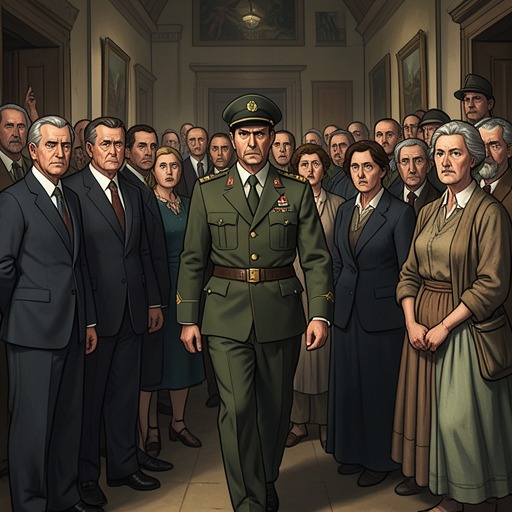
Don Ciccio belongs to the town’s modest world of work, service, and inherited attachments. He is a cathedral organist, a friend and hunting companion of Don Fabrizio Corbera, Prince of Salina, and a man whose patched shooting clothes make visible the poverty he bears without surrendering his dignity. His connection to the Prince gives him unusual access to the household, but does not erase the difference in their rank: at the Prince’s homecoming, Don Ciccio is not formally entitled to stand with Donnafugata’s authorities. He comes anyway, bringing his red pointer, Teresina, as a pleasure for his friend, and earns a special smile from the Prince.
That combination of loyalty and independence marks his place in the story. Don Ciccio is deferential to those he considers socially superior, yet his deference does not make him dishonest. The narrative describes him as someone who had once imagined a life dedicated to the arts and, despite recognizing his limited talent, continued his work at a humbler level. His attachment to music and his poverty invite the Prince’s compassion; after the voting scandal, the same man’s honesty earns something stronger: the Prince’s admiration.
The Prince’s Companion
In October, Don Ciccio accompanies the Prince on long shooting excursions with the dogs Teresina and Arguto. The outings yield little game: the Prince may bring home a brace of partridges, while Don Ciccio is fortunate to get a rabbit. Their value lies less in the bag than in the hours spent away from Donnafugata and its political changes, moving through the quiet countryside together. Don Ciccio’s affectionate attention to the dogs, his pipe, and his steady presence make him part of the familiar rhythm of the Prince’s days.
Their friendship also contains a social tension. Don Ciccio is a self-described man of principle in the episode of the false plebiscite, but the narration shows that he is also a passive snob, anxious not to cause the Prince displeasure. After he has spoken candidly about his vote, that deference returns: he tries to ease the Prince’s troubled mood by suggesting they resume shooting. The effort fails to dispel the Prince’s unease, and the Prince asks for Don Ciccio’s judgment of Don Calogero Sedàra. Don Ciccio is initially reluctant to answer, having already spoken harshly about the new mayor and fearing that his opinions about Angelica Sedàra might conflict with the Prince’s wishes.
The Hidden Vote and Its Exposure
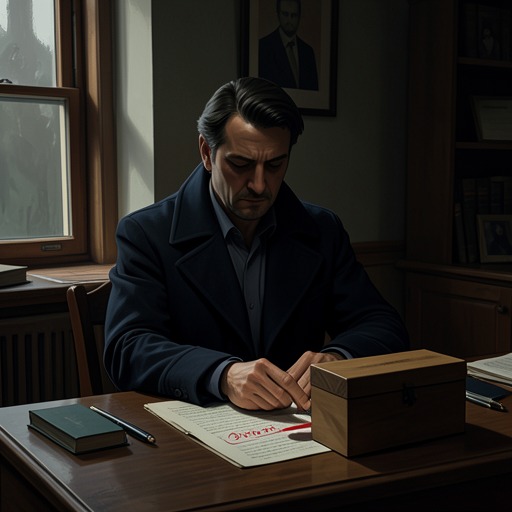
The political significance of Don Ciccio’s ordinary companionship emerges when the Prince asks how he voted on the twenty-first. Don Ciccio is caught off guard. Once the Prince reassures him that they are alone, he admits that he voted no, not once but firmly. The confession is not an abstract objection to political change: Don Ciccio knows that the Prince may consider unity necessary, but insists that his own honest opinion should not be erased simply because he is poor.
He explains that the officials at the Town Hall altered his ballot, turning his no into a yes. In making the accusation, he gives his full name and identifies himself as the son of Leonardo Tumeo, organist of the Mother Church at Donnafugata. The detail matters: the falsified tally has not merely changed a number but treated a real citizen as if he had never existed. His anger is sharpened by the contrast between his poverty and the old aristocratic system of personal loyalty. His father had served as a gamekeeper at the royal shoot of Sant’ Onofrio, and royal favor had once brought the family five gold ounces in a time of need. Don Ciccio recalls that assistance as a concrete debt, not an argument that the monarchy was flawless. Under the new order, he feels recast from a faithful subject into a political enemy, while everyone is expected to declare loyalty to the victors.
The official count exposes the scale of the contradiction: 515 people were registered as voters, 512 votes were recorded, and all 512 were declared yes, with no negative votes. Don Ciccio’s testimony reveals what that clean result conceals. The Prince understands that a handful of honest no votes would not have changed the outcome; their suppression was therefore unnecessary to victory and destructive to trust. The narrator connects this silencing to the later acquiescence for which southern Italians would be criticized, presenting the fraud as an early injury to civic participation rather than a harmless adjustment of figures.
Class, Deference, and Angelica Sedàra
Don Ciccio’s view of social rank also shapes his response to Angelica Sedàra. Before he knows of any marriage proposal, he speaks of her beauty and of the change wrought by her education in Florence. He has heard rumors about Tancredi Falconeri’s interest in her, but, like other townspeople, assumes that the young aristocrat’s attention cannot lead to marriage with Don Calogero’s daughter. His comments therefore reveal both admiration for Angelica and the class assumptions that make a match between the families difficult for him to imagine.
Don Fabrizio Corbera, Prince of Salina, then tells him that Tancredi Falconeri has asked his uncle to seek Angelica’s hand. Don Ciccio’s social precautions collapse under the surprise, leaving his older feelings intact. The Prince makes him the first person to hear the news, but orders him kept in the gun room with Teresina, cleaning and oiling the weapons until Don Calogero Sedàra has been informed. The incident places Don Ciccio at the threshold between private knowledge and public announcement: trusted with the news because of his closeness to the Prince, he must also be prevented from letting it spread.
Political Meaning and Character
Don Ciccio’s account of the plebiscite changes the Prince’s understanding of what has been lost. The Prince has been trying to read the political transition as a managed exchange of power, in which emerging figures such as Don Calogero Sedàra rise while much of the old social order remains. Don Ciccio’s experience supplies a different measure of that transition. The most consequential loss is not simply the position of one class or the outcome of one vote, but the confidence that a person’s declared will has any standing against those who control the count.
The Prince’s response is unusually searching. He has long liked Don Ciccio for his poverty, his artistic aspirations, and his attachment to music; now he wonders whether the organist has behaved more nobly than he has. Don Ciccio does not set out to become a political hero, and his habitual deference and social prejudices remain visible. His significance comes instead from the plainness of his testimony: he says what happened to his vote and why it mattered to him. Through that disclosure, the novel makes a minor town official’s falsification a measure of the new order’s moral cost, and gives the Prince a reason to see the transfer of power not only as accommodation between classes but as a betrayal of ordinary good faith.