Plebiscite of 1860
The LeopardThe Plebiscite of 1860 is the vote through which Donnafugata publicly endorsed Sicily’s union with the Kingdom of Sardinia; in the novel, its decisive significance lies in the gap between the unanimous result and the dissent the count erased. Recalled by Don Fabrizio Corbera, Prince of Salina, while resting on Mount Morco, the event becomes more than a political milestone: the apparent consent of the town conceals the loss of good faith that should have given the new national order legitimacy.
Background and Political Setting
The episode returns to the plebiscite through Don Fabrizio’s memory. As ants advance on scraps of food near him and Don Ciccio Tumeo, their orderly movement prompts him to reconsider the vote held in Donnafugata. The natural scene offers a contrast to human political arrangements: the ants do not appear troubled by the divisions and deceptions that occupy the Prince.
Before voting, Donnafugata’s inhabitants had sought Don Fabrizio’s advice. He had sincerely urged them to vote in favor of union, believing that there was little practical alternative and that a negative vote might expose ordinary people to trouble. But his counsel did not produce a single, shared understanding. Some visitors interpreted his advice as irony and thought he secretly meant the opposite; others took him for a turncoat or a fool and resolved to ignore him. Religious loyalty, favors received under the former regime, and personal losses during the upheaval also shaped resistance to the new order. From the people he had heard, Don Fabrizio estimated that around fifteen might vote no; allowing for dissent among those who had never come to the palace, he anticipated about forty negative votes in all.
The political transition had already unsettled the Prince’s sense of what could follow the old monarchy. At earlier audiences, King Ferdinand had treated him both as a family acquaintance and as a possible source of information about Sicily. When the King asked about the Lieutenant-General, Don Fabrizio avoided acting as a spy. Leaving the royal palace, he wondered whether a government based in Turin would differ substantially from the one it replaced, or merely change the accent of power. Later, Don Onofrio Rotolo’s associate Don Pietro Russo voiced a different expectation: that the change would bring liberty, security, lighter taxes, and opportunity, while leaving much else as before. These encounters frame the plebiscite as a contest not only over national union but also over who would benefit from the new political order.
The Vote and Its Public Ceremony
The voting day in Donnafugata was windy and grey. Young men moved through the streets with slips marked yes tucked into their hat ribbons, singing a tune transformed into a mournful local song. Visitors from Girgenti spoke in the tavern of Sicily’s progressive future within a renewed Italy, while peasants listened without answering. The scene sets triumphant patriotic rhetoric against the silence of people worn down by work or unemployment.
Don Fabrizio went to the Town Hall at about four in the afternoon, accompanied by Father Pirrone and Don Onofrio Rotolo. He wore the black frock-coat he had worn two years earlier when visiting King Ferdinand at Caserta. At the polling room, the committee members rose as he entered, and peasants who had arrived earlier were moved aside so that he could vote without waiting. He handed his affirmative ballot to Don Calogero Sedàra, the mayor. Father Pirrone did not vote because he had not registered as a resident; Don Onofrio cast his own affirmative vote at the Prince’s express request.
Afterward, Don Fabrizio faced the gathering alone. In the mayor’s study, portraits of Garibaldi and King Victor Emmanuel II already stood side by side. Three kinds of sweet liqueur, arranged by color with a white glass at the center, suggested the new national flag. The ceremonial display was both celebratory and uneasy: the Prince chose the white drink for practical reasons, while the new emblems and the memory of the old monarchy sharpened his awareness of political change.
The vote’s public language of national unity had limits. Before the announcement, several women appeared in the square wearing tricolour ribbons to protest their exclusion from voting. They were jeered at, including by liberal spectators, and driven away. A newspaper subsequently described their appearance as an enthusiastic patriotic demonstration welcomed by the crowd. The incident shows how the public account of participation could be made to say the opposite of what the scene disclosed.
The Official Count and the Suppressed Vote
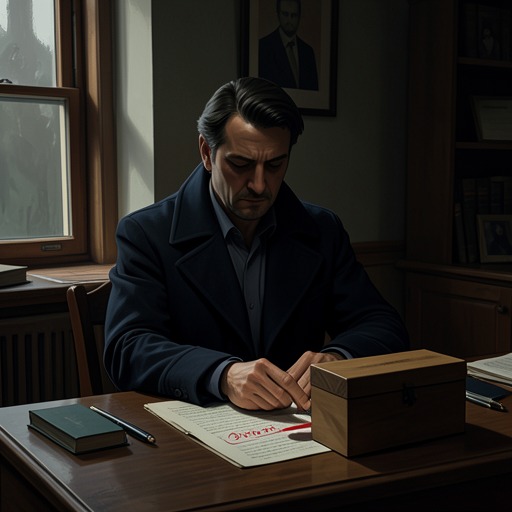
After the booths closed, the scrutators counted the ballots. Late that night Don Calogero appeared on the Town Hall balcony wearing a tricolour sash and announced the result: 515 voters, 512 votes cast, 512 yes votes, and no votes recorded. Applause, cheers, speeches, fireworks, and messages to the King and Garibaldi followed. By eight o’clock, the celebration had ended, leaving the square dark again.
The figures were at odds with what Don Fabrizio believed about his town. He had expected a noticeable minority to vote against the proposal, and when he asked Don Ciccio how he had voted, the organist first replied that everyone in Donnafugata had voted yes. Don Fabrizio took that answer as confirmation of an historical puzzle. Only after the two men were alone did Don Ciccio disclose that he himself had voted no, and that the officials had changed his vote to yes. He emphasized both his poverty and his honesty, and identified Don Calogero as the man who had annulled his choice. His protest made the official zero not merely a surprising tally but evidence that a citizen’s expressed will had been removed from the record.
Don Ciccio also recalled his family’s former ties to the royal household: his father had served as a gamekeeper, and Queen Isabella had helped him study and become organist of the Mother Church. His grievance therefore did not amount to a simple defense of his own social rank. He contrasted the favors he remembered under the former regime with the new power of men such as Don Calogero, whom he regarded as profiteers. His account gives personal and historical substance to the dissent the official result had effaced.
Meaning and Political Afterlife
Don Fabrizio’s question had been prompted by the contrast between what he knew of local opinion and the announced unanimity. Don Ciccio’s admission resolves the immediate mystery, but the Prince draws a wider conclusion: what had died on the night of the vote was good faith, a fragile civic trust that should have been protected rather than sacrificed to a result that was already assured. He reasons that even Don Ciccio’s no, along with many similar votes in Donnafugata and across the Kingdom, could not have changed the outcome. Recording the opposition honestly would have made the result more credible, not less.
The Prince’s unease is therefore not simply regret that his class has lost political ground. He recognizes that the formal interests of the former kingdom and his own privileges have survived the upheaval in altered form. What troubles him is the treatment of the voters: coercive commands associated with the old order appear to be giving way to a softer language that presents an imposed choice as the citizen’s own. In this reading, national unity is born in Donnafugata, but its founding ceremony is shadowed by the falsification of consent.
The later Senate nomination extends this tension beyond the polling place. Cavaliere Aimone Chevalley di Monterzuolo tells Don Fabrizio that the new government hopes to appoint him to the Senate, where Sicily could be represented in the legislature of the united state. Don Fabrizio declines, describing himself as caught between the old world and the new and without the self-deception he considers necessary to guide others. He recommends Don Calogero instead, citing his practical power and political usefulness; ten years later, Don Calogero does become a senator. The episode does not undo the plebiscite’s result. Rather, it shows how the new institutions can absorb the very local power that helped produce its appearance of unanimity.