Plebiscite of the Two Sicilies (1860)
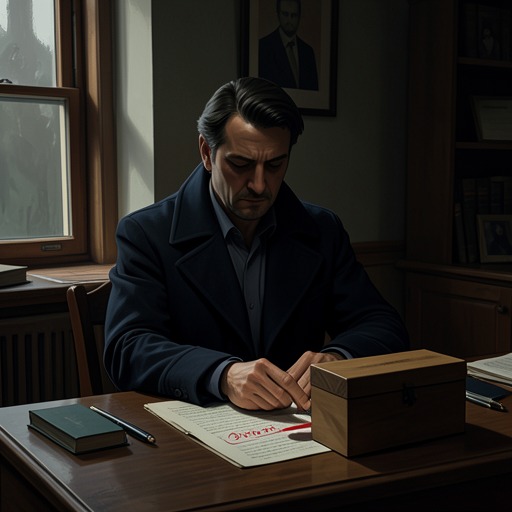
The LeopardThe Plebiscite of the Two Sicilies (1860) at Donnafugata is presented as both a public act of national unification and a falsified account of what its voters chose. Its announced result—512 votes cast, all affirmative, none negative—stood in sharp contrast to Don Fabrizio Corbera, Prince of Salina’s expectation of substantial opposition and, ultimately, to Don Ciccio Tumeo’s account that his own negative vote had been changed. In the Prince’s recollection, the episode turns a local voting ceremony into a test of whether political change can claim legitimacy when the record of consent has been manufactured.
Background and the Prince’s Expectations
The vote took place amid the transfer from the Bourbon monarchy to a new national order. Don Fabrizio had already experienced the monarchy at close quarters: at audiences with Ferdinand II of the Two Sicilies, the king’s affable manner could give way to demands for information and warnings to the Prince, who served as Tancredi Falconeri’s guardian. Leaving one audience, Don Fabrizio wondered what would follow the dying monarchy and suspected that a change of rulers might bring little more than a change in regional manners. The plebiscite later gave that uncertainty a concrete political form.
Before the vote at Donnafugata, Don Fabrizio had advised those who consulted him to vote in favour. He regarded union as a necessity, whether the plebiscite was treated as a decisive historical act or as a theatrical formality, and worried that ordinary people might suffer if their opposition became known. Yet he recognized that his advice had not persuaded everyone. Some townspeople might interpret a prince’s endorsement of revolution as irony; others distrusted the new order for reasons of faith, old political loyalties, lost property, or personal misfortune during the upheavals. From the people who had come to him, Don Fabrizio estimated that about fifteen would vote against union; allowing for dissent among the wider electorate, he expected around forty negative votes in all.
Voting Day and the Official Result
The day was windy and grey. Groups of young men moved through the streets with affirmative slips attached to their hats, singing La Bella Gigugin in a mournful transformation of the tune. Visitors from Girgenti spoke in a tavern about Sicily’s renewed prospects within a united Italy, while local peasants listened without joining the discussion. The public atmosphere thus offered competing signs: patriotic language and organized displays on one side, silence and apparent reserve on the other.
Don Fabrizio went to vote at about four in the afternoon, accompanied by Father Pirrone and Don Onofrio Rotolo. At the Town Hall, the committee members rose as the Prince entered, and several peasants already waiting were moved aside so that he could proceed without delay. He handed his affirmative ballot to Don Calogero Sedàra. Father Pirrone did not vote because he had not registered as a resident of the town; Don Onofrio voted at the Prince’s express request. Afterward, the Prince faced a reception in the Mayor’s study, where portraits of Giuseppe Garibaldi and Victor Emmanuel II already shared the wall. The ceremony joined the new national emblems to the routines of local official life.
The formal announcement came late that night, when Don Calogero appeared on the Town Hall balcony wearing a tricolour sash. He reported 515 voters, 512 votes cast, 512 affirmative votes, and no negative votes. Applause and cheers rose from the dark square; Angelica Sedàra clapped from her balcony, speeches followed, and fireworks marked the occasion. The public celebration made the result visible as a unanimous popular endorsement. Its precision, however, did not resolve the Prince’s unease. By the end of the evening, the square had returned to darkness, while his doubt about what the figures represented remained.
Dissent and the Altered Record
The discrepancy emerged later, when Don Fabrizio asked Don Ciccio Tumeo how he had voted. Tumeo initially hesitated, then answered that everyone in Donnafugata had voted affirmatively. The reply intensified the Prince’s perplexity: it contradicted his knowledge of local reservations and his estimate of the likely vote. When Tumeo later explained himself, he said that he had voted against union and that officials at the Town Hall had changed his choice. He described the alteration as a denial of his existence and of his right to express an opinion, not merely as an error in counting.
Tumeo’s account makes the official figures more than an implausibly unanimous tally. It identifies a mechanism by which opposition could disappear from the public record, and shows how a result presented as popular consent could instead reflect the control of those administering the vote. Don Fabrizio had encouraged an affirmative vote, but he had not expected the choice to be falsified. In his view, the negative ballots would not have changed the overall outcome; their presence would have made the result more meaningful by showing that support for union had survived the expression of dissent. The supposed unanimity therefore did not strengthen the new order’s claim to legitimacy. It deprived that claim of an honest measure of public opinion.
The episode also places political participation within unequal local relationships. Don Fabrizio’s own ballot was received in a room where his status altered the ordinary order of waiting, while Tumeo, a poor organist, later described his vote as something officials could erase. The Prince’s recommendation to vote affirmatively had been framed as advice about necessity and the likely consequences of opposition. For Tumeo, however, the freedom to make that choice was itself important. His protest draws a distinction between persuading people to endorse a political settlement and treating their consent as dispensable once the desired result is known.
Consequences and Significance
Don Fabrizio’s understanding changes when he learns what happened to Tumeo’s vote. He sees the falsification as the destruction of good faith—the very thing that could have justified the disruptions and sacrifices accompanying political change. His conclusion is not that the dissenters could have prevented unification. Rather, he recognizes that recording their opposition honestly would have preserved the integrity of the process even if the final political outcome remained the same. In this reading, the injury lies in the removal of a person’s choice from the account by which the new order presents itself.
The Prince also perceives a change in the language of power. The old regime’s direct command, in his recollection, is giving way to a smoother pressure backed by obligations and financial leverage: people are told that they have agreed because a document says so. The method has changed, but the imbalance between those who control decisions and those expected to accept them persists. The plebiscite thus anticipates Don Fabrizio’s broader doubts about the post-unification state. When Cavaliere Aimone Chevalley di Monterzuolo later offers him a place in the Senate, the Prince refuses, describing himself as caught between the old world and the new and arguing that younger, more adaptable men are better suited to the emerging political order. He suggests Don Calogero Sedàra instead, recognizing his practical power and usefulness to the new authorities.
Within the novel, the remembered vote binds national history to a specific local failure of truth. The proclamation makes Italy’s birth in Donnafugata a public spectacle, complete with official figures, patriotic display, and celebration. Don Ciccio’s account revises that spectacle from within: beneath the unanimous result lies an erased negative vote and the Prince’s belated recognition of what its erasure signifies. The event’s decisive legacy is therefore not simply that union was endorsed, but that its public authorization was made to appear complete by suppressing the evidence of dissent.