Suppression of Francesco Tumeo’s No Vote
The LeopardThe Suppression of Francesco Tumeo’s No Vote reveals how the Donnafugata plebiscite’s appearance of unanimous consent was manufactured at the expense of actual dissent. Its decisive moment comes after the official announcement of 512 yes votes and no opposition: Don Ciccio Tumeo tells Don Fabrizio that he voted no, and that his choice was turned into a yes. The Prince’s response shifts the episode from a local dispute over counting to a judgment on the moral cost of the new political order.
Background and the Expected Result
The vote took place amid a rapid change of power and a local society in which political choices were entangled with personal loyalties, status, and material interests. Don Fabrizio had advised those who consulted him to vote yes. He regarded acceptance of the new national arrangement as necessary, whether the plebiscite was understood as a genuine decision or as a largely theatrical confirmation of events already under way. Yet he knew that his advice had not persuaded everyone. Some residents mistrusted the new order, while others interpreted the Prince’s words as ironic instruction to do the opposite.
From these visits, Don Fabrizio estimated that about fifteen people might vote no. Since those who had sought his advice represented only a portion of the electorate, he thought the negative votes might total about forty. The expectation of a dissenting minority makes the final figures more than a suspiciously tidy result: they directly contradict what the Prince had reason to believe about his town.
The surrounding political climate also helps explain why official unanimity could serve private interests. Before the vote, Don Fabrizio had recognized Russo as a representative of an advancing class. Russo professed sympathy for the new order and predicted its benefits, while the Prince knew that he was trying through intermediaries to buy the estate of Argivocale. In Donnafugata, political promises and personal advancement were not separate matters; the new language of public improvement could accompany the pursuit of private gain.
The Vote and Its Public Announcement
On the plebiscite day, youths moved through Donnafugata wearing scraps of paper marked yes in their hats. Visitors from Girgenti spoke in a tavern about a renewed Sicily joined to Italy, while local peasants listened without joining in. The scene places patriotic rhetoric beside the silence of people whose views were difficult to read and whose political participation did not necessarily mean enthusiastic agreement.
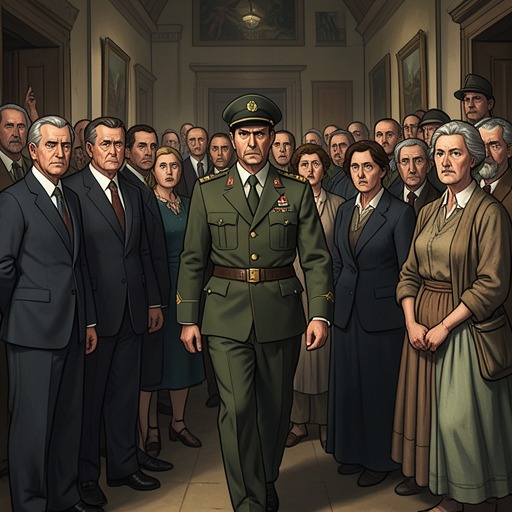
Don Fabrizio went to the Town Hall in the afternoon, accompanied by Father Pirrone and Don Onofrio Rotolo. At the voting room, the committee members stood as he entered, and peasants who had arrived earlier were moved aside so that he could cast his ballot without waiting. He gave a yes to Don Calogero Sedàra, who received it in his official capacity. Father Pirrone did not vote because he had not registered as a resident; Don Onofrio voted at the Prince’s express request. Don Fabrizio then faced the gathering alone.
After the booths closed, the scrutators counted the votes. That night Don Calogero appeared on the Town Hall balcony wearing a tricolour sash and announced the result to the people below: 515 registered voters, 512 votes cast, 512 yes votes, and zero no votes. Applause, speeches, and fireworks followed. Angelica Sedàra clapped from her balcony. The public celebration gave the figures the force of a civic spectacle, even as the result erased the dissent Don Fabrizio had expected.
Don Ciccio’s Disclosure
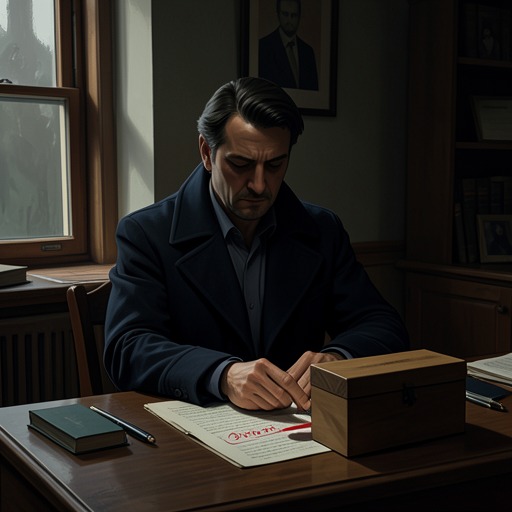
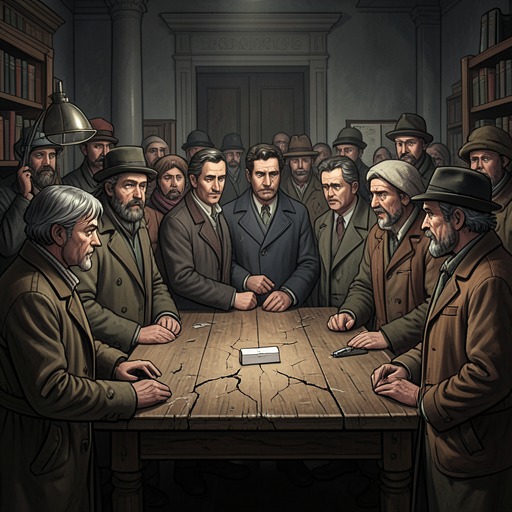
After the announcement, Don Ciccio’s fear gave way to resentment. He told Don Fabrizio that he had voted no, not once but emphatically, and that the people at the Town Hall had swallowed his opinion and returned it as its opposite. He named Don Calogero as the person who had annulled his vote. Don Ciccio’s complaint was personal as well as political: he described himself as poor but honest, recalled favours received under the former monarchy, and objected to being made to appear to have supported the very change he had opposed.
His account unsettled the Prince because Don Ciccio had trusted him enough to speak openly, while the official count had transformed that private act of dissent into an appearance of consent. Don Fabrizio understood that the falsification did not need to change the plebiscite’s overall result. Even if Don Ciccio’s vote, dozens of similar votes in Donnafugata, and many more across the kingdom had been recorded honestly, the majority would still have prevailed. The suppression therefore achieved no necessary electoral victory; it deprived the result of the truthful record that would have made it more meaningful.
Consequences and Significance
Don Fabrizio’s understanding of the night changes as he listens. He concludes that what had been killed was good faith: the fragile public trust that should have been protected if the new political settlement was to deserve support. In his view, the injury lay not simply in an altered tally but in teaching citizens that their expressed will could be appropriated and returned to them as someone else’s decision.
The episode also complicates the Prince’s own position. He had advised a yes vote and cast one himself, believing that necessity and unity made it the practical choice. Yet Don Ciccio’s protest prompts him to wonder whether the poor organist had acted more nobly than he had. Don Fabrizio’s sympathy is heightened by his longstanding regard for Don Ciccio’s dignity and devotion to music, but it becomes a political and moral admiration as well.
The narrative connects this small-town falsification to the later acquiescence for which people in the South would be criticized. Don Fabrizio recognizes that the annulment of an early expression of liberty could help produce that very passivity: when a vote is nullified while being proclaimed unanimous, citizens have reason to doubt whether participation can matter. The scene’s closing return to shooting does not resolve the Prince’s unease. He and Don Ciccio resume the hunt, and their shots strike birds they identify with Don Calogero, but the pastime cannot undo the political wrong they have just confronted.