Brad Midar
The Life ListBrad Midar enters Brett Bohlinger’s life as a stranger hired by her mother to handle an estate, but becomes the trusted executor of Elizabeth Bohlinger’s intentions and one of Brett’s most intimate confidants. He oversees the life-list challenge that reshapes Brett’s future; his loyalty to Elizabeth’s promise is matched by an increasingly personal concern for Brett, culminating in a final moment that leaves his honesty open to question.
Identity and Introduction
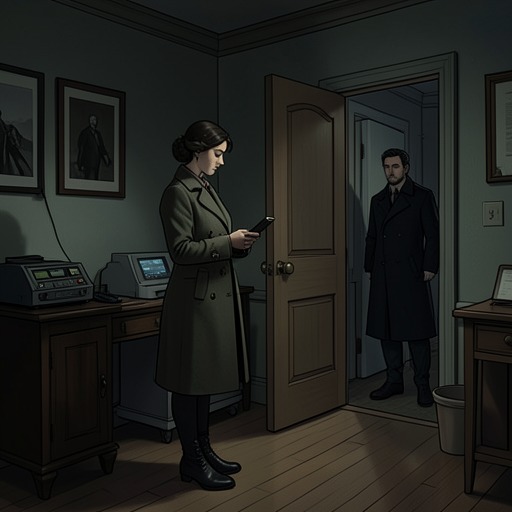
At the Bohlinger family meeting, Brad arrives late from another meeting, breathless and disheveled. About forty, tall, dark-haired, and in need of straightening his tie, he moves around the table to greet the family. Brett notices the intensity of his gaze, softened by slightly overlapping front teeth that give him a boyish charm. His arrival unsettles her: she wonders why her mother chose this younger stranger instead of the family’s longtime attorney. From the outset, his role is both formal and personal, bringing him into the family at the very moment its future is being decided.
Brad conducts the estate business with documents and deliberate explanations. When he tells Brett that Elizabeth’s shares in Bohlinger Cosmetics will go to Catherine Humphries-Bohlinger, Brett is devastated by the decision and struggles to stay composed. Brad then separates a private matter from the meeting’s formal proceedings: Elizabeth has left something specifically for Brett. From a second manila file, he produces a creased, yellowed piece of notebook paper and identifies it as Brett’s life list. The distinction between the company inheritance and the list establishes the two different legacies at stake: one concerns control of the business; the other asks Brett to change her life.
Executor of Elizabeth’s Plan
Brad is not simply the person who delivers the list. He explains that Elizabeth made him executor of her estate and entrusted him with the plan for Brett. He recalls that Elizabeth had also understood the needs of a woman acting as a caretaker, and describes her as attentive to people whose own needs might otherwise be overlooked. His account gives the assignment an emotional basis: Elizabeth’s plan reflects her care for others, and Brad’s commitment comes from both his regard for her and his word to carry it out.
His commitment persists beyond the will reading. When Brett later visits his office with wildflowers to share what she has accomplished, Brad breaks away from a major case, searches the waiting room for her, and greets her with evident delight. The welcome makes their meetings feel less like required appointments with an executor and more like encounters between people invested in one another. He continues to hold and bring out Elizabeth’s pink envelopes, including the one associated with Brett’s sixth goal, giving the dead woman’s written instructions a recurring presence in Brett’s life.
Brett’s Confidant and Ally
Brett turns to Brad when she learns from Elizabeth’s journal that Charles Bohlinger was not her biological father. She tells him about Elizabeth’s summer romance with Johnny Manns, the discovery of the affair, Johnny’s departure, and her belief that he was her father. The revelation brings hurt and anger, but also relief: Brett can reconsider the rejection she had attributed to being a bad daughter. Brad listens as she tries to make sense of the secret and its effect on her understanding of Charles and Elizabeth. Later, Brett tells him that her biological father is John Manson, not Johnny Manns, and that he lives somewhere out west; she has just watched a video of him. These disclosures show how thoroughly Brad has become a recipient of Brett’s private history, not merely a messenger carrying out her mother’s instructions.
Their closeness is reciprocal. Brad tells Brett that he admires her, while Brett invites him to meet the women she volunteers with on Monday nights, especially Sanquita Bell, whom she describes as tough but newly welcoming. When Brad and Brett reunite at a bar after a period of distance, their embrace is fierce and apologetic: each expresses regret, and the scene frames their bond as a friendship both have missed. Brad’s appearance is carefully ordinary—his hair is mussed and a mustard stain marks his tie—but the details make the moment of reunion feel familiar rather than ceremonious.
Brad’s friendship also involves direct challenges. When Brett is troubled by her relationship with Herbert Moyer, Brad presses her to admit whether she is in love with him. Brett confesses that, despite Herbert’s goodness, she cannot summon deep feeling, and wonders whether she is still trying to win the affection of a man like Charles. Brad answers by describing love as something a person cannot simply choose, then points to the distance between himself and the woman he loves, who lives two thousand miles away. His candor puts his own feelings into view without turning the exchange into a demand; he helps Brett distinguish gratitude and suitability from love while revealing the personal cost of that distinction for himself.
Support Through Crisis
Brad’s support extends beyond the life list and Brett’s romantic uncertainty. After Sanquita Bell dies following childbirth, Brett resolves to adopt Sanquita’s baby, Austin Elizabeth. Brad sits beside Brett during her meeting with social worker Kirsten Schertzing, where Brett explains her relationship with Sanquita and Sanquita’s dying wish that she keep the child. When the custody hearing becomes overwhelming, Brad requests a recess and takes Brett into the corridor. He steadies her physically and reminds her that they have done what they can, even as she feels powerless and fears that Austin’s future is being decided without her. His role here is not to erase the stakes but to keep Brett from facing them alone.
Brad’s practical concern is also evident when Joad Bohlinger visits Brett outside the neonatal intensive care unit. Joad takes Brett to the hospital cafeteria, gives her food, and asks what she intends to do about Sanquita’s baby; Brett answers that Austin is her baby and that she will adopt her. Brad is not part of that exchange, but his presence later with Brett at Kirsten’s office and in court helps carry her decision into the formal process. The shift from executor to advocate is consequential: the person initially charged with administering Elizabeth’s wishes now stands alongside Brett as she attempts to make a family of her own.
Ambiguity and Narrative Role
Brad’s defining quality is fidelity, but the novel eventually complicates what that fidelity means. When Brett doubts her relationship with Herbert, Brad asks her to stop pretending and tell him the truth. He then reads from one of Elizabeth’s letters that Herbert is not the right man and that Brett should keep trying. Brett reacts with relief, treating the letter as her mother’s sign that she is free to leave the relationship. But she notices that Brad has read the message without his glasses, and her relief gives way to suspicion.
The scene does not resolve whether Brad has misrepresented what the letter says. Instead, it places his two forms of loyalty—the promise to carry out Elizabeth’s plan and his personal attachment to Brett—under pressure at the same time. Across the story, Brad is the executor who makes the life list actionable, the friend who hears Brett’s most difficult revelations, and the ally who supports her through an adoption fight. The unexplained detail of the glasses leaves the reader to reconsider whether, at the end, he is faithfully conveying Elizabeth’s words or intervening in Brett’s life himself.