Brett Bohlinger
The Life ListBrett Bohlinger is a daughter, friend, teacher, and reluctant inheritor whose mother’s ten-goal challenge forces her to reconsider the life she has built. Her story moves from grief and resistance toward a more self-directed adulthood: she returns to a teenage list, accepts the discomfort of acting on it, and eventually chooses to finish even when the inheritance is no longer her reason. The list matters not as a ready-made plan for happiness but as a way of bringing neglected desires and responsibilities into view.
Identity and Background
In the immediate aftermath of losing Elizabeth Bohlinger, Brett retreats upstairs to her mother’s bedroom, away from the indistinct voices gathered below. The familiar room holds the scent of Elizabeth’s perfume and soap, the creak of her iron bed, and memories of being comforted there as a child. Brett remembers arriving with complaints of stomachaches or monsters, then being held and reassured by her mother. The remembered promise that there would be another sky gives the scene a tender counterweight to its grief: the child who once relied on Elizabeth’s words is now alone in the room that preserves them.
The house itself is bound to Brett’s sense of security. Elizabeth compared it to Grandmama for its sturdiness, but Brett regarded her mother as the more dependable presence. She decides to keep the bed, even while anticipating that she will miss the old brownstone. A bottle of Krug, hidden in Elizabeth’s closet for four months, gives Brett a concrete object through which to confront the loss. Her response to the room is not simply to preserve everything unchanged; rather, its familiar things make visible how much of her identity has been formed through closeness to her mother.
The List and Its Demands
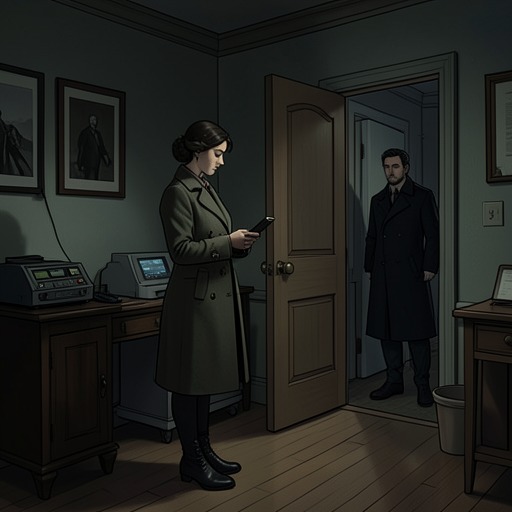
Brett’s central challenge begins when she encounters a crumpled sheet of yellowed notebook paper: her life list, written in her flowery handwriting at fourteen. She does not remember making it. Elizabeth’s handwritten comments beside some goals make the page a conversation across time, joining Brett’s younger ambitions to her mother’s assessment of the woman she might become. The list therefore arrives as both an intimate relic and an unexpected demand.
Elizabeth singles out ten of the original twenty goals for Brett to pursue, including having a baby, perhaps two. Brett’s first response is disbelief; she calls the demand insane. Elizabeth’s accompanying reasoning is personal rather than abstract: she recalls Brett’s childhood affection for baby dolls, her impatience to reach babysitting age, and the way she swaddled Toby the cat in a baby blanket. The contrast between Brett’s remembered girlhood and her present resistance sharpens the challenge. The goal does not guarantee a particular outcome, but it asks Brett to examine a desire she might otherwise leave untested.
The goals also impose a deadline. As March approaches, Brett counts five completed goals out of ten and sees only six and a half months remaining before September. She hopes to establish a relationship with her father, but considers falling in love, having a baby, buying a horse, and getting a beautiful house largely beyond her control. Her panic exposes the tension built into the list: it gives shape to change while measuring progress against outcomes that cannot all be commanded. By the end, Brett insists that completing it matters even without the inheritance. The list has become a commitment to the girl she once was, not merely a condition attached to money.
Risk, Work, and Friendship
Brett’s first stand-up performance at Third Coast Comedy gives the list’s demand for change a public form. At the microphone, her legs shake, the spotlight blinds her, and the audience waits. She steadies herself by gripping the microphone stand and imagining Elizabeth at the dining-room table asking to hear her story. The performance begins not with effortless confidence but with fear, a failing microphone, and an attempt to turn the mishap into a joke. Brett’s stage presence is therefore a practiced act of continuing while frightened, rather than proof that fear has disappeared.
Her friendship with Carrie Newsome carries a different history of risk and regret. Brett remembers their childhood closeness as unusually complete: Carrie could read her thoughts, challenge her, and laugh at her jokes. When Carrie moved from Rogers Park to Madison, Brett experienced the separation as a personal devastation. They wrote to each other faithfully during the first year, but after Carrie returned for a visit, they stopped speaking. Brett still reproaches herself for how she treated Carrie at that last meeting and believes she has never loved another friend in quite the same way. When Carrie reaches out, Brett answers that she misses her too, apologizes, and agrees to meet. The reply does not erase the old rupture; it converts regret into the possibility of renewed contact.
At home, Brett’s relationship with Andrew brings another kind of pressure into view. When he proposes that she consider bringing him into Bohlinger Cosmetics, she is unsure the idea is right, even though she had once supported it. His expectation of perfection, which she associates with his appearance and clothing as well as his broader manner, leaves her with a knot of unease. Her hesitation marks a difference between the future others may assume for her and the choices she is beginning to assess for herself.
Care, Home, and Family
Brett’s plans for Thanksgiving show her trying to make a family tradition her own. She proposes holding the meal at her mother’s house and preparing Elizabeth’s traditional dishes. When Andrew tells her that Joad and Catherine will not be there, Brett realizes she did not know they would be absent. The exchange places her wish to preserve the rituals of home beside the practical limits of who will gather. Cooking the familiar meal is an act of continuity, but the gathering cannot simply restore the family as it was.
Her work with Sanquita Bell gives care a less ceremonial, more demanding shape. Brett volunteers on Monday nights and tells Brad Midar that Sanquita, whom she describes as still hard as nails, has invited her to Thanksgiving dinner. Brad then offers her the envelope for the goal HELP POOR PEOPLE, explaining that she has fulfilled it without ulterior motives. Brett initially protests that she did not set out to complete the goal. His recognition reframes service as something she has done through the relationship itself, rather than as a task she consciously performed for credit.
That care continues on a cold morning when Brett collects Sanquita from Joshua House for an appointment with Dr. Chan. Brett points to the nephrology program at University of Chicago Medical Center as a reason for seeking specialist care. Sanquita questions why Brett is helping and whether she has better things to do. Brett’s response is conveyed through the action that brought them there: she has made the trip and arranged the appointment despite Sanquita’s skepticism. Their exchange makes the care reciprocal in its emotional force, even as Brett is the one providing practical support.
Brett’s new apartment in Pilsen becomes a modest, tangible measure of change. She furnishes it with an old double bed, a cherry dresser, a love seat, mismatched end tables, a scratched coffee table from her mother’s attic, and a secondhand terra-cotta lamp. Bowls and plates from Elizabeth’s cabinet, along with borrowed utensils and cookware, allow the new home to carry selected traces of the old one. After unpacking, Brett lights candles, opens wine, and settles on the sofa with Rudy at her feet. She falls asleep there, in a room assembled from old belongings and new surroundings. The scene presents independence not as a clean break with the past but as the ability to make a home from what she chooses to carry forward.
Family Recognition and Commitment
Brett’s meeting with Zoë opens a new emotional dimension in her family life. At Zoë’s classroom, Zoë announces, “This my sister,” then leads Brett around the room to show her photographs, the fish tank, and her friends. Brett feels intensely welcomed. The moment gives the word sister an immediate, lived meaning: not a conclusion reached through explanation alone, but a relationship made present by Zoë’s joyful introduction and the eager tour that follows. John later drives them around the Nelson complex, where Zoë points out the playground she likes best and the greenhouse where the children learn to tend plants.
Brett also asks John directly why he has not requested a paternity test, acknowledging that others have questioned whether she could be Charles’s daughter instead. John says he has never doubted that she is his. His certainty does not remove the history of doubt, but it gives Brett a clear answer from the person whose recognition matters in that moment. The question shows her actively seeking clarity rather than remaining a passive recipient of family claims.
After Sanquita’s death, Brett’s bond with her becomes inseparable from the question of what will happen to Sanquita’s child. At the custody hearing, Brett identifies herself as Sanquita’s homebound teacher and friend and is asked whether they were close. The court then considers Sanquita’s notarized statement, dated several weeks before her death, requesting that Brett receive sole custody if the child survived her. The judge grants Brett temporary custody until adoption procedures are finalized. Brett sobs, then goes straight to the hospital to see the baby. The legal decision carries Sanquita’s expressed intention into a future she cannot witness, while Brett’s immediate response makes the responsibility personal.
Change and Narrative Role
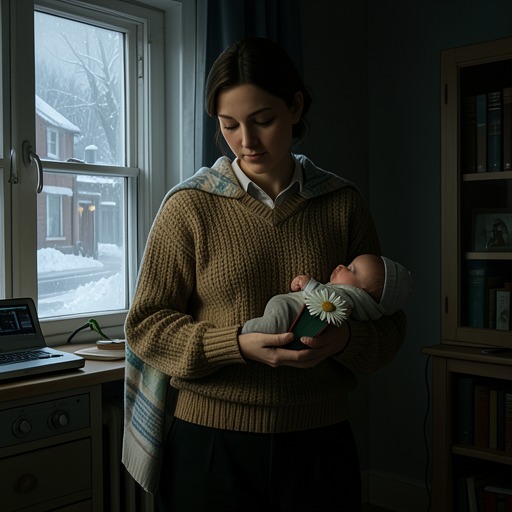
Brett’s transformation is not presented as a simple victory over fear or as the neat completion of every wish on her teenage list. Her own final resolve is more durable and less conditional: she will finish the list, however long it takes, because it is no longer about the inheritance. She does not want to disappoint either Elizabeth or the girl she once knew. As she kisses the top of Austin’s head, she says they will be fine with or without millions. The gesture links her new responsibility to the promise she makes herself: her future will not depend on a fortune, a checklist completed on schedule, or someone else’s permission to claim a life.
As a narrator, Brett presents change through concrete acts and objects: the bed she chooses to keep, the paper she does not remember writing, the microphone she grips, the apartment she furnishes, the appointment she arranges, and the baby she goes to see. Her first-person narration allows embarrassment, grief, panic, and tenderness to coexist without making her progress look effortless. Across these scenes, her mother’s challenge begins as an instruction imposed after death and becomes something Brett interprets and chooses. The list’s lasting significance lies in that shift—from inherited demand to self-authored commitment.