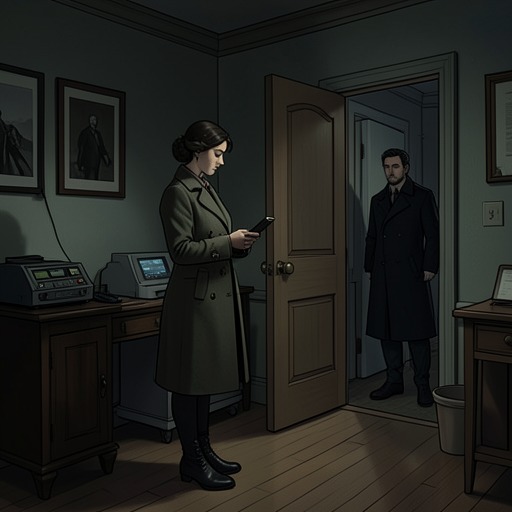
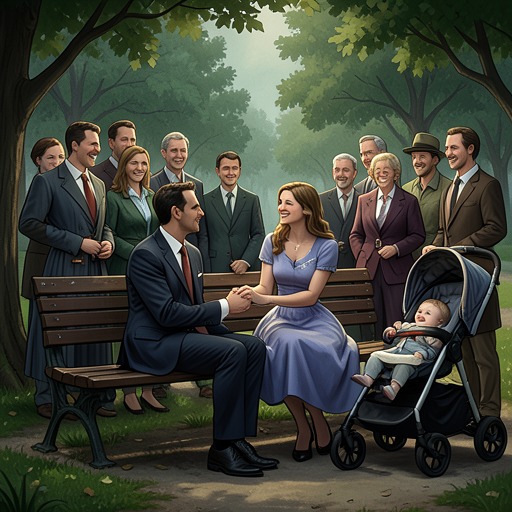
Brett makes first contact with her biological father on Christmas
The Life ListBrett makes first contact with her biological father on Christmas after finding her mother’s journal and deciding that its story and the nineteenth goal on her life list point toward a search for him. The call gives her the name John Manson and reveals that she has a half sister, but it does not deliver the uncomplicated welcome she had imagined: John lives in Seattle and cannot meet her then. The discovery expands Brett’s family even as the delay sharpens her fear that she has no place in it.
Causes and Background
The call follows a painful discovery about Brett’s origins. Her brother Joad urges caution, pointing out that the journal does not prove she was not Charles Bohlinger’s daughter. Brett rejects that uncertainty. She reads her mother’s decision to leave the journal, together with the nineteenth goal, as a direction to find her biological father and try to have a relationship with him. The journal therefore acts as more than evidence about the past: for Brett, it is a posthumous request to begin a new part of her life.
The search also reopens an old wound. Brett says that she struggled throughout her life with her relationship with Charles and believes that he knew she was not his biological daughter. She is angry that her mother did not tell her directly, but also feels that the journal finally gives her access to her mother’s account of their shared story. On Christmas, Brett calls the number associated with that search. After a silence, the man on the other end identifies himself: “This is John Manson.”
The Christmas Call
Brett first learns the practical facts of John’s life. He lives in Seattle, where he owns a small music store, Manson Music, and still gets occasional guitar gigs. The details give the newly discovered father an ordinary, present-day existence rather than leaving him as an imagined figure from her mother’s past. Brett asks where he lives and, once she knows, begins to picture a meeting.
When Brett asks whether he could come to Chicago, John says he would like to see her but explains that the timing is difficult. He has custody of his twelve-year-old daughter, Zoë, whose mother moved to Aspen. Brett had not anticipated having a sister; she responds with excitement and asks Zoë’s name. John describes her affectionately, then says she has been coughing and may be getting a cold. Traveling is out of the question, he explains, and he does not want Zoë around people while she might be ill.
Brett offers to travel to Seattle instead, so Zoë would not have to make the trip. John still declines, saying that it is not the right time and that he needs to keep Zoë away from people as a precaution. The immediate facts are limited: John postpones meeting Brett because of concern about Zoë’s health. But Brett hears the refusal through the history that brought her to the call. She concludes that he is making excuses, does not want to see her, and wants to shield his daughter from the family secret. His words that he is happy to know her and looks forward to meeting her do not overcome that interpretation.
Aftermath and Meaning
After the call, Brett lays the phone beside her. She has found her father and learned that she has a sister, yet feels more rejected than before. The contrast is the event’s central reversal: the search succeeds as a matter of identity, but the hoped-for relationship remains unavailable. Knowledge arrives immediately; belonging does not.
Brett carries the news into the living room and tells her family that she has spoken with John Manson. She presents the postponement as temporary, explaining that Zoë is under the weather and celebrating the fact that she has a sister. Joad’s question about whether John has “a real family” gives voice to the fear Brett has not resolved. He describes another person’s difficult experience of being approached by a child given up for adoption, then reassures Brett that her situation will be different. Instead, Brett imagines herself as an outsider whose presence might threaten a father-and-daughter bond already in place. The call’s emotional consequence thus unfolds not only between Brett and John, but also through the reactions and assumptions of the family gathered around her.
The later story complicates, without erasing, the rejection Brett feels that Christmas. She eventually meets Zoë and identifies her openly as her sister. Much later, her mother’s letter explains that, thirty-four years earlier, she promised Charles Bohlinger she would not reveal the secret of Brett’s conception; she says she feared that, without knowing where Brett’s father was, the truth might deepen Brett’s sense of paternal rejection. That account illuminates the long concealment behind the call, while leaving John’s Christmas decision grounded in the explanation he actually gives: caution about Zoë’s illness. The scene marks the beginning of contact, not the completion of a family relationship. It sets biological discovery against the slower work of recognition, meeting, and choosing one another as kin.