Joad Bohlinger
The Life ListJoad Bohlinger is Brett Bohlinger’s eldest brother, a family member whose warm recognition of her devotion to their mother is later complicated by his concealment of Elizabeth Bohlinger’s red leather journal. His changing role links private grief to the Bohlinger family’s public image: he acknowledges how much Brett carried during Elizabeth’s illness, yet withholds a journal containing life-changing information because he believes its contents could tarnish the company’s reputation.
Identity and Family Role
At the family gathering after Elizabeth’s death, Joad appears in the foyer carrying a colossal floral spray. His shaved head and clear-framed glasses give him an urban-artsy appearance, markedly different from Jay Bohlinger’s brushed-back, thinning hair. The physical details distinguish the two brothers while placing Joad amid the practical and emotional business of the funeral gathering: he has arrived with flowers, and he approaches Brett rather than leaving her alone in her grief.
Joad’s first important act is to name the closeness between Brett and Elizabeth. He tells Brett that she and their mother had a special bond, and that he and Jay could not have managed without her, especially near the end. His recognition has particular weight because it follows Brett pulling away and insisting that the family is grieving together. Joad does not deny their shared loss; he identifies the unequal work of caring for Elizabeth within it.
That work had included nursing Elizabeth after surgery, accompanying her to chemotherapy, pressing for second and third opinions, and being beside her when she decided to stop treatment after doctors agreed that her prognosis was grim. Joad’s words acknowledge Brett’s sustained presence through those decisions. His response presents him, at least initially, as a brother able to see and affirm care that might otherwise remain unspoken.
Grief and the Family Home
The foyer scene also places Joad among small household decisions made in the shadow of a death. Shelley arrives carrying Emma’s car carrier and asks whether anyone wants the jade plant sent by her parents. Joad indicates that he already has his own plant, while Brett tells Shelley to take it, baffled that the family is discussing a plant at all. Joad’s brief participation is practical rather than openly emotional, contrasting with Brett’s sense that the ordinary sorting of possessions is out of step with their loss.
At the reading of Elizabeth’s will, Joad objects to a provision requiring the Astor Street home and its contents to remain intact for twelve months, with neither sale nor lease permitted. The children may stay there for no more than thirty consecutive days and may use household items personally. Joad points out that he and his siblings already have homes and sees no need to preserve their mother’s house. Jay answers that they should respect Elizabeth’s wishes. The exchange reveals a difference in how the brothers respond to the will: Joad questions the practical purpose of keeping the property, while Jay emphasizes their obligation to their mother’s decision.
The Journal and Concealed Information
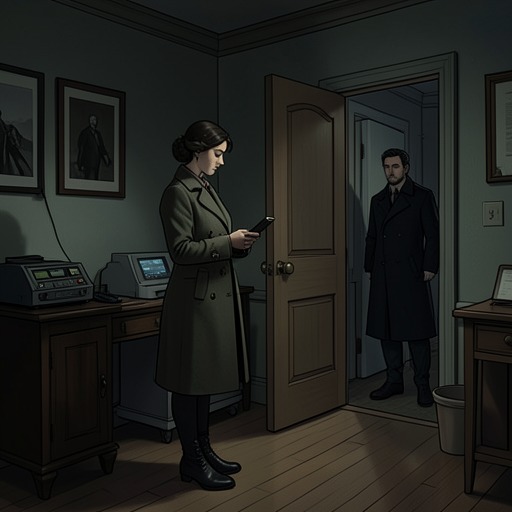
Joad’s most consequential actions concern Elizabeth’s red leather journal. During a later visit to Joad and Catherine’s home, Brett passes his cherry-paneled den, a room that serves as both home office and private sanctuary. Its locked cabinets hold his single-malt scotches; despite Catherine’s dislike of smoking in the house, he also keeps a humidor of Cuban cigars there. Brett has never entered the room uninvited, but the journal on his mahogany desk stops her. Its cover bears Elizabeth’s handwriting, and its date, the summer of 1978, places it in the period before Brett’s birth.
Brett remembers that the family, including Joad, had denied seeing the missing book. She takes it from the desk and hides it beneath her sweater when Joad approaches, choosing not to challenge him because she suspects he does not want her to have it. The concealment is not a passing misunderstanding: the journal is in his private office, and Brett’s recollection connects its presence there to the denials she has already received.
When Joad finds Brett with the open journal, he takes it from her lap and says he had hoped to reach her before she read it. Brett asks why he kept it from her. Joad explains that she had just lost their mother and that he believed another shock was the last thing she needed. His explanation initially frames the withholding as protection, but it does not undo the fact that he had kept the journal inaccessible while the family denied knowing where it was.
Reputation, Conflict, and Narrative Role
Joad’s account then changes the meaning of his decision. He says the family could not simply reveal the information to the public because Elizabeth was a brand and the company could not afford to have her spotless reputation tarnished by an illegitimate daughter. The concern is not limited to Brett’s grief or readiness to learn the truth: Joad explicitly connects disclosure to the public standing of Elizabeth and the company. Brett understands that he has regarded her as a possible threat to the Bohlinger brand, and the protective explanation becomes inseparable from institutional self-interest.
This turn makes Joad more than a brother who disagrees about a house or handles family possessions differently. He has recognized Brett’s devotion and the indispensable role she played at the end of Elizabeth’s life, yet he has also participated in keeping a defining family secret from her. The journal, first found in the privacy of his den and then taken from Brett after she reads it, gives that conflict a concrete form: the same brother who can affirm her bond with their mother has tried to manage what she is allowed to know about her own place in the family.
The evidence leaves Joad’s character in tension rather than resolving him into either a supportive sibling or a simple antagonist. His concern about the timing of the revelation is present, but so is his stated fear for Elizabeth’s reputation and the company. For Brett, that distinction matters: after grieving the mother she cared for, she must also confront the possibility that her family has treated the truth about her origins as a reputational problem to be contained.