Sanquita Bell
The Life ListSanquita Bell is a high-school senior whose studies continue amid homelessness, pregnancy, and life-threatening kidney disease. Through homebound lessons with Brett Bohlinger, she emerges not simply as the recipient of care but as a young woman with clear ambitions and fierce convictions: she wants a diploma, intends to give her baby a different life from the one she fears, and ultimately asks Brett to raise the child if she cannot. Her friendship with Brett turns those wishes into the basis for a lasting responsibility.
Identity and Circumstances
Sanquita is introduced as a student Brett visits in Englewood, at a large green house that bears a sign for Joshua House. The place is a shelter for homeless women, but Sanquita makes clear that her family is not there with her. Her mother moved to Detroit the previous year; Sanquita refuses to follow, saying she will not let her baby have that kind of life. She does not explain what she means, and Brett does not press her. That restraint leaves the circumstances partly unstated while making Sanquita's decision unmistakable: she has chosen to remain apart from her mother and to make a different future for her child.
Sanquita is three months pregnant when Brett first meets her, and she is also living with kidney disease. Brett is struck by how small and young she appears, but Sanquita is a high-school senior, not a child whose aims can be reduced to her vulnerability. The description of her illness becomes physical and immediate during their lessons: she has swollen hands and puffy eyelids, and raw-looking patches of skin. On a later visit, Brett notices a painful-looking patch on Sanquita's forehead and understands it as a consequence of waste building up in her body. Illness is part of her daily life, not merely information about a future crisis.
Homebound Lessons and Ambition
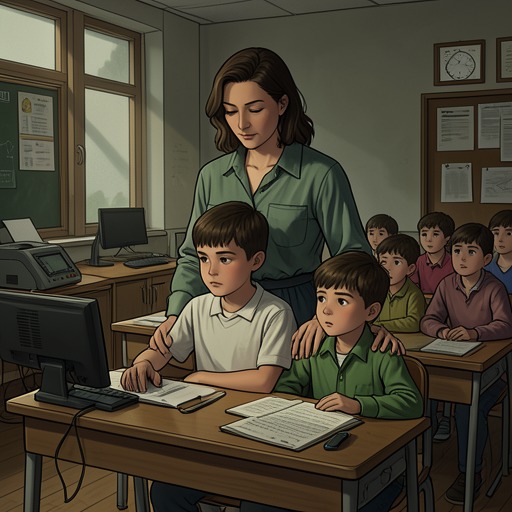
Brett's teaching takes place in a plain shared bedroom at Joshua House. A weathered bedside table stands between twin beds with faded blue covers; mismatched dressers flank the window. Sanquita says they can work there, explaining that her roommate, Chardonay, is at work. The setting makes the lesson a private, improvised classroom, but Sanquita's concentration gives it purpose. She asks Brett for practical help with her education, not rescue from her circumstances: she wants to earn her diploma so her baby will know that her mother was smart.
The work is demanding, especially chemistry. Sanquita listens as Brett explains the material, keeps trying, and eventually understands a difficult point. She says she usually struggles with science but has grasped it that day. Brett praises her as a hard worker and a smart girl, while recognizing that Sanquita's success belongs to Sanquita. Their lessons thus establish a relationship built on effort and respect rather than on Brett's role as a benefactor. Sanquita asks when Brett will return, and Brett consults her planner to arrange the next visit. The question registers the value Sanquita places on the instruction and the continuing connection it makes possible.
That connection gradually reaches beyond schoolwork. When Brett brings Thanksgiving dinner to Joshua House, Sanquita is waiting at the door to receive the basket. Later, Brett finds her visibly unwell and asks how she is feeling; Sanquita says she feels fine without meeting Brett's eyes. Brett recognizes the guarded answer but does not treat it as proof that Sanquita is ready to confide everything. Trust develops through repeated visits and attention to what Sanquita does and does not say. On a later visit, when Brett arrives anxious, Sanquita is sitting up with a glass of juice while residents Tanya and Mercedes tell stories about labor. Sanquita welcomes Brett in and hugs her back, a notable change from the stiff response Brett usually receives.
Pregnancy and Medical Crisis
By the time Brett drives Sanquita to an appointment with Dr. Chan at the University of Chicago Medical Center, the stakes of the pregnancy are explicit. On the frigid morning drive, Sanquita questions why Brett is helping her when Brett could be doing other things. Brett explains that she is Sanquita's teacher and friend, but Sanquita's question also shows that the care is not something she takes for granted. At the appointment, Dr. Chan explains that Sanquita's kidney condition is serious and that pregnancy further compromises her kidneys. If her potassium rises, she risks cardiac arrest. The doctor says time is critical and recommends terminating the pregnancy as soon as possible.
Sanquita's immediate answer is refusal. She turns to Brett as if betrayed, making clear that the proposed medical intervention conflicts with what she wants for her baby. Her decision does not make the danger disappear: the doctor's warning remains stark, and Brett has to reckon with the severity of Sanquita's condition. The conflict is therefore not between a reckless young woman and an uncomplicated solution, but between a grave medical risk and Sanquita's determination to continue the pregnancy. Her earlier resolve to keep her child from the life she left behind now carries an acute bodily cost.
As Sanquita grows weaker, she makes her wish increasingly direct. She tells Brett that if she dies, she wants Brett to keep the baby. When Brett urges her to fight, Sanquita raises her face with great effort and asks Brett to take the child. Brett initially cannot accept the prospect and insists that Sanquita will recover, but Sanquita repeats her plea. These exchanges recast their relationship: the student who once asked when her teacher would return now entrusts Brett with the future she has been trying to secure for her baby.
Death and the Custody Request
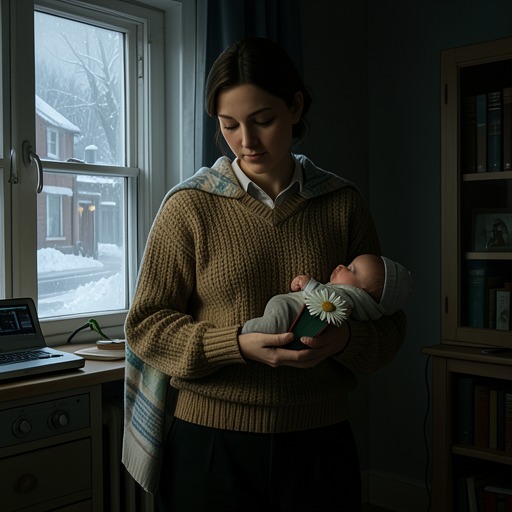
Sanquita delivers a premature baby girl weighing two pounds and four ounces. The infant is severely malnourished, with underdeveloped lungs, and is taken to the neonatal intensive care unit for breathing support. The birth is therefore both an arrival and a crisis: Sanquita's child survives delivery, but her health remains precarious. Medical records later show that Sanquita lapsed into a coma after her C-section and that she died following the delivery. Brett tells the custody investigator that Sanquita woke on the evening of the birth, after which she again lost consciousness.
The custody question tests whether Sanquita's stated wish can be established beyond Brett's account. At the hearing, the judge produces a notarized declaration dated March 5, several weeks before Sanquita's death. It identifies Brett as Sanquita's best friend and homebound teacher and states Sanquita's intention that Brett receive sole custody if the child outlived her. The document corroborates the plea Brett remembers and leads the judge to grant Brett temporary custody while adoption procedures are completed. Sanquita's written request thus survives her death as an actionable decision, rather than remaining only a private conversation between friends.
Narrative Significance
Sanquita's story is shaped by the difference between being described through hardship and being heard as a person with purposes of her own. The shelter, her kidney disease, and the high-risk pregnancy expose the precarious conditions around her, but the novel also gives her educational ambition, her deliberate choice not to move to Detroit, her refusal of the proposed abortion, and her judgment about whom to trust. Her wish that her baby know her mother was smart gives education an intimate meaning: the diploma is both a goal for Sanquita and a message she hopes her child will inherit.
Her bond with Brett develops through ordinary acts of teaching and care before it becomes a life-changing request. Chemistry lessons, the question of when Brett will return, a Thanksgiving basket, and the later returned hug mark a relationship becoming more trusting without erasing Sanquita's guardedness. The notarized declaration makes that relationship consequential beyond the scenes they share: Sanquita's own decision helps shape the baby's future and draws Brett into motherhood. In this way, Sanquita remains central to the story even after her death, not only as the source of a custody crisis but as the person whose stated wishes give that crisis its direction.