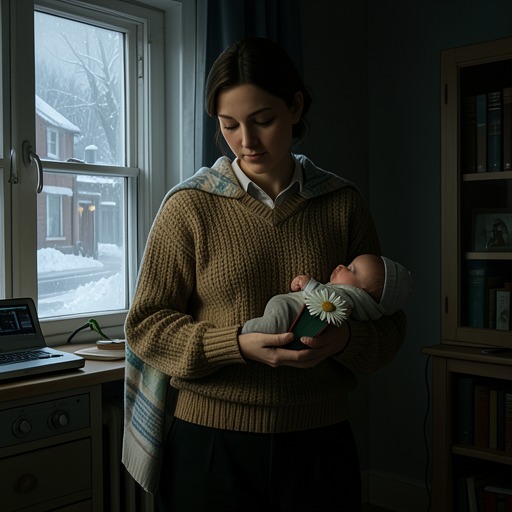
Sanquita's pregnancy and kidney disease crisis
The Life ListSanquita’s pregnancy and kidney disease crisis forces a medical emergency into the center of Brett Bohlinger’s life, where clinical warnings collide with Sanquita’s determination to carry her baby. The crisis unfolds from a specialist’s grave prognosis through bleeding, contractions, and a premature delivery. It also changes Brett’s relationship with Sanquita: the teacher who accompanies her to an appointment becomes a caregiver, advocate, and, after Sanquita’s death, the witness to her final wish.
Diagnosis and Immediate Stakes
On a frigid morning, Brett picks Sanquita up at Joshua House for an appointment with Dr. Chan at the University of Chicago Medical Center. Snow crunches underfoot, ice cracks on Lake Michigan, and Sanquita warms her bare hands at the car’s heat vent. Brett cites the hospital’s nephrology program as a reason for hope, but Sanquita questions why Brett is helping her. Her skepticism gives way to a demanding examination, blood draws, and questions before Dr. Chan explains the danger.
Dr. Chan describes Sanquita’s kidney condition as very serious and says the pregnancy is placing further stress on already tenuous kidney function. If the kidneys cannot function properly, potassium levels may rise and put Sanquita at risk of cardiac arrest. Because time is pressing, Dr. Chan recommends ending the pregnancy as soon as possible. The recommendation makes the conflict immediate: the pregnancy is not simply a medical condition to monitor, but a choice with potentially fatal consequences for both mother and child.
When Dr. Chan explains that an abortion can be performed late in pregnancy when the mother’s life is at risk, Sanquita rejects the recommendation and turns to Brett as if Brett has betrayed her. Brett asks what may happen if Sanquita continues the pregnancy. Dr. Chan estimates Sanquita’s chance at fifty-fifty and the baby’s at thirty percent. The doctor does not spell out that she means survival; the implication is clear to Brett. The figures establish the stakes, but they do not resolve the decision.
Sanquita’s Decision and Brett’s Role
In the car afterward, Sanquita says she will not return to the doctor who advised her to abort. Brett tries to explain that the recommendation reflects concern for Sanquita’s life, not a desire to harm her. Sanquita counters that Brett has no children and therefore has no right to tell her what to do. Their disagreement reveals the limits of Brett’s authority: she can arrange care, listen, and warn, but she cannot make Sanquita accept a medical judgment that contradicts her own priorities.
The argument briefly gives way to tenderness. Sanquita tells Brett that she would have made a good mother, a remark that is both comforting and painful for Brett. Brett squeezes her hand and says she does not want to lose her. Sanquita then makes her position unmistakable: her life means nothing to her without the baby, and she would rather die than kill the child. Brett recognizes the intensity of this love as potentially lethal, not as a sentiment that cancels the medical danger. The scene keeps both realities in view: Sanquita’s fierce attachment and the risk that her choice may cost her life.
The crisis also makes Brett’s care practical and sustained. She accompanies Sanquita to specialist care and remains close as the pregnancy becomes more precarious. When Sanquita later bleeds, Jean Anderson calls Brett and asks her to come early. At Joshua House, Brett finds Sanquita lying in the back of a car, sweating and massaging her belly. Sanquita smiles when she sees Brett and asks whether Brett will return the next day, because she still has exams to take. The question preserves the ordinary demands of her life even as her body signals an emergency.
Bleeding, Contractions, and a Narrowing Hope
Jean takes Sanquita to Cook County Memorial Hospital. Brett returns to Joshua House the following morning after calling the hospital repeatedly through the night; by three in the morning, Jean has assured her that Sanquita will be all right. Yet Sanquita comes back exhausted, slumped against the car window, and says that the hospital gave her medicine to stop the contractions. Jean and Brett help her up the porch steps, and Brett carries her upstairs to bed. Sanquita’s insistence that she still needs to take her exams sits beside the physical evidence of how much help she now requires.
Later, Brett finds her propped against a pillow, drinking juice while Tanya and Mercedes tell stories about their own labors. Sanquita is feeling better, but the doctors have told her to stay off her feet. She hopes the baby can wait until the end of April, around the thirty-sixth week, and says that then everything will be all right. Brett calls the prospect wonderful while trying to believe it herself. The hoped-for milestone offers a brief measure of reassurance, but the preceding bleeding and contractions have already made the pregnancy’s uncertainty tangible.
Premature Birth and Aftermath
The baby arrives before Sanquita can reach the hoped-for point in the pregnancy. Dr. O’Connor tells Brett and Jean that Sanquita has delivered a girl weighing two pounds and four ounces. The infant is severely malnourished and her lungs are not fully developed; she is taken to the neonatal intensive care unit and placed on CPAP until she can breathe on her own. Dr. O’Connor calls her a miracle, but the details make clear that birth has not ended the emergency. The baby survives delivery in profoundly fragile condition, and her breathing requires intensive support.
Sanquita does not survive the C-section. Later, in a meeting with Kirsten Schertzing, Brett learns that Sanquita’s medical chart records a coma after surgery and no reported period of consciousness during the thirteen hours before her death—except for Brett’s account. Brett says that Sanquita woke on the evening she delivered and confirms that she told Brett she wanted her to keep the baby. That exchange gives the crisis an aftermath beyond medical loss: Sanquita’s wish becomes a consequential charge entrusted to Brett, and Brett’s memory is scrutinized as evidence of what Sanquita wanted.
Narrative Significance
The episode is structured around competing forms of knowledge. Dr. Chan speaks in terms of kidney function, potassium, cardiac arrest, and survival probabilities; Sanquita speaks from her insistence that life without her baby would have no value. Neither account erases the other. The specialist’s warning is specific and urgent, while Sanquita’s refusal is not presented as ignorance of the danger: she has heard the prognosis and chooses to continue the pregnancy regardless.
Brett occupies the uneasy space between those positions. She accompanies Sanquita to care, asks the question Sanquita does not want to hear, returns when bleeding begins, and remains close through the labor and its aftermath. Her role shifts from friend and teacher to caregiver and witness, without giving her control over Sanquita’s decision or its outcome. The premature birth and Sanquita’s death make the central cost of the crisis irreversible, while the baby’s survival and Sanquita’s final request carry the consequences forward into Brett’s life.