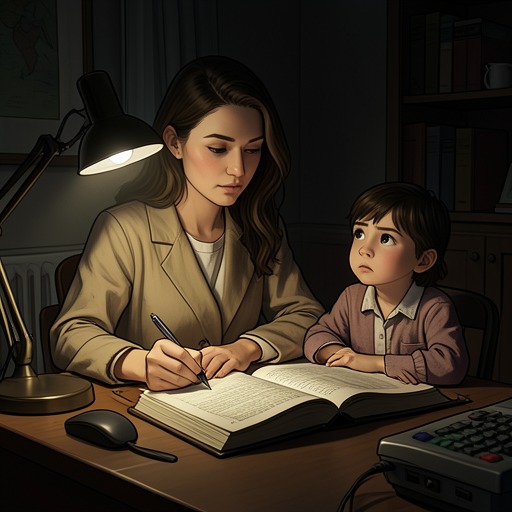
Sanquita’s high-risk pregnancy
The Life ListSanquita’s high-risk pregnancy is a medical emergency and an ethical crisis: her already compromised kidneys make pregnancy dangerous, but she refuses to end it because having her baby matters more to her than her own survival. Brett Bohlinger becomes her advocate and caregiver, caught between the doctors’ warnings and Sanquita’s determination. The pregnancy culminates in bleeding, premature labor, and the birth of a critically fragile baby girl; Sanquita’s later coma and death give the earlier risks their full consequence.
Medical Danger and the Choice to Continue
Sanquita’s pregnancy is complicated by a serious kidney condition that threatens her life. When Dr. Chan explains that the strain of pregnancy is further compromising Sanquita’s kidneys, she connects their poor function to rising potassium levels and the risk of cardiac arrest. She urges Sanquita to abort the fetus as soon as possible. Brett points out that Sanquita is well into her second trimester; Dr. Chan answers that a late-term abortion is performed when the mother’s life is at risk, and that this is such a case.
Asked what might happen if the pregnancy continues, Dr. Chan gives a stark estimate: Sanquita has a fifty-fifty chance, while the baby has about a thirty percent chance. The doctor does not specify the outcome in the exchange, but the danger is unmistakable. Her clinical assessment frames pregnancy as a decision under competing threats, not as a routine expectation of a healthy delivery.
Sanquita rejects the recommendation. In the car, she says she will not return to the doctor and insists that the doctor wants her to kill her baby. Brett tries to distinguish the recommendation from a desire to harm her, explaining that the doctor believes it is best for Sanquita because her life is at stake. Sanquita answers that Brett has no right to tell her what to do because she has no children. The disagreement exposes a painful limit in Brett’s role: she can listen, accompany, and protect, but she cannot make Sanquita accept a choice she experiences as the loss of her child.
Sanquita’s Resolve and Brett’s Care
Sanquita makes the stakes explicit when she tells Brett that her life means nothing to her without the baby and that she would rather die than kill it. Brett recognizes this as a love so absolute that it may also destroy the person who feels it. The narration does not present Sanquita’s decision as a simple victory of devotion over fear; it holds her determination beside the doctor’s warning and Brett’s fear of losing her.
The care between the two women remains reciprocal even amid disagreement. Sanquita tells Brett that she would have made a good mother, a kindness that is also painful for Brett to hear. Brett squeezes Sanquita’s hand and tells her that she hopes Sanquita can become a mother once her kidney problem is resolved, while admitting that she does not want to lose her. Their exchange gives the pregnancy a personal dimension beyond prognosis: it is bound up with Brett’s longing for motherhood and her growing attachment to Sanquita, without making either woman’s feelings interchangeable.
When Jean Anderson calls to report that Sanquita is bleeding, Brett abandons her plans, makes a sudden U-turn, and rushes to the center, praying aloud that the baby will not die. Jean is taking Sanquita to Cook County Memorial Hospital. In the backseat, Sanquita is sweating, her face bloated, but she smiles at Brett, who squeezes her hand and urges her to hang on. Even in this acute emergency, Sanquita asks whether Brett will return the next day because she has exams to take. Her concern for school persists alongside the immediate threat to her pregnancy.
A Precarious Delay
After the bleeding episode, Sanquita receives medicine to stop the contractions. Brett calls the hospital repeatedly through the night; by three in the morning, Jean tells her that Sanquita will be fine. The reassurance is provisional rather than a resolution. The next morning, Sanquita returns slumped in the backseat of Jean’s car. Jean and Brett help her into the house, and Brett carries her upstairs to bed. Sanquita remains focused on taking her exams, while Brett’s physical care answers the vulnerability her words do not erase.
Later, Sanquita says the doctors have told her to stay off her feet. She hopes the baby can remain in the womb until the end of April, around the thirty-sixth week, when she believes everything will be all right. Brett calls the prospect wonderful, trying to believe in it herself. The hoped-for date and week give their optimism a concrete measure, but the preceding bleeding and contractions make clear how uncertain that timetable is.
Premature Birth and Aftermath
The hoped-for wait does not reach its intended end. A doctor reports that Sanquita has delivered a two-pound, four-ounce baby girl. The newborn is extremely malnourished, and her lungs are not fully developed; she is taken to the neonatal intensive care unit and placed on CPAP until she can breathe on her own. The doctor calls her a miracle, a word that registers the severity of her condition as much as the fact of her arrival.
Sanquita’s own outcome is also grave. Later, Kirsten tells Brett that Sanquita lapsed into a coma after her C-section and that no one reported her conscious during the following thirteen hours leading up to her death, except Brett. Brett insists that Sanquita woke that evening, the same day she delivered the baby, and wanted Brett to keep her child. The high-risk pregnancy therefore ends not with the safe delivery Sanquita hoped for, but with a critically premature infant, Sanquita’s death, and a final request that shapes Brett’s responsibilities.
Significance
The pregnancy brings medical knowledge and lived conviction into direct conflict. Dr. Chan describes measurable danger; Sanquita understands the proposed intervention as killing her baby; Brett hears both the medical warning and the force of Sanquita’s attachment. Neither the diagnosis nor the love cancels the other. The narrative’s repeated practical details—blood tests, potassium, contractions, exams, the hospital journey, and the newborn’s weight—keep the crisis grounded in bodies and decisions rather than reducing it to an abstract moral argument.
For Brett, caring for Sanquita means remaining present without being able to control the outcome. She argues, worries, rushes to the hospital, and later becomes the person Sanquita turns to in a brief final moment of consciousness. The pregnancy thus changes from a threatened future into a lasting bond and obligation: Sanquita’s refusal, the baby’s precarious birth, and her request to Brett converge in the circumstances that leave Brett to care for the child.