Ester’s childlessness
The Lighthouse (Alison Moore Edition)Ester’s childlessness is a condition shaped by both her own uncertainty about motherhood and the expectations voiced by those around her. She tells Ida that she and Bernard may not have children, and she does not especially want them; yet questions from Ida and a later private wondering about age keep the subject present. The novel does not reduce this absence to a simple choice or establish a medical explanation. Instead, it follows the difference between what Ester says she wants, what her husband and mother-in-law expect, and what she cannot finally settle for herself.
Ester’s earlier experience and her conversation with Ida
Ester’s account of childlessness includes a pregnancy from before her relationship with Bernard. While helping Ida in the kitchen, she tells her about a married man with whom she had been involved before Conrad. She had become pregnant during that relationship, was frightened, and had not been able to continue with the pregnancy. Ida, in turn, describes discovering that she was pregnant with Bernard before she was married to his father, and the fear she felt at the time. Their exchange places Ester’s experience beside Ida’s, but does not make them identical: both speak of fear, while their circumstances and eventual lives differ.
The setting gives the disclosure a particular intimacy. Ester likes assisting Ida in the kitchen, although she is not a confident cook, and the work recalls her childhood memories of cooking with Lotte while Ester’s mother was away. As the two women prepare food, they share stories about relationships and pregnancies that are otherwise difficult to raise. Ester asks whether her own past is dreadful, and Ida responds by locating it in Ester’s youth. Ida’s answer offers some reassurance, but it does not settle what Ester feels about the pregnancy or what she wants in the present.
Bernard and Ida’s expectations
During a visit, Ida asks when she can expect grandchildren. Ester answers that she and Bernard might not have children, adding that she does not especially want them and believes she has said so before. Ida replies that Bernard wants children. The exchange makes clear that the couple do not express a shared desire: Ester speaks for her own reluctance, while Ida presents Bernard’s wish as a reason the possibility should remain open.
Ida also brings other women and their children into these conversations. She mentions Andrea’s baby boy and later tells Bernard that Susanne has asked after him. At breakfast she reports that Therese now has three children, a girl and twin boys. Ester watches Bernard’s face as Ida delivers this news. These references turn motherhood into a comparison, placing other women’s family lives beside Ester’s marriage and making the absence of children difficult to leave unremarked.
On the last visit described, Ida invites Liese to dinner. Liese is a twenty-year-old nursery nurse whom Ida describes as fond of children; Ida also recalls that she herself was already pregnant with Bernard at that age. The introduction again connects youth, pregnancy, and family formation, this time through the presence of a young woman whom Ida has brought into the household. Ester and Bernard argue on the drive back to Hellhaus after Ida’s visits, though the account does not specify that every argument is caused by the subject of children. The repeated family references nevertheless form a tense setting in which Ester’s answer is continually measured against what Ida believes Bernard wants.
Loss, family pressure, and age
Ester’s mother also makes the absence of a grandchild explicit. After Ester’s father dies of a heart attack, Ester returns home. At his funeral, her mother holds a relative’s baby boy and asks Ester about the grandson she does not have. She repeats the question, in different forms, on later visits. Only recently has she stopped raising grandchildren and begun offering advice about preserving one’s looks in middle age. The shift changes the subject rather than removing the pressure: the expectation of motherhood gives way to attention to Ester’s age and appearance.
Ester’s father’s death is accompanied by her mother’s account of warning signs that he ignored and of an earlier heart attack that had gone unnoticed. That family history does not explain Ester’s childlessness, but it places the funeral conversation within a scene already marked by loss and by the limits of what relatives recognize in one another. Her mother’s question arrives while she is holding someone else’s baby, making the missing grandchild a visible contrast without establishing that Ester herself experiences it in the same way.
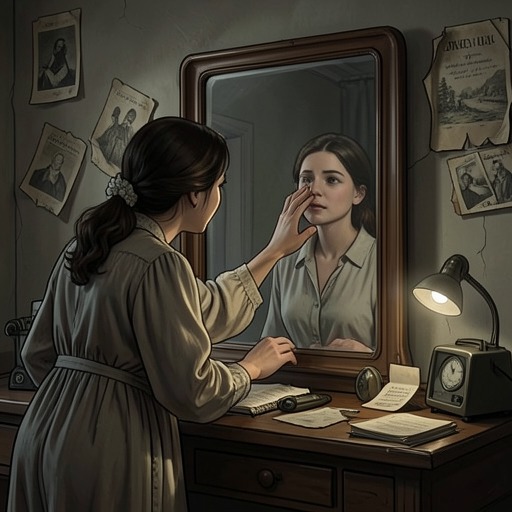
Later, after a nap, Ester studies her face in the dressing-table mirror. Her make-up does not conceal the dark circles beneath her eyes, and she wonders privately whether she is too old to have children. This thought complicates her earlier statement that she does not especially want them: the narrative records a question, not a decision to become a mother. Her concern emerges alongside her awareness of age and appearance, after years in which family members have repeatedly connected women’s lives to pregnancy and children.
Significance of the unresolved question
Ester’s childlessness remains unresolved rather than being framed as a single cause or a settled verdict. She has disclosed an earlier pregnancy that did not continue, told Ida that she may not want children, and faced Bernard’s stated desire and Ida’s repeated reminders of motherhood. Her mother’s questions and the comparisons with other women add further pressure, while Ester’s later wondering about age shows that the issue has not simply vanished from her thoughts.
The distinction between Ester’s expressed reluctance and her private question matters. The evidence does not say that she changes her mind, that she is infertile, or that she definitively wants a child. It shows instead that her position is spoken and revisited under family scrutiny, without a final answer. Childlessness therefore becomes not only an absence in Ester and Bernard’s marriage but also a point at which their different expectations and the older generation’s assumptions about grandchildren meet.